Energean’s H1 2026 performance demonstrated strong financial resilience and operational delivery, highlighted by a 45% year-on-year rise in profit after tax to $160 million and a 35% increase in free cash flow to $250 million, driven by tight cost control, strong cash generation, and a 29% surge in realized liquid prices. Operationally, although average working-interest production for the first half was 124,000 barrels of oil equivalent per day (boe/d), the company rebounded powerfully to surpass 180,000 boe/d in August 2026, allowing Energean to reaffirm its full-year 2026 production guidance of 130,000 to 140,000 boe/d.
This performance demonstrates that Energean has the operational platform, technical capability and financial discipline required to pursue its next phase of growth.
In Egypt, we are proposing an investment program of around $150 million over the coming four years, subject to final confirmation and approvals. The program is designed to discover new reserves, increase domestic production, strengthen Egypt’s energy security and create long-term value from our existing asset base. The reforms undertaken under the leadership of Minister of Petroleum and Mineral Resources, Karim Badawi- particularly the progress in addressing overdue receivables, maintaining payment discipline and improving the investment framework – have made Egypt increasingly attractive as a destination for international capital. We strongly support this direction and believe it can unlock further investment by Energean and the wider industry.
How can Energean’s investment support Egypt’s energy security and reduce reliance on imports?
Egypt remains a core production and growth market for Energean. It offers established infrastructure, an experienced workforce and a clear route for further investment. First but not least, Egypt needs energy, investment and experienced oil and gas companies, so we feel welcome in the country.
The progress made under Minister Badawi’s leadership, especially on overdue payments, has strengthened investor confidence and enhanced Egypt’s investment profile. Continued progress in this direction will support the deployment of additional capital and the development of new resources.
The most direct contribution is to increase domestic production. Every additional unit of gas or oil produced locally strengthens supply resilience and reduces exposure to imported energy, particularly during periods of high demand.
Energean’s role is to deploy private capital and assume the exploration, development and execution risk required to bring additional resources to market. In Egypt, we can build on existing infrastructure and operating capabilities, including Abu Qir Petroleum, to optimize mature fields, accelerate development opportunities and shorten the route from discovery to production.
Regional infrastructure also has an important role to play. Regional connectivity, including projects such as the planned Nitzana connection, provides additional flexibility, diversity of supply and security during periods of high demand.
Following Egypt’s progress in settling IOC arrears, what additional measures could encourage further investment?
The substantial settlement of historical receivables and the regular payment of current dues are very positive developments. They have improved confidence and created a stronger basis for international companies to consider committing additional capital to Egypt. We recognize the efforts of the Egyptian Government and the Ministry of Petroleum and Mineral Resources (MoPMR), in achieving this progress.
Mutual trust and cooperation are essential for the common success, and we appreciate and value the strong partnership we have developed for more than 20 years with the Egyptian General Petroleum Corporation (EGPC) and the Egyptian Natural Gas Holding Company (EGAS).
The next priority is to maintain the payment discipline and provide long-term commercial and regulatory visibility. Energy projects require significant upfront capital and are developed over many years, so investors need confidence that contractual frameworks, approval processes and payment arrangements will remain predictable.
Competitive terms, efficient approvals and gas-pricing arrangements that reflect project economics will also be important, particularly for technically complex or higher-risk exploration. Continued constructive dialogue between the Government, EGPC and investors can help identify practical solutions and ensure that capital is directed towards projects capable of adding production and supporting Egypt’s energy security.
What priorities will define Energean’s next phase of growth in Egypt?
Our first priority is to increase production safely, responsibly and efficiently, with the ambition of doubling Energean’s Egyptian production over the coming decade within, and nearby, our current perimeter of activities and concessions, valorizing our cumulated knowledge and existing infrastructure.
We estimate the remaining reserves in this long producing area at 4-5 trillion cubic feet (tcf), where hydrocarbons have been extracted for more than 50 years. The development of such potential requires, however, a new set of agreements and conditions, already agreed with our partners and now in a process of final validations.
More precisely, together with EGPC and EGAS and with the strong technical support of our operating JVs, we identified and committed to development and exploration requiring up to $150 million in investment, both within our current leases and in two neighboring new acreages. The program, to be executed within 4 to 5 years, includes six wells, the acquisition of more than 700 km²of ocean-bottom-node seismic data and the reprocessing of existing 3D seismic data. We expect to unlock approximately 50 Million barrels of oil equivalent (mmboe) of additional reserves in the first phase, and to de-risk high-potential deeper gas prospects.
In case of success in the first exploration phases, it will be followed by additional $ 250 million second phase developments, giving a long term perspective of production and reflecting the sense of our long term commitment to the country.
Delivery will depend on close and constructive cooperation with the MoPMR, EGPC, EGAS and our other partners. This partnership approach is essential to maintaining safe operations, enabling timely approvals and translating investment into additional production for Egypt.
What role does Energean’s Egyptian workforce play in delivering this growth?
Our Egyptian employees are central to both our current operations and our future investment plans. Across the Group, more than 98% of our workforce is made up of local employees. Developing local talent and supporting the communities that host our operations are core strategic choices for Energean.
In Egypt, our branch employees and the teams at Abu Qir Petroleum bring deep technical, operational and local knowledge. Their experience is essential to the safe and reliable operation of our assets, the optimization of existing fields and the delivery of future drilling and investment programs.
We will continue to invest in local capability, maintain high safety standards and ensure that Egyptian expertise remains at the heart of our growth. The strongest foundation for a long-term energy business is a skilled local workforce that understands the assets, the operating environment and the needs of the country.
What are Energean’s medium- and long-term expansion plans?
Energean currently operates in five Mediterranean countries, providing us with a strong and diversified regional platform. This footprint is particularly valuable in the context of growing energy needs across Europe, Africa and the Middle East, and provides a solid foundation from which Energean can continue to pursue disciplined growth. For us, discipline means being selective. Every opportunity we consider must meet our commercial, technical and strategic criteria and demonstrate a clear path to sustainable value creation.
We are fully prepared and able to take considered risks where we see clear value. We grow organically, continuing to advance our portfolio in the Eastern Mediterranean – where Egypt is a good example – but also evaluating opportunities for inorganic growth across EMEA, West and North Africa.
A strong example is our material exploration program in Greece with ExxonMobil. The planned campaign would represent the country’s first deepwater offshore exploration drilling in approximately 45 years and is targeting mean prospective resources of around 9.5 tcf of gas in place. It demonstrates our willingness to combine regional knowledge and solid presence, international partnerships and deepwater capability in the pursuit of material opportunities.
Energean will also deliver first gas from our Irena development in Croatia in H1 2027, bringing a new source of regional energy security online.
What examples best illustrate Energean’s ability to finance, deliver, and operate complex offshore infrastructure?
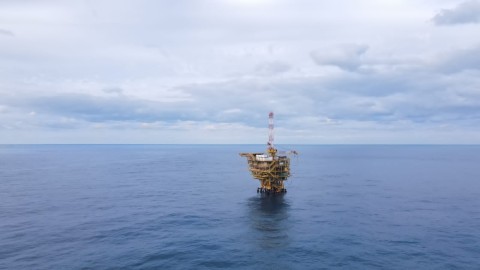
The Energean Power Floating Production, Storage and Offloading (FPSO) vessel is one of the clearest examples of our ability to finance, deliver and operate complex offshore infrastructure. It operates in water depths of approximately 1,800 metres and is 100% owned by Energean. Following the safe completion of the second oil train this summer, its oil-processing capacity increased by 72%, taking liquids-handling capacity to approximately 31 thousand barrels of oil equivalent per day (kboe/d).
Four wells are currently producing through the system, with two additional wells planned to be added in H1 2027. Energean has drilled more than ten deepwater wells, giving us direct experience in technically demanding offshore environments.
In Egypt, Energean also drilled a deepwater exploration well in 2019, further demonstrating our ability to operate in technically demanding environments.
This capability extends across the full project cycle – from exploration and appraisal through drilling, subsea development, infrastructure delivery, production and ongoing reservoir management. It is supported by our existing investment in Egypt and by the proposed investment program for the coming years.
The relevance for Egypt is practical. We can apply this regional experience to the optimization of existing assets, the delivery of new wells and the evaluation of deeper exploration opportunities, while maintaining the safety, execution discipline and capital control required for offshore development.
How does Energean balance maximizing production from existing assets with pursuing new discoveries?
We see these objectives as complementary rather than competing. Optimizing mature assets generates near-term production and cash flow, while exploration creates the resource base needed for longer-term growth.
In Egypt, the newly negotiated concessions consolidation with EGPC will support more integrated reservoir management, development drilling and investment decisions across the complete asset base. This should help us to extend the productive life of existing fields and identify opportunities that may not have been economically or operationally efficient under a more fragmented structure.
At the same time, we are progressing seismic acquisition and reprocessing to improve our understanding of deeper targets and identify future drilling opportunities. Existing infrastructure is a major advantage because it can shorten development timelines, reduce costs and improve the economics of bringing new discoveries into production. This combination of optimization of the existing and pursuing targeted exploration is at the center of our growth strategy.
What demonstrates Energean’s financial capacity to undertake major investments?
Since 2017, Energean has raised $7 billion from international debt and equity markets and invested approximately $4.5 billion in development projects.
This record reflects the confidence placed in the company by international lenders, investors and project partners. More importantly, it demonstrates our ability to finance, execute and operate capital-intensive offshore developments rather than simply announce them.
Financial capacity is not only a question of scale. It is also about discipline: selecting the right projects, managing risk, structuring finance appropriately and deploying capital where there is a clear route to value creation. That is the same approach we intend to apply to any future investment in Egypt.