News / Egypt

Badawi Outlines Egypt’s Strategy for Mining Value Creation at OECD Forum

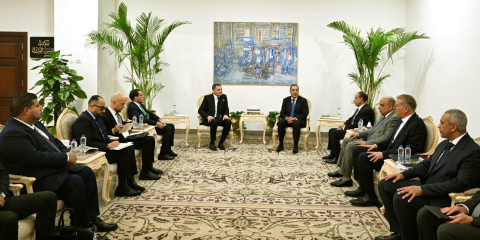
Minister of Petroleum and Mineral Resources, Karim Badawi, represented Egypt and delivered a keynote address at the opening of the Organization for Economic Co-operation and Development (OECD) Critical Minerals Forum in Istanbul, Türkiye.
Badawi took part in the high-level ministerial panel discussion held during the opening session, alongside Bandar Alkhorayef, Saudi Arabia’s Minister of Industry and Mineral Resources; Mike Kopp, Senior Advisor to the US Secretary of Energy; Rohitesh Dhawan, President and CEO of the International Council on Mining and Metals (ICMM); and the Philippine Undersecretary of Industry.

Egypt, Türkiye Talk Mining Cooperation

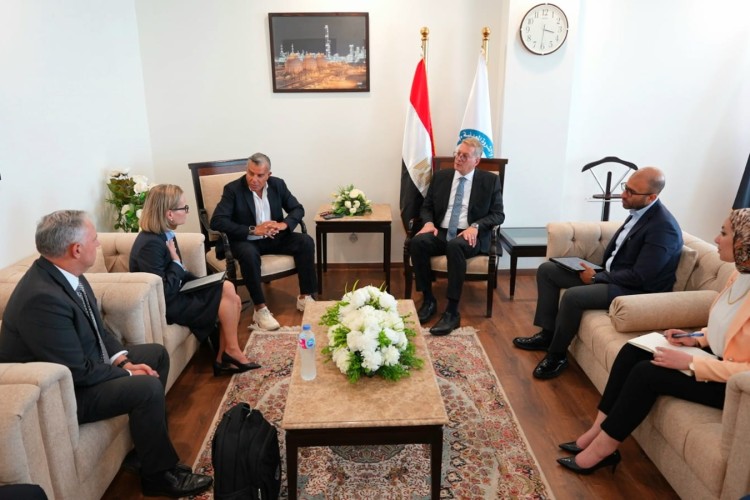
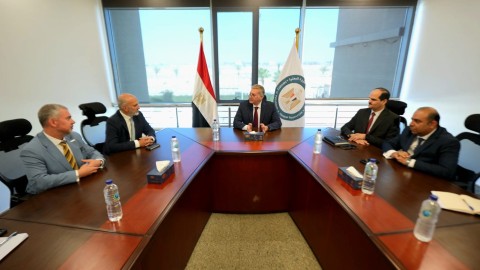
Egypt and Türkiye are set to strengthen mining sector cooperation. Karim Badawi, Minister of Petroleum and Mineral Resources, met with Alparslan Bayraktar, Türkiye’s Minister of Energy and Natural Resources, to discuss mining opportunities in the mining and energy sectors between the two countries, according to a statement by the Ministry of Petroleum and Mineral Resources (MoPMR).
This meeting is building on previous engagements between officials from Egyptian Mineral Resources and Mining Industries Authority (MRMIA) and Türkiye’s OZ Minerals Company, as well as the memorandum of understanding (MoU) signed between the two countries in May 2025.

SPE Egypt Launches Workshop on Energy Innovation

A high-level workshop organized by the Society of Petroleum Engineers (SPE)has kicked off on April 28, focusing on innovative strategies to maximize Egypt’s petroleum and gas reserves. The workshop is part of the SPE Egypt's  Golden Jubilee celebrations and was attended by  Jennifer Miskimins,  SPE President, and Said Abd El Moniem, SPE Egypt Chairperson. 

The first day’s activities included a panel discussion that addressed the evolution of Egypt’s energy landscape and the  potential of achieving sustainable growth in production and reserves. It also highlighted  strengthening of Egypt’s position as a regional energy hub by fostering a stable and attractive investment environment, balancing economic growth with sustainability goals, and the dynamic pillars of the Ministry of Petroleum and Mineral Resources’ strategy that support these objectives.

Fajr Cuts Electricity Costs at Headqurters by 65%

The Egyptian Fajr Natural Gas Company reduced electricity consumption at its headquarters by 67%, recording annual savings of EGP 900,000, an achievement hailed by Karim Badawi, Minister of Petroleum and Mineral Resources, during the company's general assembly meeting.  

Fajr Chairman, Ehab Kamal, reported that 2025 represented a strategic turning point as the company transitioned from planning to execution. The company recorded its first operating revenues from integrated service stations through the "El Banafseg" station in New Cairo, which provides natural gas fueling and electric vehicle (EV) charging services.

Madbouly and Badawi Outline Strategy for Summer Energy Security

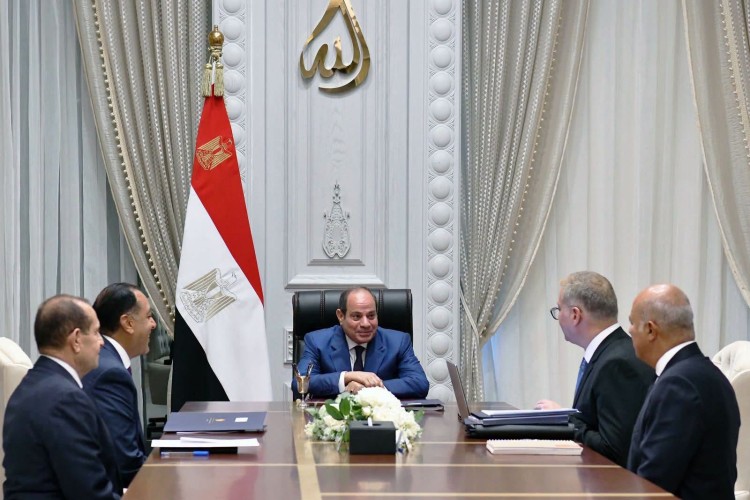
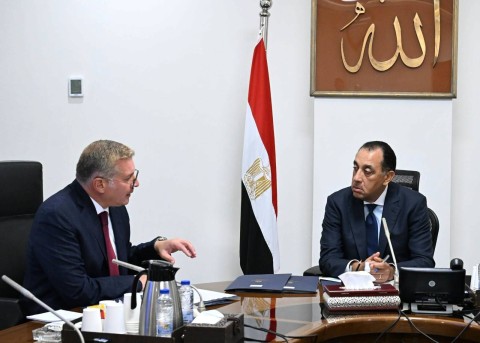
Prime Minister Mostafa Madbouly met with Karim Badawi, Minister of Petroleum and Mineral Resources, to follow up on a number of work files, including efforts to secure the local market’s needs for natural gas and petroleum products.

Madbouly Urges Solar Shift for Homes, Industry

Prime Minister Mostafa Madbouly urged the government to launch an initiative to incentivize factories and households to transition to solar energy, stressing that this is a top government priority.
This came during the Central Crisis Management Committee meeting, chaired by Madbouly, to follow up on the latest developments of the current crisis.

MEES: Iran War Enhances Egypt’s East Med Gas Hub Role

"Egypt’s bid to become the East Mediterranean gas hub and export gateway to the world has been bolstered by the geopolitical upheaval in the Gulf. With liquified natural gas (LNG) exports disrupted and alternative export routes slow to progress, Egypt is well placed to consolidate its position,” stated the Middle East Economic Survey (MEES), a widely read weekly publication focusing on developments in the region’s energy landscape.

Egypt is solidifying its role as the central hub for profiting from Eastern Mediterranean energy resources, according to the publication, which explained that by acting as the primary destination for new gas production from Israel and Cyprus, Cairo intends to leverage these regional inflows to satisfy its rising internal energy needs. Furthermore, this strategy allows Egypt to process excess supply through its coastal LNG facilities, which are currently operating below capacity, for export to the global market.

Egypt to Build $10Bn Green Ammonia project in Ras Banas

Egypt’s Minister of Industry, Khaled Hashem, met with a delegation from Egypt Amun Green Ammonia (EAGA), a consortium formed by Poland’s Hynfra and Egypt’s Coxswains, to discuss a planned green ammonia project. The initiative foresees initial investments of $5 billion, rising to $10 billion upon reaching full capacity.

Local Demand on Methanex Egypt Output Up Tenfold in 15 Years

The overall production of Methanex Egypt, the country's sole producer of Methanol, reached 1.1 million tons (mmt) in 2025, recording 1.5 million safe man-hours without injuries, Mohamed Shindy, Managing Director of Methanex Egypt, told the company’s General Assembly convened to approve the 2025 fiscal year (FY) financial performance.
The company has exported over 12 mmt to European and Asian markets since its inception, securing consistent foreign currency inflows for the Egyptian economy

Badawi Outlines Five-Year Infrastructure Plan to Reduce Imports

Karim Badawi, Minister of Petroleum and Mineral Resources, confirmed that the petroleum sector is executing an ambitious five-year plan to increase production by upgrading and expanding existing infrastructure, according to a statement by the Ministry. The strategy aims to rapidly integrate targeted increases in reserves and production into the national grid, preventing bottlenecks and optimizing additional potential. Primarily, these efforts focus on reducing the national import bill, meeting domestic market requirements, and supporting the expansion of value-added industries.

Page 7 of 1011

Login

Welcome! Login in to your account

Remember me Lost your password?

Lost Password