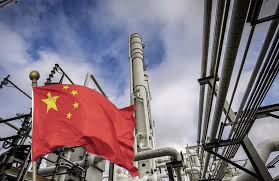
Chinese refiners have delayed two major refining projects slated for 2026 deployment, freezing a combined capacity of 500,000 barrels per day (bbl/d) following Middle Eastern crude supply disruptions at the Strait of Hormuz driven by the conflict in Iran, according to Reuters.
The operational pushbacks are expected to cap near-term crude demand from the world’s largest oil importer and temper global oil prices, as Chinese downstream operators navigate high feedstock costs and decelerating domestic fuel consumption.
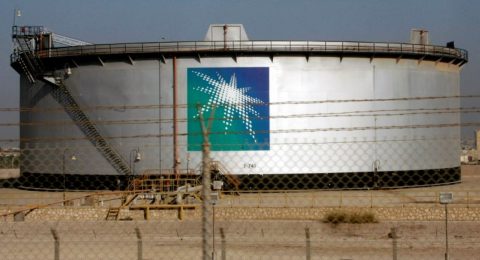
Huajin Aramco Petrochemical Company (HAPCO) postponed the startup of its new 300,000 bbl/d refining and petrochemical complex in Panjin to September or early October, shifting from an initial mid-year target. This adjustment reflects heightened feedstock supply uncertainty caused by regional maritime choke-point disruptions.
HAPCO operates as a joint venture (JV) combining Saudi Aramco, which holds a supply mandate to deliver up to 210,000 bbl/d of crude to the facility, alongside Chinese state-owned defense conglomerate Norinco Group and Panjin Xincheng Industrial Group. Beyond crude distillation, the integrated complex features a 1.65 million metric tons-per-year ethylene cracker and a 2 million metric tons-per-year paraxylene unit.
Separately, PetroChina indefinitely postponed the planned restart of a 200,000 bbl/d crude distillation unit at its Dalian refinery. The state-backed major initially targeted a mid-year restart to capitalize on wide refining margins generated by processing discounted Russian crude barrels. However, the Middle East conflict has altered global oil flows, erasing those discounts through intensified international competition for Russian volumes.
The delays coincide with a sharp compression in Chinese refining margins. Operators are facing an economic squeeze caused by elevated international crude benchmarks alongside domestic retail fuel price caps imposed by the state. Concurrently, underlying fuel demand continues to weaken, driven by accelerating electric vehicle adoption across China. This margin compression reduced Chinese refinery throughput to approximately 13.3 million bbl/d, representing 69% of the country’s estimated 19.2 million bbl/d total capacity.
Despite Chinese operational delays, Asia continues to lead global refining capacity additions, with Indian state firms accelerating alternative processing infrastructure.