In its February 2026 report, the Global Solar Council (GSC) praised Egypt’s strategic efforts to diversify its energy mix and bolster green electricity exports, solidifying the nation’s standing as a regional hub for sustainable energy, noted a statement by the Egyptian Cabinet.
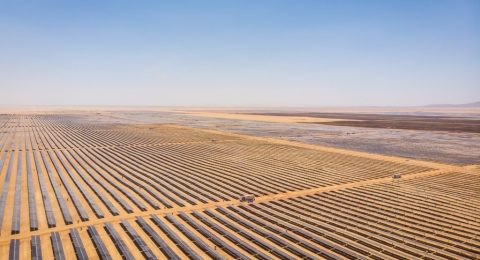
The statement also pointed out that Norway’s Scatec has announced the commencement of commercial operations at its Obelisk solar project in Nagaa Hammadi. The facility marks Egypt’s first hybrid renewable energy plant, integrating solar Photovoltaic (PV) generation with advanced battery storage technology.
The Obelisk project is designed to enhance the flexibility and resilience of the national power grid through a phased deployment strategy. The initial phase features a solar generation capacity of 561 Megawatt (MW) coupled with a 200 Megawatt-hour (MWh) battery energy storage system (BESS), while the second phase targets an additional 564 MW to further diversify energy sources and ensure a reliable, low-carbon power supply.
On the industrial front, the report highlights Egypt’s emergence as a manufacturing center for components of renewable projects. This growth is fueled by significant foreign direct investments (FDI), including the EliTe Solar manufacturing facility and Chinese Sungrow’s battery factory, which are pivotal in localizing green technology.
Established during the COP21 climate summit in Paris, the GSC works alongside governments, the private sector, and international institutions to accelerate the global deployment of solar solutions. The council’s mission is to facilitate a fair and sustainable global transition toward a green energy economy.
Egypt’s 42% by 2030 target represents an ambitious acceleration of the country’s Integrated Sustainable Energy Strategy (ISES). Originally set for 2035, the government brought this goal forward by five years in its 2023 update to the Nationally Determined Contributions (NDCs). To achieve this, Egypt is leveraging its vast solar and wind resources, aiming to add over 10 GW of new capacity through programs like Nexus on Water, Food and Energy (NWFE). This shift is designed to reduce the state’s reliance on natural gas for power generation, freeing up hydrocarbon resources for high-value exports and industrial use while positioning Egypt as a regional green energy corridor.