Egypt’s National Council for Green Hydrogen has approved a one-year extension of its memorandum of understanding (MoU) with Saudi Arabia’s ACWA Power for its planned East Nile project, which will produce 66,000 tons of green hydrogen and 500,000 tons of green ammonia.
In December 2023, ACWA Power, the world’s largest private water desalination company and a green hydrogen pioneer, signed a framework agreement following its 2022 MoU to develop Egypt’s first green hydrogen phase. With an investment exceeding $4 billion, the initial phase aimed to produce 600,000 tons of green ammonia per year, with plans for a second phase expanding capacity up to 2 million tons annually.
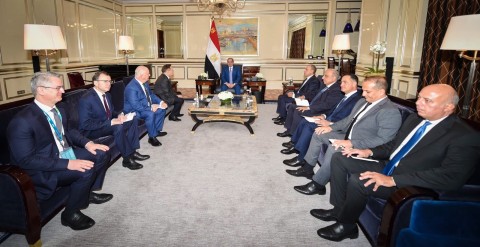
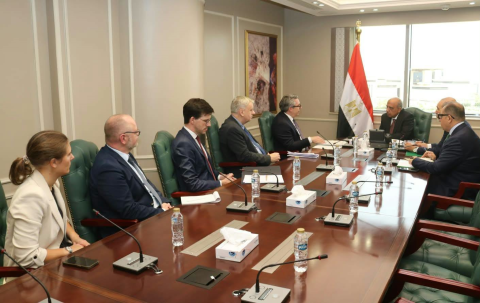
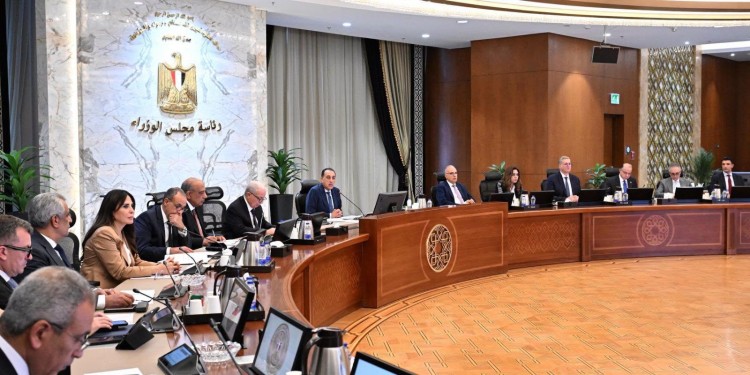
Prime Minister Mostafa Madbouly chaired the council’s meeting, attended by Karim Badawi, Minister of Petroleum and Mineral Resources, Mahmoud Esmat, Minister of Electricity and Renewable Energy, and other ministers and government officials.
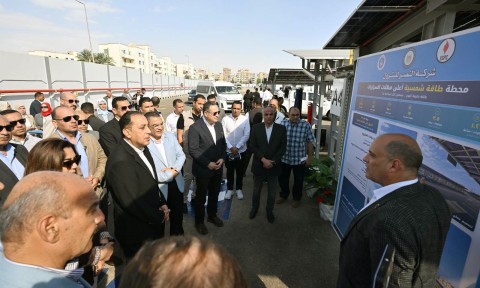
The council also approved allocating a 12-square-kilometer (km²) plot in West Zaafarana to India’s ACURE to develop a 600-megawatt (MW) solar power plant supporting the pilot phase of its green ammonia project.
The solar facility will supply electricity to the project’s initial phase, which targets annual production of 100,000 tons of green ammonia. The wider project is planned to reach a production capacity of one million tons per year through successive phases.
The meeting reviewed the implementation status of agreements signed with international companies and discussed developing an integrated framework to address challenges facing green hydrogen projects, through coordination among the relevant ministries and government authorities.
The decisions form part of Egypt’s efforts to establish itself as a regional hub for low-carbon hydrogen and its derivatives. In February 2024, Egypt approved its National Low-Carbon Hydrogen Strategy, setting out plans to gradually expand domestic hydrogen use, increase production capacity, and develop export markets. The strategy also targets renewable energy accounting for more than 42% of the country’s electricity mix by 2030.
To attract investors, Egypt introduced Law No. 2 of 2024, which introduced incentives for low-carbon hydrogen and derivative production projects, granting developers up to 55%, VAT exemptions on equipment and exports, discounted seaport and maritime services, and various non-tax benefits.
The government has also signed multiple agreements with international developers. In February 2024, it announced seven cooperation agreements covering green hydrogen, green ammonia, and renewable energy projects, with anticipated investments exceeding $40 billion over 10 years.