Egypt is expanding the application of hydraulic fracturing and horizontal drilling technologies, as they are among the key technological pillars of the petroleum sector’s five-year plan, said Karim Badawi, Minister of Petroleum and Mineral Resources, according to a ministry statement on November 4.
Badawi added that the ministry had launched an integrated initiative, in co-operation with investment partners and leading global services and technology companies, to expand the application of these technologies.
The initiative aims to increase the productivity of existing wells, revive wells whose production has declined, and access resources and reservoirs whose exploitation had not been economically viable using conventional methods, opening up new prospects for increasing domestic production, according to the minister.
Hydraulic fracturing technology involves creating precise pathways within rock formations, allowing oil and gas to flow more efficiently from reservoirs into wells and increasing production rates. Combining it with horizontal drilling enables access to larger areas of hydrocarbon-bearing formations and maximizes the utilization of available resources.
Badawi noted that these technologies had delivered successful results within Egypt’s petroleum sector, particularly in the Western Desert.
He stressed that work was under way to provide economic models and investment incentives, in co-operation between the Egyptian General Petroleum Corporation (EGPC) and international companies, to encourage partners to expand their application.
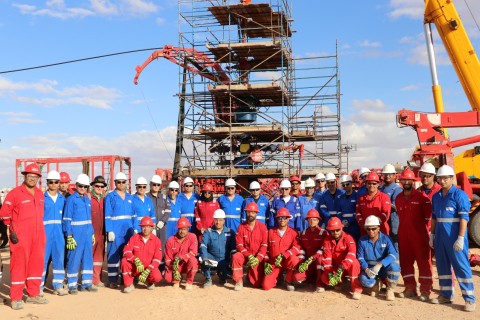
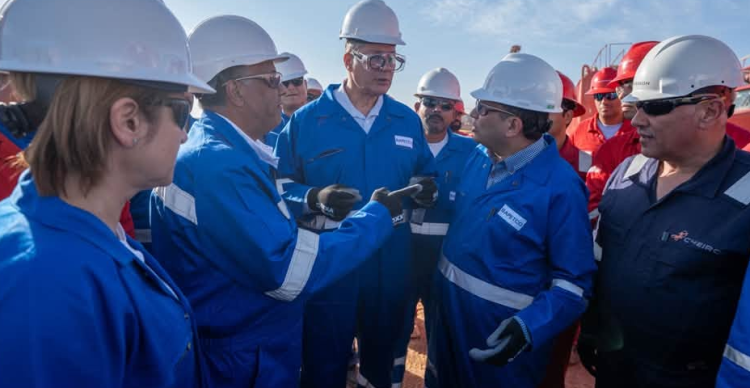
The remarks came during the minister’s inspection of hydraulic fracturing operations at the Obaiyed H-18 well in the Obaiyed field in the Western Desert, operated by Badr Eldin Petroleum Company (BAPETCO).
The operations aim to increase the well’s production to around 12 million cubic feet of gas per day (mcf/d), compared with approximately three mcf/d currently, quadrupling its output through the use of multi-stage hydraulic fracturing technology.