Asian oil refiners are turning to smaller tankers, securing vessels through long-term charters, and buying Middle Eastern crude on a delivered basis to contain feedstock costs as oil shipping rates hover near record highs, Reuters reported.
The adjustments reflect mounting pressure on crude procurement economics as tanker shortages and rising security risks around the Strait of Hormuz drive up freight costs. Shipping US crude to Asia has reached $40 per barrel, according to Vitol’s head of Asia, Kieran Gallagher. In contrast, about 80 very large crude carriers (VLCCs) are tied up transporting oil through the region.
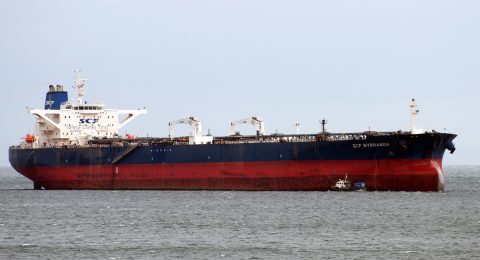
Taiwan’s state-owned refiner CPC bought six Aframax cargoes in one week, compared with its usual monthly purchases of two to three VLCC cargoes, traders told Reuters. Aframax tankers typically carry about 600,000 barrels, compared with approximately two million barrels (mmbbl) for a VLCC.
South Korea’s refiner SK Energy also chartered an Aframax tanker to load US crude in early November for $23 million.
Refiners are also shifting shipping costs to crude suppliers by purchasing cargoes on a delivered basis, under which the seller arranges and pays for transportation to the agreed destination. Abu Dhabi National Oil Company (ADNOC) has sold cargoes for delivery to China and India over the next two months, while Saudi Aramco has also sold delivered cargoes to Asian buyers for November, traders told Reuters.
Despite the higher costs, some refiners are maintaining production to meet contractual commitments. K.Y. Lin, president of Formosa Petrochemical, told Reuters that net refining margins remained above $10 per barrel after accounting for freight and insurance on Middle Eastern crude, although shipping costs had substantially reduced gross margins.
The International Energy Agency (IEA) reported in its October 2026 Oil Market Report that freight costs for VLCCs transporting crude from the Middle East Gulf to Asia reached approximately $36 per barrel in early October, more than five times their pre-war levels. Shipping costs on the US Gulf Coast-to-China route also exceeded $37 per barrel, limiting the ability of Asian refiners to offset higher Middle Eastern freight costs by switching to US crude.