


Features / Technology

Driving The Future of Flight: Egypt’s Path to Electric Aviation

Electric aviation is emerging as one of the most promising pathways to reduce emissions, operating costs, and noise in air transport; particularly for short-haul and regional flights. While full commercial deployment remains in its early stages, research, regulatory frameworks, and pilot projects are accelerating globally.
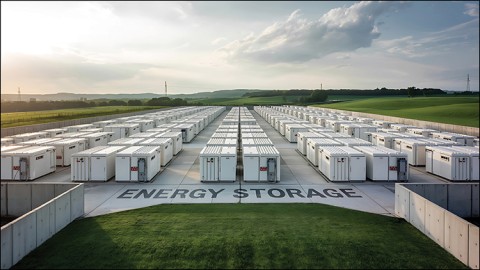

Egypt’s Bess Revolution: Powering a Greener Future

Egypt stands at the forefront of renewable energy expansion in the MENA region, with ambitious targets to increase the share of renewables in Egypt’s energy mix to 42% by 2030 and 60% by 2040. As the country accelerates the integration of renewable energy into its power mix, battery energy storage systems (BESS) emerge as a critical enabling technology. Once viewed as a supporting technology, battery storage is increasingly being treated as essential infrastructure—one that underpins grid stability, enables higher renewable penetration, and strengthens long-term energy security. BESS play a pivotal role in this transition, bridging the gap between intermittent solar and wind resources and the demands of a growing economy.

OBN Sparks Offshore Exploration Shift

As offshore hydrocarbon exploration moves into increasingly complex geological environments, traditional seismic technologies are struggling to deliver the clarity operators need to make confident investment decisions. In response, the global oil and gas industry is turning to more advanced solutions, among them Ocean Bottom Node (OBN) seismic technology, a method that is rapidly reshaping how subsurface data is acquired and interpreted.

Inside Egypt’s Energy Command Hub: MoPMR Builds Sector’s Nerve System

In today’s energy landscape, efficiency is powered by data as much as by fuel. Realizing this, Egypt’s Ministry of Petroleum and Mineral Resources (MoPMR) has taken a decisive step toward a better system with the launch of the Executive Command Center (ECC), a digital platform designed to optimize operations, streamline production, and enhance energy security across the nation’s entire oil and gas value chain.

Earth’s Infinite Heat: Geothermal Energy’s Path to Global Power

Geothermal energy, the heat stored beneath the Earth’s surface, has long been recognized as one of the most abundant clean energy resources. Unlike solar or wind, which depend on weather conditions, geothermal energy is available around the clock and can deliver stable, baseload electricity. It is considered renewable because the Earth continuously produces heat, primarily through natural radioactive decay deep underground.

Burning No More: Egypt Turns Rice Waste into Wood

Each autumn, as rice harvests season wrap up in Egypt, a thick blanket of smoke descends over Cairo and the Nile Delta. Farmers, with few disposal options, would set fire to leftover rice straw. The result: a suffocating haze known as the “black cloud.” First reported in 1997, it grew into a national crisis, and by 2017 was responsible for nearly half of the country’s air pollution.

Turning Kitchen Waste into Fuel: Sustainable Breakthrough in Biodiesel Production

In a world still heavily reliant on diesel, across transportation, agriculture, shipping, and power generation, the need for cleaner, more sustainable alternatives is urgent. Fossil fuels not only accelerate climate change, but they also lock developing economies into expensive, finite energy systems.

Affordable and Sustainable Extraction: Cooking Oil Turns Electronic Waste into Silver

Silver has long been treasured for its beauty, but in today’s world, its true value lies in its versatility. Silver became widely used in various industries, including catalysts, electric vehicles, energy-saving appliances, medical devices as well as components of modern electronics such as computers, cell phones, and solar panels. Thus, its industrial and commercial scale has surged in recent years, evolving far beyond its traditional use in jewelry and silverware.

Cryogenic Carbon Capture(CCC): A Game Changer in Blue Hydrogen Production

Amid a growing global demand for a clean energy source, hydrogen stands as a promising alternative to fossil fuels. That is because when burned, it does not emit greenhouse gases (GHG) or pollutants, making it an efficient source for the transportation sector, industrial projects, and power generation.

AI-Powered Workforce: Bridging Demographic Gaps in The Energy Sector’s Race to Net Zero

Given the current global energy demand, companies are redirecting their focus to fossil fuels that are low-carbon and climate-conscious rather than transitioning to renewable energies. However, innovative technologies and digital transformation are essential to maintain a balance while still striving to reach net zero goals. They are utilized to optimize operations, achieve energy efficiency, and ensure energy security, which ultimately reduces emissions. In order to expand their utilization, certain factors must be met, with a skilled workforce being paramount to drive through this process.

Page 1 of 12

Login

Welcome! Login in to your account

Remember me Lost your password?

Lost Password