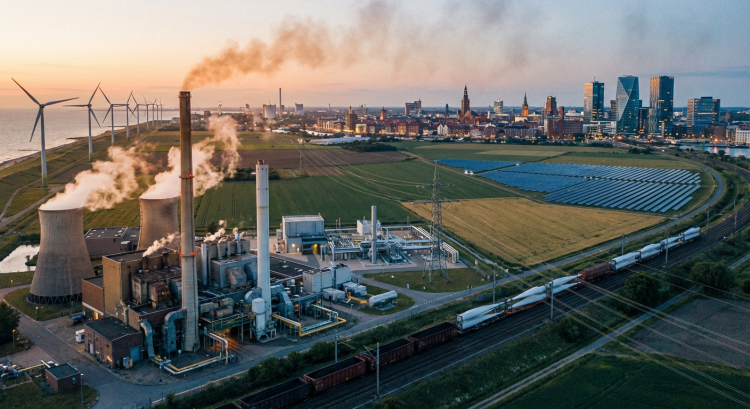
For more than a decade, the global energy conversation, as well as Egypt’s, was framed around a single powerful word: transition. The idea was straightforward; fossil fuels would be replaced by renewables in a linear march toward decarbonization. Oil, gas, and coal would gradually fade as wind, solar, hydrogen, and batteries scaled up. Today, that narrative is evolving. Many developing countries, including Egypt, are scaling renewables while maintaining or expanding gas infrastructure. Energy realism recognizes that climate goals must be balanced with development needs.
Egypt’s Energy Landscape
In 2023-2024, Egypt’s total inputs for electric power generation amounted to 37.891 million tons of oil equivalent (mmtoe). The sector remained predominantly gas-reliant, with natural gas providing the lion’s share at 29.758 mmtoe. Petroleum products contributed a further 5.746 mmtoe, though their utility was largely concentrated in specialized, off-grid applications in remote territories. Complementing these hydrocarbon sources, the renewable sector integrated 1.295 mmtoe from hydroelectric installations and a combined 992,000 tons from solar and wind initiatives, marking a continued effort toward diversifying the national power matrix, according to the Central Agency for Public Mobilization and Statistics’ (CAPMAS) Energy Balance Bulletin Year 2023/2024.
Egypt has revised its renewable energy targets to 42% by 2030 and over 60% by 2040. Supported by the European Commission and Cowater International, the nation has restructured its energy roadmap to prioritize wind, solar, and low-carbon hydrogen. A cornerstone of this plan is the National Low-Carbon Hydrogen Strategy, approved in 2024, which aims to capture up to 8% of the global market. To fuel this growth, Egypt is leveraging the “Build, Own, Operate” (BOO) model to attract private investment, already securing 32 Power Purchase Agreements totaling 1,465 MW.
Energy Realism
Egypt, as well as the rest of the world, is changing its approach from fossil fuel divestment to energy portfolio diversification. It is no longer about how fast to eliminate, but also how to maintain stability while reducing emissions. Accordingly, the energy systems are evolving through technological layering rather than the immediate erasure of existing infrastructure.
Tharwat Hassane, Petrophysical Advisor and Operational General Manager at Sahara Oil and Gas Company, tells Egypt Oil & Gas that while the world is moving toward cleaner energy and net‑zero goals, it still depends heavily on oil and gas. Fossil fuels remain essential because they provide reliable, high‑density energy and keep power grids stable — something renewable sources like wind and solar cannot fully achieve yet.
Moreover, Alaa Mostafa Abd elrahime, Energy efficiency and sustainability expert, tells Egypt Oil & Gas: “Egypt’s economy, industrial competitiveness, and export revenues remain closely linked to natural gas and petroleum activities. A rapid or poorly sequenced phase-out of fossil fuels could create several interconnected risks, including grid instability, rising electricity costs, Industrial and petrochemical slowdown, foreign currency pressure, and employment impacts across energy-intensive sectors.”
Abd elrahime explains that “from a crisis management perspective, sudden transitions can generate structural economic shocks. Energy realism mitigates these risks by advocating for a phased and balanced transition strategy. Natural gas, for example, can function as a lower-carbon bridge fuel while renewable infrastructure, storage capacity, and grid flexibility are strengthened.”
Additionally, Hassane points out that “diversification in the energy mix will significantly reduce price volatility and geopolitical risks. This translates to a range of available prices. For example, Egypt has green hydrogen, solar panels, and all these things; We can choose one source and leave another.”
Therefore, “a resilient transition is not defined by speed alone, but by stability, affordability, and security of supply. Energy realism ensures decarbonization progresses without compromising national energy security or economic sustainability,” according to Abd elrahime.
The Role of Innovation and AI
The global shift toward energy diversification is driven not only by climate goals but also by geopolitical risks, rising demand, and the need to stabilise energy systems. These pressures make innovation and digital transformation essential. Industry 4.0 — the Fourth Industrial Revolution, which uses advanced technologies such as AI, IoT, and automation — is reshaping how energy systems are managed, ensuring resilience amid volatility.
Egypt has embraced this transformation, applying digital tools not only to renewable energy projects but also to its hydrocarbon sector. Recognizing that oil and gas remain a critical layer of the transition, the Ministry of Petroleum and Mineral Resources has launched a five‑year exploration campaign with global partners, placing AI‑driven reservoir analytics at its core. This approach maximizes efficiency, reduces costs, and unlocks difficult‑to‑access resources, ensuring domestic production remains robust even as renewables expand.
Moreover, leveraging AI and innovation allows the oil and gas sector to ensure cost-efficiency and safety. Mohamed Ashraf Awad, Drilling & Workover Rigs HHSEQ Supervisor at AlMansoori Specialized Engineering LLC, tells Egypt Oil & Gas: “Innovation has helped reduce costs and improve safety mainly. Real-time monitoring systems for drilling and well control parameters allow early detection of abnormal trends and prevent non-productive time and well control incidents. Digital maintenance and inspection systems support predictive maintenance for critical equipment, reducing unplanned shutdowns and repair costs. Additionally, improved gas detection and H₂S monitoring technologies, as well as digital emergency response and reporting systems, significantly enhance personnel safety and response time during critical situations.”
In terms of renewable energy Abd elrahime explains that “digitalization and AI are critical for integrating large-scale renewables like Benban and Gulf of Suez wind farms, which introduce grid intermittency. AI enhances resilience through improved load forecasting, renewable generation prediction, and real-time dispatch optimization enabling accurate demand forecasting, dynamic supply-demand balancing, and smarter storage management.”
“AI-driven predictive maintenance also boosts transmission and distribution reliability, reducing outages. Ultimately, AI transforms variable renewable sources into predictable, manageable assets, ensuring renewable expansion strengthens rather than destabilizes the grid,” Abd elrahime points out.
Future Outlook
According to Hassane, Egypt can achieve energy balance through two main strategies. First, by expanding exploration campaigns supported by new tenders in areas such as the Red Sea, the Mediterranean, the Western and Eastern Deserts, and the Gulf of Suez. This would open up more exploration zones, leading to fresh discoveries and higher production. Second, by boosting output from aging wells. Many of Egypt’s wells have been operating for decades and now face challenges like declining pressure, depletion, and rising water cuts, all of which reduce production over time. Addressing these issues is essential to sustain and increase output.
Hassane noted that Egypt is currently producing about 4.1 billion cubic feet of natural gas per day, with output expected to rise to 6 bcf/d within the next five years. For him, this means that the country is on track to regain self‑sufficiency, supported by discoveries coming into production and the localization of emerging industries such as green hydrogen and advanced renewable energy.
Additionally, “significant upgrades are underway in wind, solar, and nuclear power plants by 2028, leading to a diversified energy mix and enabling Egypt to achieve self-sufficiency and reclaim its position as a regional energy hub,” according to Hassane, who expects that in the future a huge amount of Egypt’s natural gas production can be used in petrochemicals, fertilizers and ammonia.
Egypt’s energy future is being shaped not by a race to abandon hydrocarbons, but by a pragmatic strategy that aligns climate ambition with economic stability and national development priorities. The country’s current energy balance, dominated by natural gas yet increasingly infused with renewables- reflects the realities of a system in transition, not replacement. Egypt’s transition is not a linear shift from old to new, but a calibrated evolution that balances economic imperatives with environmental responsibility. By embracing energy realism, leveraging innovation, and pursuing diversification, Egypt is crafting a transition model that is resilient, future‑ready, and uniquely suited to its national context.