Libya to Boost Oil Production
Libya’s crude oil production has increased by a third after resuming production from Sharara oilfield.
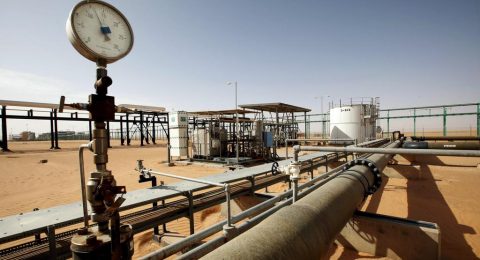
Libya’s crude oil production has increased by a third after resuming production from Sharara oilfield.
Oman’s natural gas production level is expected to exceed the country's oil level by 2030 because of the sultanate’s gas field developments.
Egypt has renewed the agreement with Saudi Aramco to provide Egyptian refineries with crude oil for six months starting from January 2019.

Stable production is a positive sign in a time in which oil fields annual production declined by around 20% to 25%.
Iraqi crude oil cargoes contribute to the local market's fuel demands, preventing bottlenecks, Tarek El Molla, Minister of Petroleum, noted.
The Egyptian oil and gas sector managed to boost production rates during the second half of 2018 to reach 665,000 b/d of crude oil and condensates, which covers around 75% of the local market's demands.
The Egyptian oil and gas sector added 240,000 barrels per day (b/d) of crude oil to production in 2018, according to a source at the Ministry of Petroleum.
Crude oil and condensates production in Oman have exceeded more than 30 million barrels with a daily average of 1.14 million barrels in November 2018.

Egypt's natural gas production will increase to 8 billion cubic feet per day (bcf/d) by 2021, up 29% from 6.2 bcf/d currently.
Kuwait National Petroleum Company (KNPC) plans to spend around $25 billion to increase the refining capacity to 2 million barrels per day (b/d) by 2035.