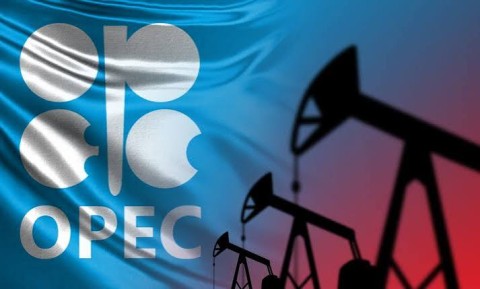
The Organization of the Petroleum Exporting Countries and allies (OPEC+) will maintain cooperation despite the United Arab Emirates’ (UAE) withdrawal, Russia’s Deputy Prime Minister Alexander Novak announced, according to Reuters.
Novak emphasized that he does not foresee an oil price war following the UAE’s departure, pointing instead to the prevailing global oil supply deficit.
The UAE announced its withdrawal from OPEC, delivering a significant setback to the producers’ alliance at a time when an unprecedented energy crisis, sparked by the Iran war, has laid bare divisions among Gulf states. The UAE ranked as the fourth‑largest producer within OPEC+, the alliance of OPEC members and partners, while Russia holds the second position after Saudi Arabia, Reuters noted.
“In the current situation, it is hard to talk about a price war when there is a shortage in the market. What we are seeing instead is the deepest crisis in the industry,” Novak was quoted by Interfax news agency.
“Large volumes of oil are not reaching the market today, while demand significantly exceeds supply. This has created an imbalance due to serious logistical disruptions, including the situation in the Middle East,” Novak said, according to Interfax.
The 2026 US–Iran conflict has unleashed what the International Energy Agency (IEA) describes as the most severe energy shock in decades, driving oil prices above $120 a barrel amid reports that the US is preparing for a prolonged blockade of Iran. On April 28, Brent crude, the global benchmark, surged past $120 (£89), briefly touching $122, its highest level since 2022.