OPEC+, the world’s largest oil-producing alliance, is set to boost crude output by another 411,000 barrels per day (bbl/d) in August as part of its effort to reclaim market share, according to Reuters.
If agreed upon, this would raise OPEC+’s cumulative 2025 production increase to 1.78 million bbl/d, representing more than 1.5% of global demand. However, the group has yet to fully deliver on previously agreed hikes due to delays by some members: while a few are offsetting prior overproduction, others need a longer period to bring output back online.
The shift began in April when eight members started reversing their latest 2.2 million bbl/d cut, accelerating production boosts through May, June, and July—even though this added supply has exerted downward pressure on prices.
The move followed internal tensions, especially after Kazakhstan significantly exceeded its output targets, frustrating members who maintained compliance.
Russian President Vladimir Putin recently stated that global oil demand is expected to climb during the summer, indicating support for further increases.
The OPEC+ core eight—Saudi Arabia, Russia, UAE, Iraq, Kuwait, Kazakhstan, Oman, and Algeria—are scheduled to meet on July 6 and may debate an even larger production hike for August.
OPEC+ currently supplies around 50% of the world’s oil. By July, the eight core members had increased or announced hikes totalling 1.37 million bbl/d—around 62% of the cuts being reversed. The UAE alone is producing an additional 300,000 bbl/d, pushing the overall increase to 2.5 million bbl/d.
Meanwhile, according to OPEC’s latest monthly oil market report, the supply by countries that neither belong to OPEC nor OPEC+ is expected to expand by about 0.8 million bbl/d in 2025 to average 54 million bbl/d, driven by growth in the US, Brazil, Canada and Argentina.
Thereby, planned output hikes by OPEC+ alongside non-OPEC countries could lead to oversupplying the market.
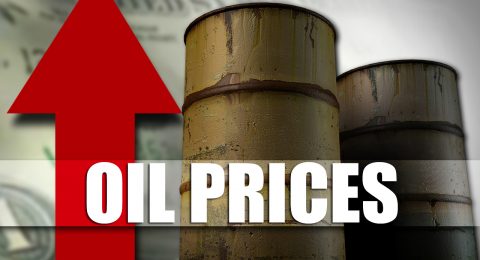
Oil hit a five-month high above $81 on June 23 after the US attacked Iran’s nuclear facilities, only to fall back to $68 on June 27as the Israel-Iran ceasefire reduced tensions and supply risks. In April, it fell to a four-year low below $60 after OPEC+ said it was tripling its output hike in May and as Trump’s tariffs raised concerns about global economic weakness.