Misr Fertilizers Production Company (MOPCO), Egypt’s largest nitrogen fertilizer producer, recorded a 56% year-on-year (YoY) increase in net profit after tax to EGP 12.14 billion in the first nine months of 2026, according to the company’s financial results report.
Sales rose 47% YoY to EGP 27.39 billion during January-September 2026, while gross profit increased 50% to EGP 14.20 billion. Operating profit also grew 41% to EGP 12.48 billion.
“MOPCO achieved outstanding results during the third quarter (Q3) of 2026, reflecting the success of the company’s strategy in enhancing operational efficiency and achieving sustainable growth through expansion into additional markets worldwide,” said Osama Abd ElRahman Morsi, CEO & Managing Director of MOPCO
Exports accounted for 80% of MOPCO’s total sales revenue, with urea representing 93% of export revenue and ammonia accounting for the remaining 7%.
The company has diversified its sales channels to overcome regional logistical challenges, with a notable increase in ammonia exports due to their higher returns.
Meanwhile, MOPCO’s domestic market accounted for 20% of total sales by the end of the third quarter (Q3) of fiscal year 2026, with urea representing 64% and Ammonia 36%.
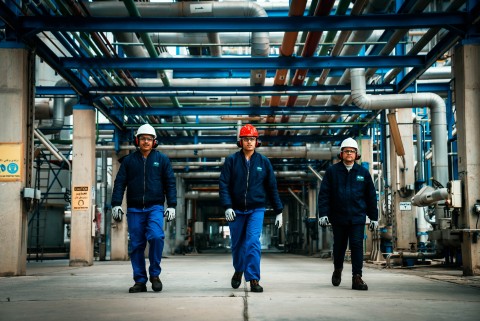
“The company is moving steadily in accordance with well-studied plans and targeted operational and development programs focused on improving production efficiency, strengthening safety standards, and maximizing operational and financial returns,” said Morsi.
The company is advancing work on a green ammonia project in Damietta through Damietta Green Ammonia Company (DGA). The project is designed to produce 150,000 metric tons of green ammonia a year (mt/y) using MOPCO’s existing ammonia facilities. The company plans to export the output after meeting domestic demand.
Apart from this growth, MOPCO revealed on November 8 a reduction in its natural gas supply to 33% to the Egyptian Stock Exchange (EGX). It stressed that its operations and production processes are being managed in line with the available gas volumes to ensure business continuity.
Established in 1998, the company operates an integrated fertilizer complex in Damietta Public Free Zone, comprising three production plants with an annual urea production capacity of about 2 million tons (mmt).