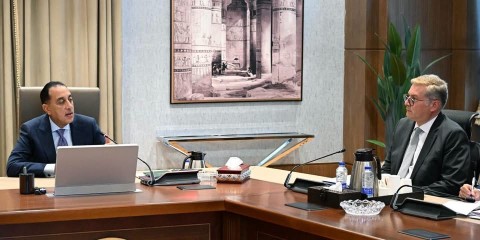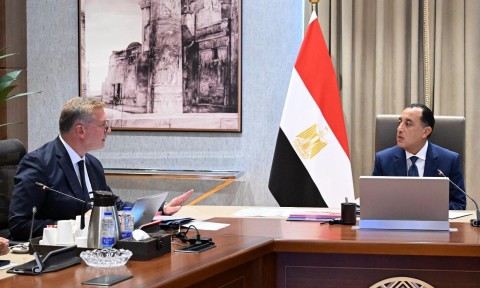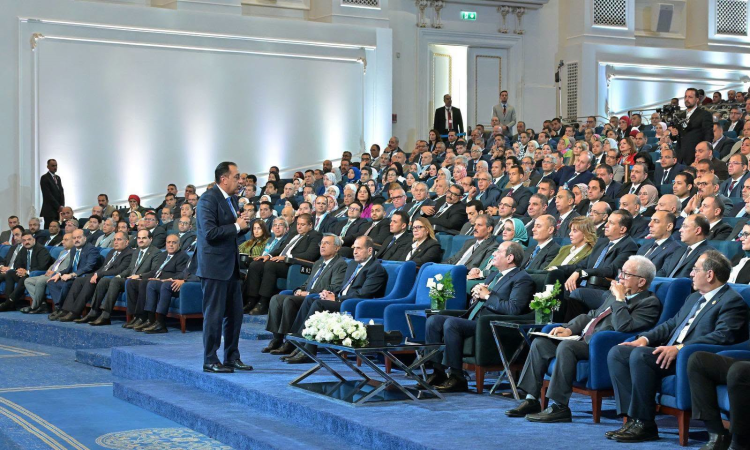
Prime Minister Mostafa Madbouly said during Egypt 2026 Forum that rising oil prices, to $110 per barrel, leave the government with three options: passing the higher costs on to citizens, absorbing them through the state budget, or to maintain the budget’s existing allocations and purchase petroleum products at higher prices within available resources, according to a Cabinet statement.
Madbouly said the exceptional global circumstances require Egypt to address economic developments with precision and responsibility. He noted that the state budget was based on an oil price of $75 per barrel, while prices have now risen to around $110 per barrel. The increase affects not only transport fuels but also natural gas used in power generation, adding to the government’s financial burden.
The remarks came after the Fuel Automatic Pricing Committee’s (FAPC) decision on October 15 to keep domestic petroleum product prices unchanged for the third quarter (Q3) of 2026, despite rising fuel prices in other countries across the Middle East and Europe.
Egypt last raised domestic fuel prices in March 2026, with increases ranging from 14% to 30% across petroleum products. The hikes exceeded the committee’s usual quarterly adjustment cap of ±10% amid a surge in Brent crude prices above $115 per barrel and shipping disruptions through the Strait of Hormuz.
For the second option, Madbouly explained that for Egypt to absorb the entire increase, would require either the availability of sufficient financial resources or resorting to borrowing to cover these burdens. He noted, however, that borrowing is not a cost-free solution; it entails additional obligations in the form of accrued interest, which increases the total public debt and the country’s future financial liabilities.
Egypt has been gradually phasing out energy subsidies as part of its economic reform program linked to the $8 billion loan agreement with the International Monetary Fund (IMF).
The government allocated EGP120 billion ($2.26 billion) for energy subsidies in the upcoming fiscal year (FY) 2026/27, down from around EGP150 billion in FY2025/26, representing a reduction of around 20%, Finance Minister Ahmed Kouchouk said at a press conference on April 11. The budget was prepared before the escalation of the US-Israeli war on Iran.
Electricity subsidies are set to rise by 39% to EGP104.2 billion in FY2026/27 to support the sector and improve transmission and distribution infrastructure.
As for the third option, the Prime Minister warned that this could cover only 50% to 60% of domestic needs, potentially causing fuel shortages at filling stations. It could also force the government to introduce electricity load-shedding for six to eight hours daily.
To choose between these options, Madbouly noted that it requires balancing the protection of citizens from the impact of global price hikes with the preservation of national economic stability, while also avoiding the imposition of additional financial burdens on future generations, all while taking into account the essential priorities and needs of both the state and its citizens.
Egypt’s domestic consumption of petroleum products rose by 34.2% between fiscal year (FY) 2019/2020 and FY2024/25, reaching 36.9 million metric tons (mmt) in FY2024/25, driven largely by transport demand and higher fuel oil and gas oil consumption at power stations.
Because domestic refinery output fell short of meeting growing consumption needs, Egypt had to bridge the resulting gap by relying on imported petroleum products to ensure market stability.
Consequently, total inbound shipments saw a steep ramp-up across the six-year period, more than doubling from 7.22 mmt in FY 2019/20 to reach 16.28 mmt in FY 2024/25, with the annual import bill hitting $10.49 billion. Imports included gas oil, fuel oil, gasoline 95, and liquefied petroleum gas (LPG).