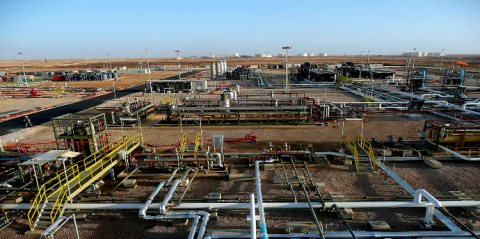
Italian energy company Eni has signed a 25-year production contract with Venezuela’s state-owned oil company PDVSA to develop the giant Junín-5 heavy oil field in the Orinoco Belt, taking exclusive operatorship of the project.
Under the new contract, Eni will assume full responsibility for the field’s technical, financial, and commercial management. The contract can be extended beyond its initial 25-year term, according to a press release by Eni.
Junín-5 contains around 35 billion barrels of certified oil in place and currently produces approximately 12,000 barrels per day (bbl/d). Eni previously said the field could be rapidly developed to reach a production plateau of around 200,000 bbl/d.
The agreement was signed on September 2 in Caracas in the presence of Delcy Rodríguez, Venezuelan Acting President; Chris Wright, US Energy Secretary; Paula Henao, Venezuelan Minister of Hydrocarbons; Héctor Obregón, PDVSA CEO; and Claudio Descalzi, Eni CEO.
The contract replaces the previous operating structure of the Petrojunín joint venture, in which Eni held a 40% stake and PDVSA 60%. The transition follows Venezuela’s January 2026 approval of amendments to its Organic Hydrocarbons Law, which established a new framework for foreign participation in the oil sector.
“This agreement represents a new pillar for the revival of the country’s oil and gas sector, at a historic time when energy security, based on abundant resources and diversified supply routes, is vital to global stability. Venezuela can now embark on a path of energy development and economic growth that can bring significant benefits to the local population and to global energy availability. The operatorship of an important area such as Junín 5 is recognition of our ability to deliver complex projects quickly and efficiently, and it reinforces our long-standing presence in the country, which we have never abandoned, continuing to provide energy to the local population even during the most difficult times,” Descalzi commented.
In March 2026, the US issued a general license broadly authorizing companies to conduct business with PDVSA, although sanctions remained in place in several areas. Reuters reported that the measure was intended to encourage new investment and increase Venezuela’s crude production capacity. At the time, Venezuela was producing about 1.05 million bbl/d, up from 878,000 bbl/d in early January.