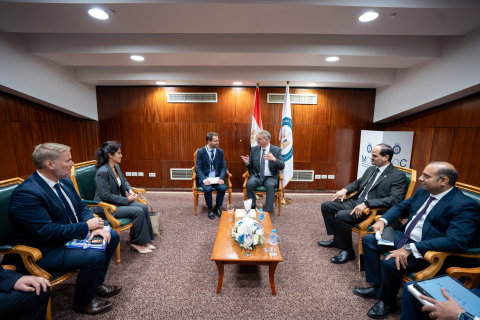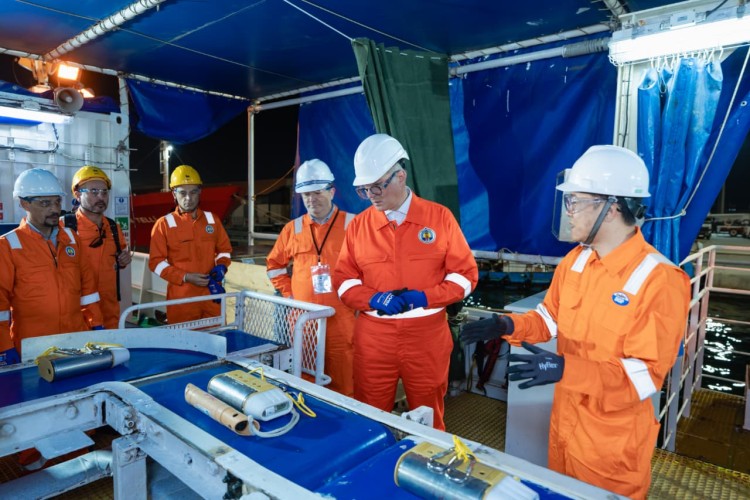
Egypt will launch an offshore seismic survey using Ocean Bottom Node (OBN) technology in the Eastern Mediterranean on October 30, Karim Badawi, Minister of Petroleum and Mineral Resources, said during an inspection of the Commander survey vessel at Port Said Port. The project will initially cover 300 square kilometers across the Denise area off Port Said and Ras El Bar, as Egypt expands the use of advanced exploration technologies to identify new natural gas prospects.
The project is being implemented by the Egyptian Natural Gas Holding Company (EGAS) in cooperation with a consortium comprising SLB and technology and earth data company Viridien. The initial phase is scheduled for completion by the end of 2026, with further survey activities planned for 2027.
During the visit, Badawi said OBN technology had helped increase exploratory drilling success rates in the Gulf of Suez from 26% to 80%, highlighting its potential to improve exploration targeting, reduce drilling risks, and attract investment.
The Eastern Mediterranean project aims to generate high-resolution geological data to help identify promising natural gas structures beneath the seabed and support more informed decisions on exploration and drilling.
The project would also build on Egypt’s experience in the Gulf of Suez and integrate seismic findings from different regions, including the Nile Delta, to improve the assessment of geological structures and prioritize exploration targets. He stressed the need to adhere to the project schedule and accelerate data processing and interpretation so that the results can inform technical and investment decisions, Badawi noted.
Henning Berg, CEO and board member of Viridien, said the company had conducted approximately 80% of global OBN survey work, bringing experience from similar projects in the UAE and Saudi Arabia.
On October 18, the Ministry outlined a first phase covering approximately 18,000 square kilometers (km²), as part of a wider program targeting 95,000 km² of Egyptian waters. The 300-km² area in the latest announcement refers to the initial survey work in Denise and Ras El Bar, rather than the entire first phase.
In April 2026, the ministry reported that a new exploratory well in the South Wasl area of the Gulf of Suez delivered production of approximately 2,500 barrels per day of oil and 3 million cubic feet per day of gas. The ministry linked the result to improved geological imaging using OBN-based 3D seismic surveys.