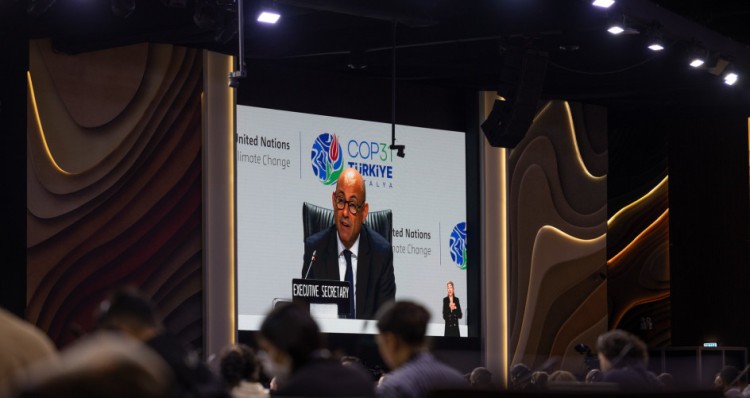
The COP31 climate conference in Antalya, Turkey, ended without a political agreement as Saudi Arabia led opposition to language calling for a transition away from fossil fuels, Reuters reported, citing negotiators from Europe, Asia, Africa, Latin America, and small island states.
A coalition backed by around 130 countries submitted a proposal calling for explicit language on transitioning away from fossil fuels and the removal of references to carbon capture, utilization, and storage (CCUS) technologies.
The European Union (EU) and other countries vulnerable to climate change refused to accept a proposed agreement that omitted references to fossil fuels. Meanwhile, Saudi Arabia maintained its opposition to such language, advocating instead for carbon capture technologies to reduce emissions associated with fossil fuel consumption, according to Reuters.
Saudi Arabia and fellow members of the Organization of the Petroleum Exporting Countries (OPEC) have long opposed climate language targeting fossil fuels, saying they need to be part of the global energy mix for the foreseeable future.
The final revised draft continued to exclude references to fossil fuels while maintaining strong language supporting carbon capture technologies, drawing criticism from several delegations.
COP31 President Murat Kurum confirmed during Sunday’s closing plenary that no consensus had been reached and that no further draft would be presented.
The outcome marks a setback for efforts to build on previous climate agreements, particularly those reached at COP26 in Glasgow in 2021 and COP28 in Dubai in 2023, which explicitly addressed fossil fuels.
The disagreement reflects the different economic and energy priorities of the negotiating parties. For the EU, reducing dependence on fossil fuels is central to its climate policy, energy transition strategy, and efforts to meet its emissions-reduction targets. Saudi Arabia, by contrast, relies heavily on oil revenues and maintains that fossil fuels will remain essential to meeting global energy demand.