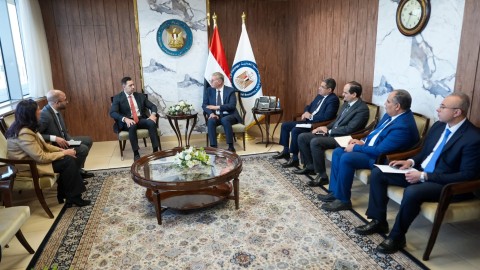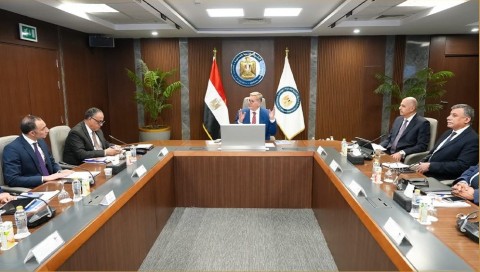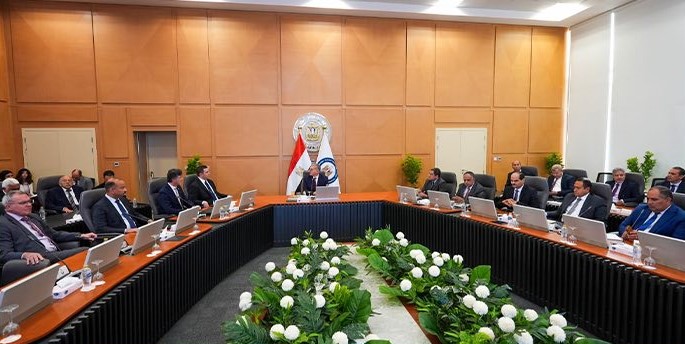
Karim Badawi, Minister of Petroleum and Mineral Resources, met with leaders of international oil companies (IOCs) operating in Egypt to discuss a five-year roadmap to intensify exploration and production (E&P) activities. The meeting focused on accelerating operations through 2030 and introducing new incentive packages to attract further investment.
Badawi emphasized that the Ministry is prioritizing stimulus measures designed to increase crude oil and natural gas output. These measures include promoting the use of advanced technologies, such as horizontal drilling and the exploitation of unconventional resources, to unlock new energy reserves.
Furthermore, he pointed out that there are promising investment opportunities in untapped areas, specifically in the Western Mediterranean and certain blocks within the Western Desert, noting that Egypt’s energy sector operates on a foundation of transparency and consensus with its international partners.
To enhance geological data accuracy, the Minister underlined the importance of integrating modern techniques, including seismic surveys and Artificial Intelligence (AI) applications. These tools are expected to streamline the identification of new petroleum potential and bolster national reserves.
Addressing recent operational successes, Badawi credited the continuous cooperation between the Ministry and its partners for overcoming the electricity power-cut challenges faced last summer. Despite record-breaking consumption levels, the partnership ensured a stable energy supply, a result he stressed must be sustained through ongoing collaboration.
Badawi announced in December that Egypt has succeeded in securing $16.7 billion worth of investment commitments from foreign partners over the next five years, with Italy’s energy giant Eni to invest $8 bn, the UK-based bp will inject $5 bn, and the remaining $3.7 billion will be provided by ARCIUS Energy (a joint venture between bp and ADNOC’s subsidiary XRG).