As 2025 comes to a close, Egypt’s mining sector stands out as one of the clearest examples of how long-standing reform efforts have begun translating into tangible results. In a year shaped by global commodity volatility, tightening exploration budgets, and heightened competition among emerging mining jurisdictions, Egypt pursued a pragmatic agenda centered on regulatory restructuring, data transparency, and investor confidence. While the sector’s transformation remains ongoing, 2025 marked a decisive step toward closing the gap between potential and performance.
Notably, mining occupied a central position within the Ministry of Petroleum and Mineral Resources’ (MoPMR) reform priorities throughout the year. Speaking at industry platforms such as the Egypt Mining Forum 2025, Minister Karim Badawy emphasized that the objective was no longer to promote geological promise alone, but to establish a competitive mining jurisdiction capable of sustaining exploration, development, and production. This focus on execution rather than promotion shaped the pace and sequencing of reforms during the year.
EMRA becomes Financially independent
one of the most consequential milestones was the transformation of the Egyptian Mineral Resources Authority into an economic authority under the name of the Mineral Resources and Mining Industries Authority. This step granted the authority greater financial and administrative flexibility, enabling it to operate on a more commercial footing. For investors, the move addressed long-standing concerns related to licensing delays, fragmented oversight, and limited institutional autonomy, all of which historically constrained mining investment and project development.
2025 also marked a turning point in Egypt’s approach to geological data. For the first time in more than 40 years, the government advanced plans to implement a nationwide airborne geophysical survey covering the entirety of Egypt. Scheduled to begin in the first half of the following year, the survey aims to reduce exploration risk by improving data quality, identifying mineral potential, and mapping the distribution of strategic and rare minerals. This initiative represents a foundational shift toward data-driven investment decision-making and aligns Egypt with global best practice mining jurisdictions.
Gold and Beyond
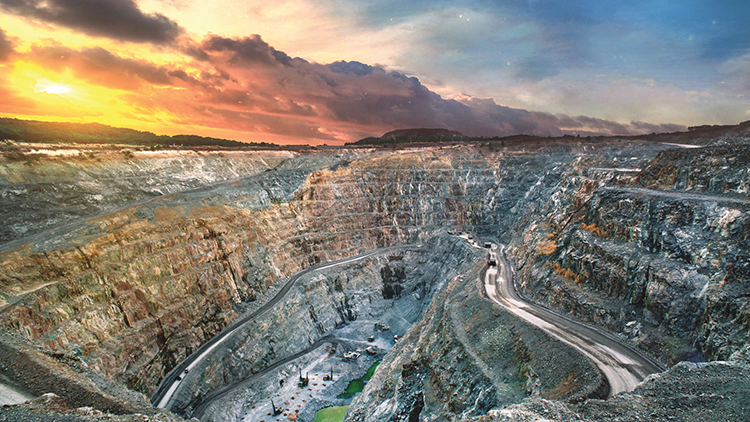
At the production level, Sukari Gold Mine continued to anchor Egypt’s mining output throughout 2025. Its operational stability reinforced Egypt’s status as a producing gold jurisdiction rather than a purely exploratory market. The mine’s sustained performance remained a key reference point for international investors assessing Egypt’s capacity to support long-term mining operations. Beyond Sukari, exploration activity expanded across the Eastern Desert, particularly in gold and base metals, supported by clearer licensing terms and an increasingly competitive fiscal framework.
Equally important, 2025 marked a strategic elevation of industrial minerals within Egypt’s mining agenda. Ministerial statements throughout the year emphasized that resources such as silica sand, kaolin, phosphate rock, and mineral sands should be treated as strategically important mining assets rather than low-value extractive outputs. This reframing reflected a broader policy objective of diversifying the mining portfolio and strengthening Egypt’s position in industrial mineral supply chains.
In this context, silica sand and kaolin projects gained momentum as part of efforts to link mining activity with domestic industrial demand and export opportunities. These minerals, abundant in several Egyptian regions, were increasingly positioned as enablers of value retention and industrial competitiveness rather than raw export commodities. The focus on industrial minerals also reduced reliance on a single commodity, contributing to a more balanced mining sector.
Meanwhile, black sands and mineral sands projects continued to progress steadily during the year. State-backed entities, working alongside private sector partners, expanded beneficiation and processing capacity targeting titanium-bearing minerals, zircon, and associated heavy minerals. While these projects advanced without significant public attention, their development reflected a deliberate policy shift toward domestic value addition and long-term industrial integration within the mining sector.
In addition, phosphate resource development regained strategic relevance in 2025. After years of delay, progress was made in removing obstacles facing the establishment of Egypt’s first integrated industrial complex aimed at increasing value from phosphate resources in the New Valley. The year saw clearer execution frameworks and strengthened partnerships with the domestic private sector, positioning the project more firmly on a realistic implementation path and reinforcing the role of phosphates within Egypt’s mining strategy.
Resetting Mining Regulations
On the regulatory front, one of the most impactful achievements of 2025 was the adoption of a royalty and taxation system aligned with internationally applied mining investment models. This framework replaced legacy structures that were widely viewed as uncompetitive and unpredictable. By aligning fiscal terms with those used in established mining jurisdictions, Egypt improved its attractiveness for gold and mineral exploration, contributing to the entry of major international mining companies such as AngloGold Ashanti and Barrick Gold, alongside continued investment at Sukari.
At the same time, the ministry introduced a targeted incentive package aimed at junior and mid-tier mining companies, which play a critical role in global exploration activity. These measures included the implementation of a single-window licensing mechanism, customs and tax exemptions for exploration equipment, larger and more economically viable concession areas, enhanced security for new exploration zones, and the removal of mandatory area relinquishment provided work programs are fulfilled.
Collectively, these reforms addressed many of the operational barriers that historically deterred smaller and mid-sized investors. Market participants following Egypt’s mining reforms observed that, “[Egypt] has begun closing the gap between regulatory intent and execution on the ground, which is what long-term investors ultimately look for.”
Courting Global investors
International engagement also emerged as a defining feature of Egypt’s mining strategy in 2025. In the second half of the year, scarcely a fortnight went by without the minister traveling to a new destination to promote investment opportunities in the gas, oil, and mining sectors.. Minister Badawy’s visit to Australia, particularly Western Australia’s globally recognized mining hub, underscored Egypt’s intent to integrate into mature mining ecosystems rather than operate in isolation. Australian companies were introduced to Egypt’s updated regulatory framework, incentive packages, and exploration opportunities, prompting growing interest from Australian exploration and mining services firms considering entry into the Egyptian market.
Parallel to policy and investment reforms, 2025 saw increased emphasis on human capital development within the mining sector. The Mineral Resources and Mining Industries Authority advanced training and capacity-building initiatives in cooperation with internationally recognized universities specializing in mining sciences, including Murdoch University and Curtin University. These programs aimed to strengthen technical expertise, improve regulatory oversight, and support the long-term sustainability of Egypt’s mining industry.
Taken together, 2025 represented a year of recalibration rather than reinvention for Egypt’s mining sector. Progress was defined not by a single breakthrough, but by a series of interconnected steps addressing governance, data availability, fiscal competitiveness, and investor engagement. Regulatory reform began delivering practical outcomes, while project-level developments signaled growing confidence in Egypt’s mineral potential.
In conclusion, looking ahead to 2026, the challenge will lie in sustaining execution momentum and ensuring that reforms, surveys, and incentives translate into operating mines and commercially viable projects. If 2025 demonstrated anything, it is that Egypt’s mining sector is increasingly defined not by untapped promise, but by measurable and verifiable progress.