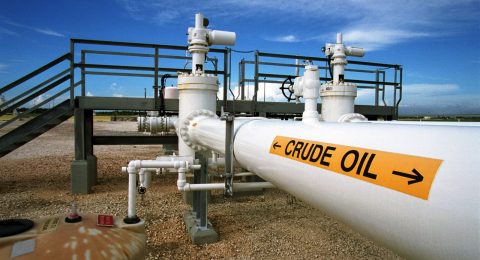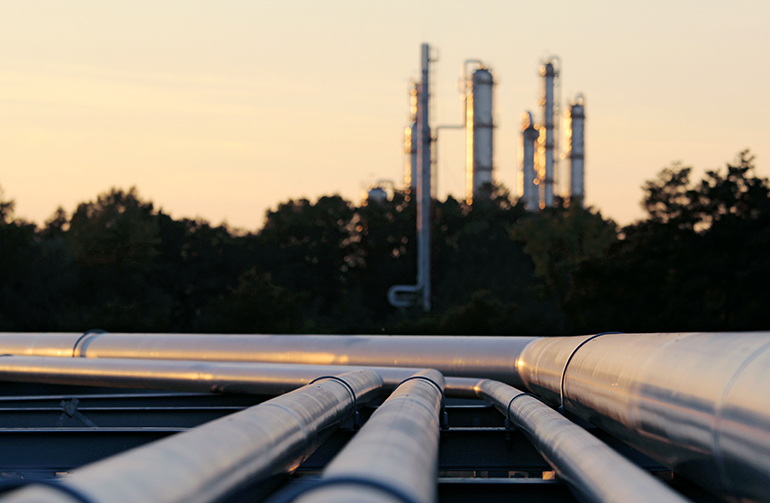
Saudi Arabia has fully restored oil pumping capacity through its East-West pipeline, which holds a total capacity of 7 million barrels per day (mmbbl/d).
The East-West pipeline is a critical strategic asset, serving as Saudi Arabia’s primary export artery while the Strait of Hormuz remains closed. By transporting crude from the eastern fields to the Red Sea coast, the pipeline allows the Kingdom to bypass the maritime chokepoint entirely, ensuring the continued flow of oil to global markets despite the regional blockade.
The Saudi Ministry of Energy confirmed on Sunday that the energy facilities and the pipeline segments affected by the attacks have recovered and regained their full operational capabilities.
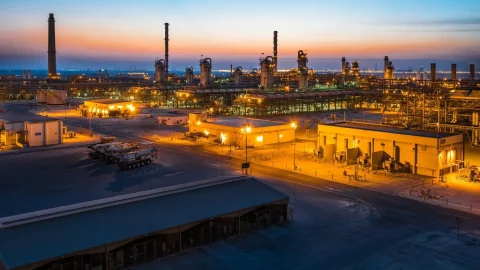
Iranian strikes caused operational disruptions at major oil, gas, refining, petrochemical, and power sites across Riyadh, the Eastern Province, and the industrial city of Yanbu.
Saudi Arabia said on Thursday that the attacks had reduced its oil production capacity by about 600,000 barrels per day (bb/d) and its pumping capacity through the East-West pipeline by about 700,000 bb/d.
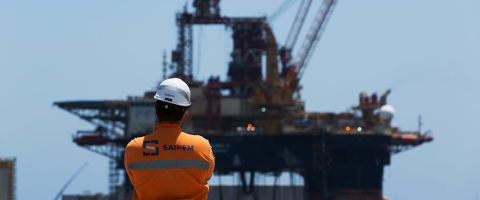
The country has also restored production at the massive Manifa offshore oil field, located in the Arabian Gulf, where output had previously fallen by about 300,000 bb/d.
Work is also underway to fully restore production at the Khurais field, one of the largest oil projects in the world and primarily produces high-quality Arab Light crude, after attacks there reduced Saudi Arabia’s production capacity by another 300,000 bbl/d.
The rapid recovery will enhance the reliability and continuity of supplies to both domestic and global markets, as the Saudi Ministry of Energy noted