Rising military tensions between the US, Israel, and Iran are disrupting oil and gas supplies across the Middle East, intensifying fears over global energy security and renewed price volatility, Reuters reported.
Iraq, the second-largest producer in OPEC, has slashed nearly 1.5 million barrels per day (mmbbl/d), about half of its total output, due to storage limitations and the absence of secure export routes, officials told Reuters. Authorities warned that as much as 3 million bpd, almost the country’s entire production capacity, could be shut in within days if exports fail to resume.
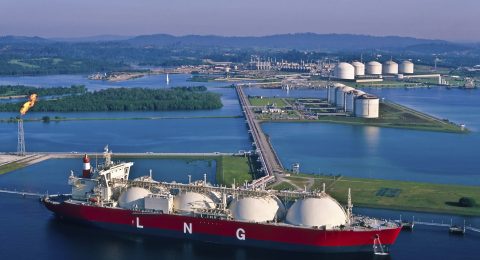
In the gas sector, QatarEnergy has halted operations at its liquefied natural gas (LNG) facilities, affecting some of the world’s largest export plants. Qatar, which accounts for roughly 20% of global LNG supply, also suspended parts of its downstream production, tightening global gas availability.
Meanwhile, Saudi Arabia, the world’s top crude exporter, has suspended output at the 550,000 barrels per day (bbl/d) Ras Tanura refinery and started rerouting crude shipments from eastern ports to Yanbu on the Red Sea to safeguard exports.
Additional disruptions were reported in Israel and Iraq’s Kurdistan region, where portions of oil and gas production were curtailed. In the United Arab Emirates(UAE), a fire caused by debris damaged facilities at Fujairah port, a critical global oil storage and bunkering hub, further compounding supply risks.
Tensions have also escalated in the Strait of Hormuz, a strategic chokepoint that handles around 20% of global oil and LNG trade. Shipping traffic slowed sharply after Iran reportedly attacked five vessels. An Iranian Revolutionary Guards official declared the Strait closed on March 2, warning that any ship attempting to pass would be targeted — a development that could significantly disrupt global energy flows.
Asian buyers are already adjusting to the tightening supply outlook. Chinese refiners have begun shutting crude processing units or advancing maintenance schedules due to disrupted feedstock flows. India is seeking alternative sources of crude and LNG in preparation for a prolonged crisis, while Indonesia plans to increase imports of US crude to offset reduced Middle Eastern supply.
The unfolding conflict highlights the fragility of global energy supply chains, with markets bracing for sustained volatility should disruptions deepen or maritime trade through the Strait of Hormuz remain constrained.