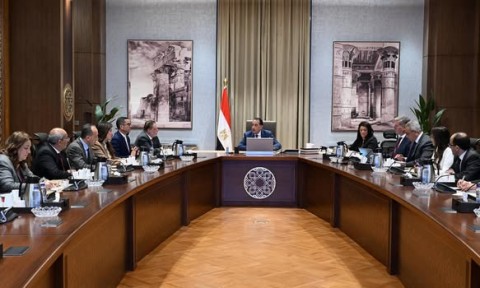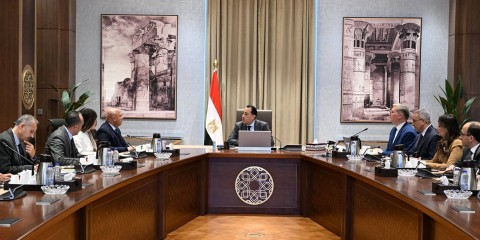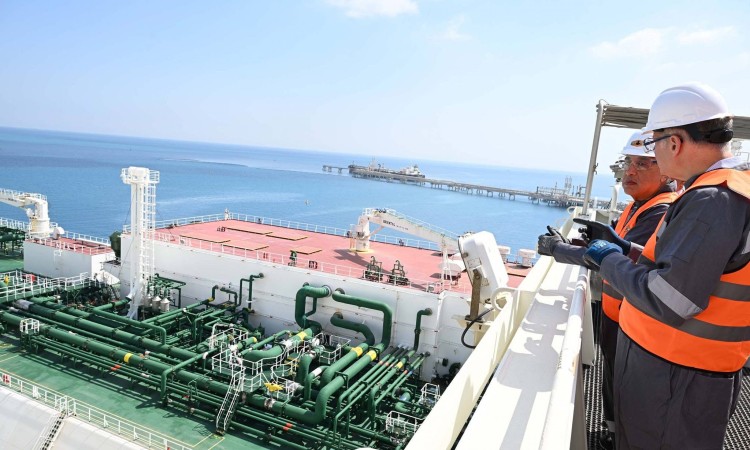
Egyptian Prime Minister Mostafa Madbouly conducted a tour of the SUMED Petroleum Port at Ain Sokhna, where he inspected its petroleum‑product and LNG handling and storage terminal.
Madbouly was accompanied by Minister of Petroleum and Mineral Resources Karim Badawi, Suez Governor Hani Rashad, and several officials from the petroleum sector and relevant authorities.
The Arab Petroleum Pipelines Company (SUMED), established in 1974, operates the SUMED Pipeline – a 320‑km crude transit line from Ain Sokhna to Sidi Krir commissioned in 1977 – and manages the linked SUMED port and terminal facilities that receive, store, and load crude and petroleum products.
During the visit, the prime minister listened to a briefing by Mohamed Abdelhafez, Chairman and managing director of the SUMED company, about the port’s strategic role and recent developments in its infrastructure capabilities.
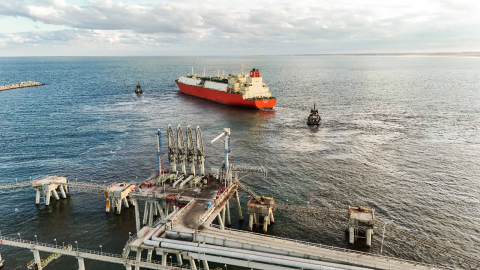
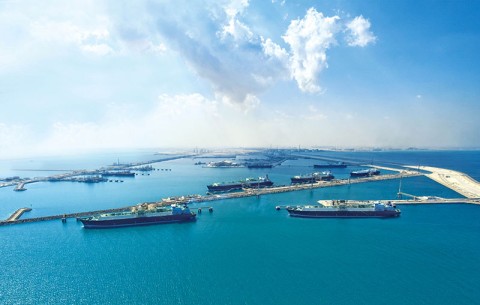
Abdel Hafez also reviewed the capabilities of the petroleum products and LNG handling and storage terminal, highlighting its 3-km marine jetty that includes three berths capable of receiving petroleum product tankers and LNG regasification vessels. With water depths of up to 19 metres, the terminal can accommodate some of the world’s largest energy carriers.
According to Abdelhafez, the port receives imported LNG cargoes from tankers, which are then transferred to the Floating, Storage and Regasification Units(FSRU)s Hoegh Galleon and Energos Eskimo docked at the terminal to be regasified and pumped into Egypt’s national gas grid to supply the domestic market.