While the Egyptian General Petroleum Corporation’s (EGPC) financial position has improved due to recent measures, including reaching cost recovery on products covered by its retail fuel indexation mechanism, its finances “remain a source of fiscal risk,” noted an International Monetary Fund (IMF) press release dated December 23, 2025.
The IMF reached a staff-level agreement with Egyptian authorities on the fifth and sixth reviews of the $8 billion Extended Fund Facility (EFF) and the first review under the Resilience and Sustainability Facility (RSF), according to the press release.
The cost recovery achievement refers to lifting the fuel subsidies so that the octane gasoline is now sold at almost its cost, which represents progress in addressing EGPC’s financial challenges, particularly as the government, in parallel, continues efforts to settle arrears owed to foreign oil and natural gas companies.
Minister of Petroleum and Mineral Resources Karim Badawi previously emphasized the government’s commitment to timely payments, with Egypt paying approximately $1.72 billion in arrears to foreign partners in 2025, including $1 billion in January, $500 million in September, and another $620 million scheduled for later in the year.
Alongside EGPC’s fiscal consolidation efforts, reforms related to RSF are on track, according to the IMF. In March 2025, the fund’s executive board approved Egypt’s request for an arrangement under the RSF, which gives the country access to about $1.3 billion.
The press release stated that the authorities have already implemented two key measures related to this facility. First, it published “a schedule outlining the implementation plan to achieve renewable energy targets” in addition to a “directive issued by CBE to mandate banks to monitor and report exposure to firms that may face material transition risks from the adoption of the Carbon Border Adjustment Mechanism”.
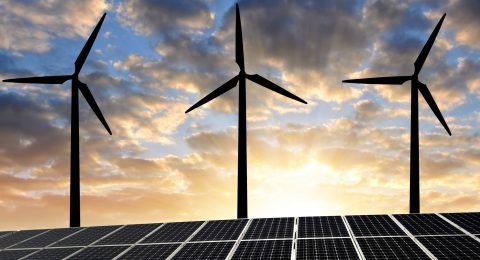
Egypt’s Integrated Sustainable Energy Strategy, released in 2024, aims to increase renewable energy’s share in the energy mix to 42% by 2030 and over 60% by 2040, targeting 25.1 gigawatts (GW) of total renewable power capacity by 2030.
The fifth review was supposed to be approved in May, but the IMF opted to delay it and combine it with the sixth review, due to its reservations on the slow pace of some reforms, namely the privatisation. An IMF delegation was in Cairo from December 1-11 to hold discussions with Egyptian authorities.