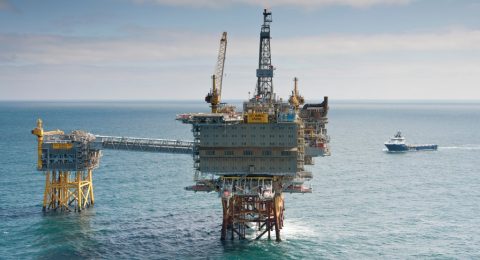
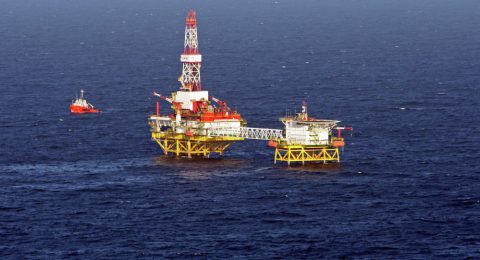
The global average decline rate of oil and gas fields’ production has accelerated sharply, driven by increased dependence on shale and deepwater resources, according to a report released by the International Energy Agency (IEA). This decline has forced companies to put in far greater effort to sustain current production levels.
The report showed that onshore supergiant oil fields in the Middle East see decline rates of under 2% annually, whereas smaller offshore fields in Europe lose over 15% of gas each year. Declines are even sharper for tight oil and shale gas, where production would drop by more than 35% in one year without investment, and a further 15% in a second year.
IEA Executive Director Fatih Birol said that just a small share of upstream oil and gas investment is allocated to supporting demand growth. On the other hand, almost 90% of annual spending is focused on replacing lost output from aging fields. “Declining production rates are often overlooked in conversations about oil and gas investment. Our latest analysis reveals that these declines have been speeding up in recent years,” he added.
Birol also highlighted the need for paying careful attention to impacts on market stability, energy security, and emissions.
“In the case of oil, an absence of upstream investments would cause the loss of the equivalent of Brazil and Norway’s combined production from the global market balance each year,” Birol noted. To keep production at today’s level, more than 45 million barrels per day (mmbl/d) of oil must be produced, along with about 200 billion cubic meters (bcm) of natural gas from new fields by 2050, according to IEA’s analysis.
In 2010, a freeze on upstream investments would have led to an annual loss of just under 4 mmbl/d of oil supply. Now, the figure has risen to 5.5 mmbl/d, with natural gas decline rates growing from 180 to 270 bcm per year, IEA explained.
In a recent report by the IEA, global oil production was predicted to increase to 105.8 mmbl/d throughout 2025, following the OPEC+ decision to ease back its earlier oil production cuts.