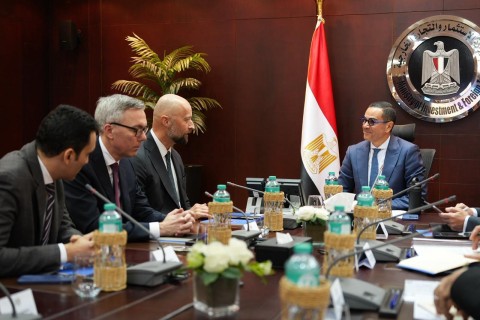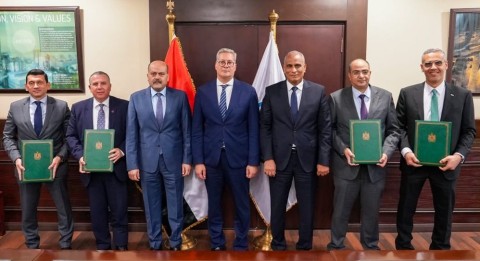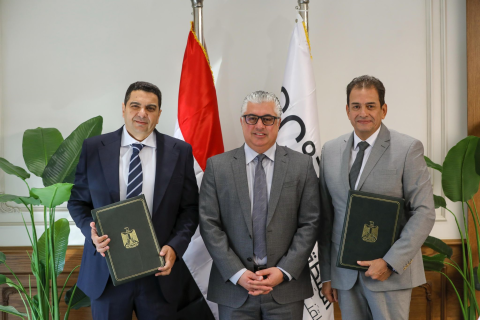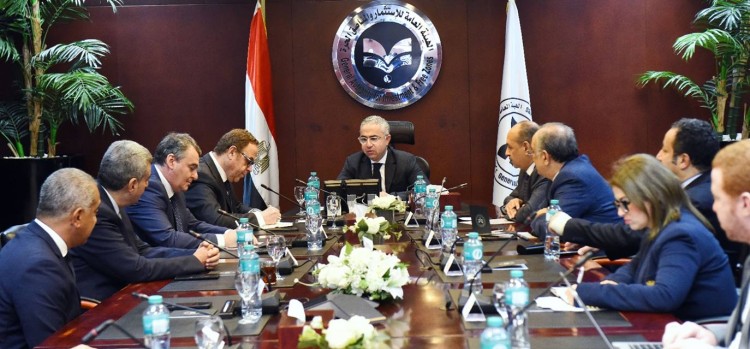
Mohamed El-Gawsaky, CEO of the General Authority for Investment and Free Zones (GAFI) met with a delegation from DrasChem Specialized Chemicals company to discuss steps for establishing a sodium cyanide production plant at the Sidi Kerir Petrochemicals Complex in Alexandria.
In its first phase, the plant is to produce and export 50,000 tons of sodium cyanide, a substance used in gold extraction, with an investment cost of $200 million. Once operational, the first-phase output will be equivalent to five times the current domestic demand, meeting an important part of the needs of gold mines in the African continent.
DrashChem is an Egyptian Company established as a private free zone project after securing the cabinet approval. The company has begun detailed engineering design, project structuring, and raw material supply contracting. First-phase production is targeted to start in 2028.
Sodium cyanide is a critical reagent used in gold leaching and metallurgical recovery processes across the mining sector.
Future expansion phases will assess doubling output and producing downstream derivatives, with a third phase planned to manufacture sodium-ion battery components, a lower-cost and more sustainable alternative to lithium-ion technologies used in energy storage systems and data center power solutions. The plant is expected to generate around $120 million annually in export revenues and create up to 500 direct jobs.
El-Gawsaky called on Egyptian companies to adopt export-oriented production strategies, particularly targeting African markets under the African Continental Free Trade Agreement (AfCFTA). He noted that Investment and Foreign Trade Ministry aims to raise exports by approximately $4 billion compared to 2024 levels, when exports reached $7.7 billion, with chemicals among the priority sectors.
He added that Draschem’s sodium cyanide products have an additional advantage, given their importance to gold mines in Africa, which leads the world’s continents in this field and controls about a quarter of global gold production. In addition, El-Gawsaky highlighted the importance of the company’s sodium-ion battery products in achieving the government’s goal of increasing the local component of renewable energy storage batteries.
Bassam El Shemmy, Vice President for Strategic Partnerships at the Austrian Petrochemical Holding GmbH, which is a major shareholder in DrasChem, said Egypt is the ideal location for launching the sodium cyanide plant, due to several factors, most notably its geographical proximity to targeted export markets in Africa and the Middle East, the development of Egyptian roads and ports in recent years, and the abundance of raw materials required for the industry, namely natural gas, ammonia, and sodium hydroxide (caustic soda), key inputs for cyanide production.
Project partner Draslovka, a Czech technology provider, will transfer its production technology, previously deployed in the US, to Egypt for the first time in Africa and the Middle East. The partners said this will support the development of a regional hub for gold processing chemicals and sodium-ion battery materials.