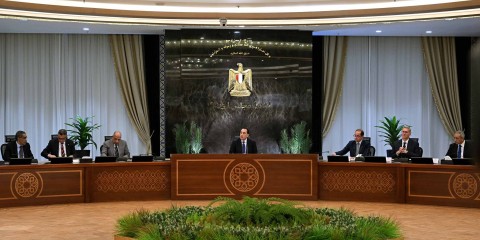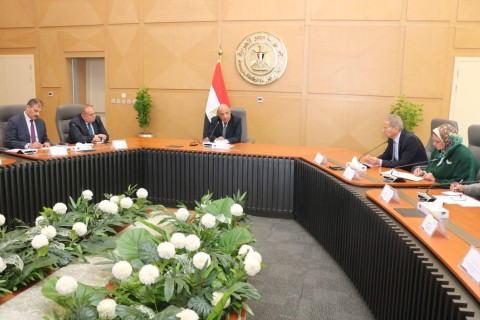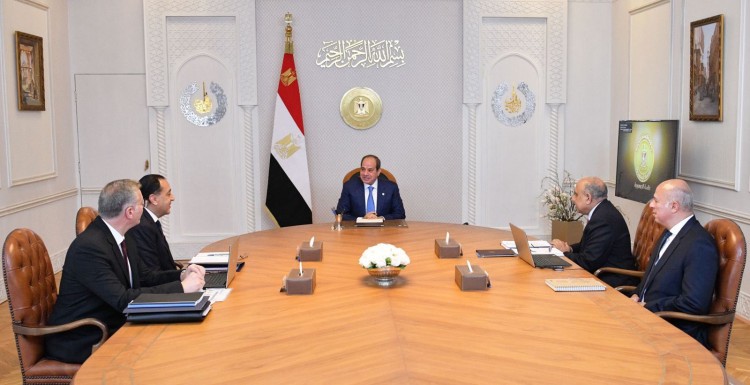
Egypt is planning to add 2,500 megawatts (MW) of renewable energy capacity to its national electricity grid before next summer, said Presidential Spokesman Mohamed El-Shennawy. This announcement follows a high-level meeting between President Abdel Fattah El-Sisi, Prime Minister Moustafa Madbouly, and the Ministers of Petroleum and Electricity to review scenarios for ensuring the stability of power generation nationwide.
The meeting covered comprehensive action plans to secure fuel equivalents and sustain the power grid’s stability, emphasizing the integration of these new renewable capacities as a core pillar. President El-Sisi highlighted that energy security remains a fundamental pillar of national security, directing the government to maintain strategic reserves of petroleum products and provide the necessary financing for energy sector projects.
Efforts to enhance readiness for gas supplies were also a primary focus, particularly in light of regional conflicts and their impact on global petroleum prices. Minister of Petroleum and Mineral Resources Karim Badawi detailed a plan to maximize the utility of existing refineries to reduce the fuel import bill.
The President directed the full settlement of arrears owed to foreign companies and called for intensifying efforts to attract investment, including equipping infrastructure for liquefied gas imports and the operation of Floating Storage and Regasification Units (FSRUs).
This came one day after a press conference where Badawi stated that there has been comprehensive coordination among all members of the government to secure energy supplies and strengthen the infrastructure for regasification vessels to secure supplies for the summer of 2026.
Egypt’s four FSRUs provide it with the capacity to inject 2.75 billion cubic feet (bcf) of gas into the grid and created a mechanism that enables Egypt to import liquefied natural gas (LNG) cargoes in addition to relying on local production, rather than depending solely on pipeline supplies to meet the country’s gas needs.
Badawi stressed that while supplies of piped gas have stopped completely currently, this was not the first time Egypt has faced such a situation in recent months, pointing out that the development of infrastructure and the ability to import LNG have helped maintain supply sustainability.
Therefore, under the current circumstances, Egypt is not affected by any potential closure of the Strait of Hormuz in terms of gas imports, according to Badawi. LNG cargoes that reach Egypt through the Mediterranean Sea can be connected directly to the regasification vessel in Damietta. In contrast, those passing through the Suez Canal can connect with regasification vessels in Ain Sokhna.
Egypt currently has three regasification vessels in Ain Sokhna, one of which is undergoing maintenance and will be ready by the end of this month.
Noting that Egypt has agreements with several countries and sources of crude oil, Badawi said: “Through our partners in the Kingdom of Saudi Arabia, particularly Aramco, crude oil can be supplied via the Red Sea and transported through the SUMED pipeline to the Mediterranean. We have a variety of sources, whether in crude oil or in gas products, a fact that gives us flexibility in the market.”