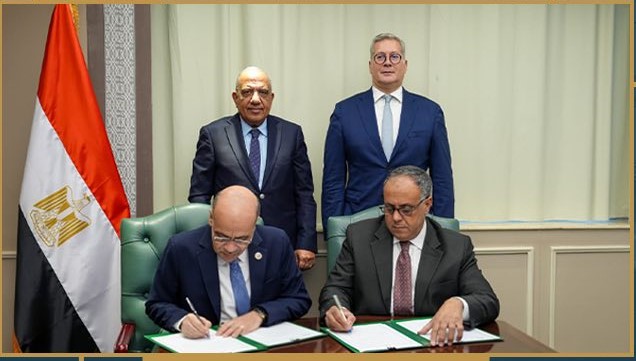
Egypt is set to launch a new program to treat petroleum waste and maximize the economic value of its mineral resources through a partnership between the Ministry of Petroleum and Mineral Resources (MoPMR) and the Ministry of Electricity and Renewable Energy.
The initiative focuses on treating Technically Enhanced Naturally Occurring Radioactive Materials (TE-NORM) resulting from oil sector activities. This includes processing sediments, produced water, sludge, and other waste types found at petroleum sites.
Under the agreement, the Nuclear Materials Authority (NMA) will conduct necessary surveys, environmental assessments, and waste treatment operations using advanced technologies to ensure compliance with national and international safety standards.
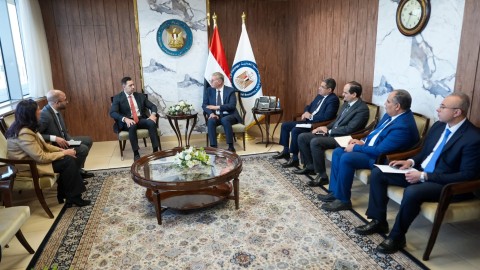
The collaboration was formalized in a protocol signed by Salah Abdel Kerim, Chief Executive Officer (CEO) of the Egyptian General Petroleum Corporation (EGPC), and Hamed Mira, Chairman of the NMA, in the presence of Minister of Petroleum and Mineral Resources Karim Badawi and Minister of Electricity and Renewable Energy Mahmoud Esmat.
Badawi described the agreement as a distinguished model of integration between the two ministries. He emphasized that increasing production must accompany environmental stewardship.
He noted that safe waste management and recycling are key pillars of the ministry’s strategy to enhance environmental sustainability and reduce emissions.
Esmat highlighted the strategic importance of maximizing returns from earth ores and extracting rare elements, aligning with state directives to increase the added value of natural resources.
He stressed the commitment to providing the necessary technological support and training to ensure rigorous safety and monitoring standards are met during implementation.
Under the terms of the protocol, EGPC will identify waste locations, types, and quantities, providing technical reports and logistical support to facilitate surveys.
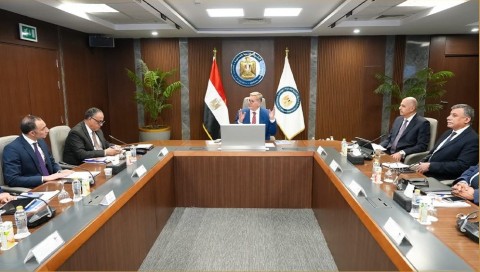
A joint technical committee will be formed to oversee the execution of the project and ensure adherence to safety regulations.
This initiative builds on a year of deepening cooperation between the two ministries, which have closely coordinated efforts to secure fuel supplies for power plants and manage peak summer loads. Their partnership extends to long-term strategic planning, including joint committees focused on energy efficiency and increasing the renewable energy share in Egypt’s national mix to 42% by 2030.