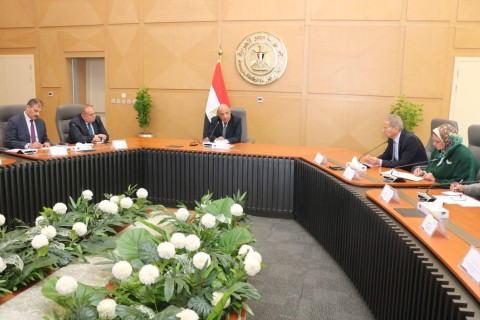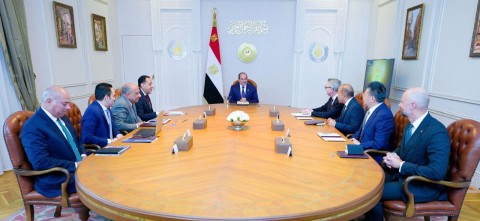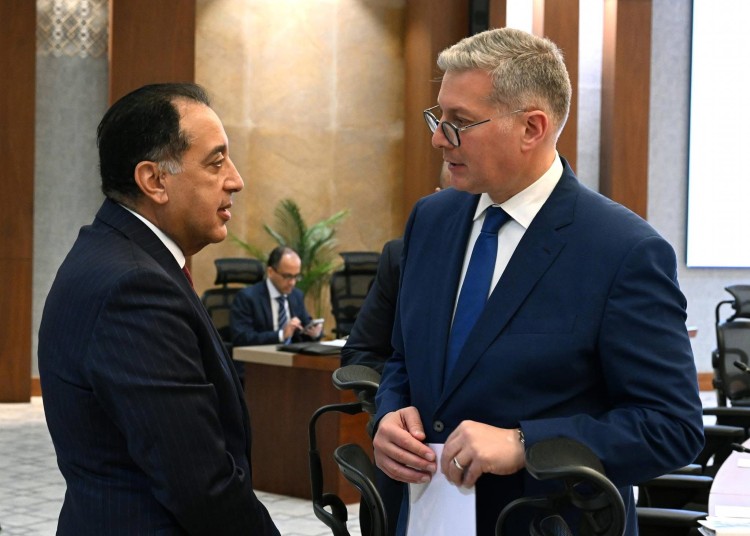
Minister of Petroleum and Mineral Resources, Karim Badawi, presented a strategic review to the Cabinet regarding a recent Rystad Energy report titled “Resetting Egypt’s Gas Sector: Debt Settlement, Drilling Recovery, and Expansion of Renewables.”
The report identifies a major structural transformation in Egypt’s petroleum industry, driven by pragmatic policy reforms, debt settlement for international oil companies (IOCs), and a global-leading licensing activity that aligns conventional resource development with energy transition goals.
According to a statement by the Ministry of Petroleum and Mineral Resources (MoPMR), the analysis highlights a surge in upstream momentum, with Eni announcing a $9 billion investment plan and Dana Gas launching a $100 million drilling program targeting 11 new wells.
Furthermore, Egypt has emerged as the most active country globally in licensing activity for 2025–2026, launching 10 licensing rounds and ranking fifth worldwide in total bid offerings. These efforts have stabilized production at approximately 3.5 billion cubic meters (bcm) per month.
On the corporate side, APA Corporation significantly exceeded its 2024 average of 444 million cubic feet per day (mmcf/d) through successful new well completions, while QatarEnergy secured a 27% stake in the North Cleopatra offshore concession alongside Shell
Badawi noted that the restoration of investor confidence is directly linked to the government’s commitment to settling arrears. Debt owed to international partners declined throughout 2025 due to a structured financial plan extending into early 2026.
The report characterizes Egypt’s direct engagement with partners as a genuine partnership model, contrasting it with the more rigid contractual approaches often seen across other African producing nations.
The sector’s strategy to become a regional natural gas trading hub remains a primary objective. This plan is supported by upgrading infrastructure, optimizing regasification units, and implementing pipeline linkage projects with neighboring fields.
Finally, the report underscores the role of renewable energy in securing national energy stability. Egypt aims for renewables to contribute 46% of the total energy mix by 2030, a move designed to reduce domestic natural gas consumption in power generation.
By easing the demand on the national grid, this transition will reduce reliance on LNG imports and strengthen the country’s trade balance. Badawi reaffirmed that the Ministry’s 2021–2030 roadmap remains focused on achieving self-sufficiency through a diversified energy portfolio and the application of latest-generation technologies in existing fields.