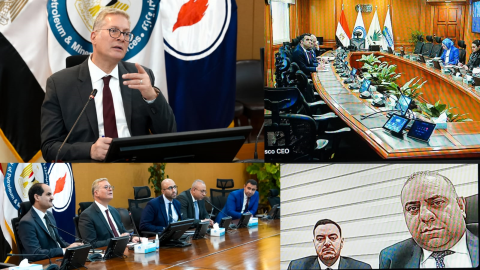
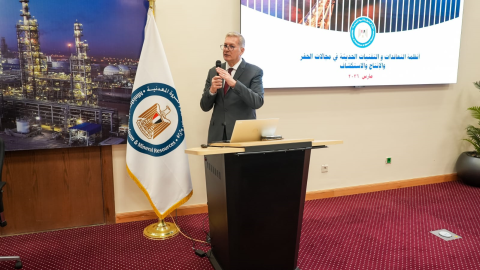
Karim Badawi, Minister of Petroleum and Mineral Resources, has approved the investment budgets of Suez Oil Processing Company (SOPC) and Nasr Petroleum Company (NPC) for the fiscal year (FY) 2026/2027, focusing on upgrading production units, expanding refining capacity, and improving operational efficiency.
The government places great importance on supporting refining and petrochemical projects, contributing to the implementation of the state’s plan to achieve self-sufficiency in petroleum products, particularly gasoline and diesel, said Badawi.
He stressed that the ministry is working to raise refining rates at Nasr and Suez refineries to reach full capacity in the coming period by securing additional crude oil supplies for both companies.
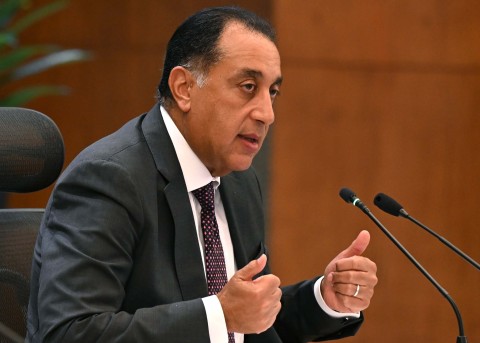
He also explained that, through the Egyptian General Petroleum Corporation (EGPC), the ministry is accelerating the implementation of the coking complex project, which represents a key pillar in the plan to reduce diesel imports over the medium term. A coking complex is an industrial facility within a refinery that converts heavy hydrocarbons or coal into lighter fuels and solid carbon (coke). Badawi referred to the latest meeting with the Prime Minister Mostafa Madbouly, which concluded with the need to expedite the completion of various refining projects.
SOPC Chairman Hesham Fathy presented the company’s recent efforts to rehabilitate and upgrade all production units, as well as the development and modernization project of the coking and diesel production complex.
Furthermore, he affirmed the company’s commitment to implementing new projects aimed at improving efficiency, increasing petroleum product output in line with the highest international quality standards, supporting self-sufficiency, and reducing the import bill.
Meanwhile, NPC Chairman Rashad Nazim outlined the key features of the company’s 2026/2027 investment budget, which includes plans to develop and implement several major production units, flare gas recovery projects, cooling systems upgrades, early-warning and automatic firefighting systems, and enhancements to process safety and asset integrity.
The plan also includes expanding digital transformation projects, monitoring employees’ compliance with safety procedures using artificial intelligence (AI) technologies, and establishing a 1.2-megawatt (MW) solar power plant to support energy conservation and reduce emissions.
The rising cost of energy imports underscores the drive toward self-sufficiency. The petroleum import bill surged by 53.3% to reach $9.7 billion during the first half of fiscal year (FY )2024/25, with refined products such as diesel and gasoline accounting for $2.1 billion. Accelerating these domestic refining projects is essential to reducing this multi-billion-dollar foreign-currency drain and stabilising the national trade balance.