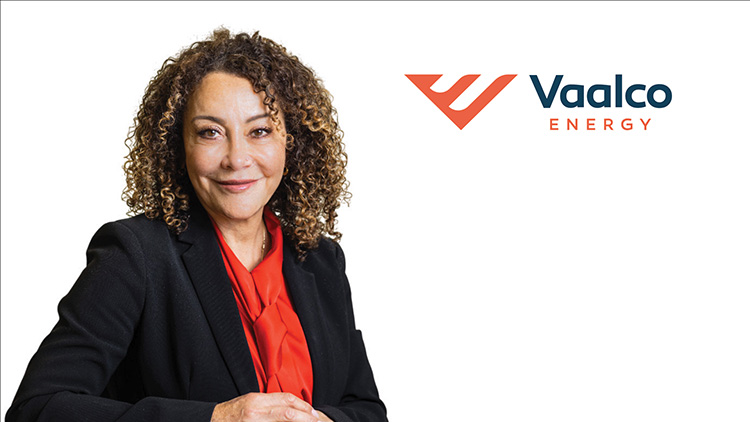
How does your extended oil and gas experience reflect on your visionary lead to Vaalco’s work in Egypt?
I’m lucky to have had a long work history with this wonderful country since 2000 when I led Shell here. So, I understand the relevance and importance of our sector to Egypt. It is a joy for me to create partnerships with colleagues in the Ministry of Petroleum and Mineral Resources (MoPMR) and the Egyptian General Petroleum Company (EGPC) to generate value for Egypt and my Company.
On the technical and commercial side, I have been privileged to work on every major continent in settings from onshore desert to ultra deep water. My personal aim, always, is to leave the place I am leading better than when I joined it, in terms of the bottom line, capability, culture, systems and processes.
Could you share with us the secret behind Vaalco’s strong performance in Egypt during H1 2025, and how does Egypt rank within your global portfolio?
There are 4 things:
First and foremost, the reforms that H.E. Eng. Karim Badawi instigated in August 2024; payment of the monthly invoices, commitment to lower and erase aged receivables, openness to out- of- bid round, direct negotiation on open acreage, willingness to adopt different commercial constructs to enable more expensive developments. In particular, the consistency of payments and the visible support for dealing with the receivables issue promotes confidence for our Board, Shareholders and the Markets. We are on the ground here and understand how Egypt works, those who are investing from afar must have the confidence that their investment is safe.
With his visible and impactful leadership at the top, Eng. Salah Abdel Kareem, CEO of the EGPC,is breathing a breath of fresh air across and deep into the organisation. His team is competent, accessible, engaged, and open to suggestions that create value for Egypt and its partners. It is an absolute pleasure to work with him and his team, together we work at speed to deliver results, not just talk.
From August 2024 to July 2025, we have had a relentless campaign to upskill our Cairo team. Our technical team is now 99% Egyptian. And the new ways they’re working, with the help of AI and machine learning, make me want to get behind the interpretation screen again
In the end, without the support of the Vaalco Board and Executives, we couldn’t have achieved half of what we have in the short 15 months since I arrived. Egypt is a core country for Vaalco. Part of my job with my excellent leadership team is to make sure that it stays competitive in the annual capital allocation exercise, which is why consistency and commitment on the payment issue is so important. Consistency and commitment equal confidence to continue investment.
How do you view the incremental production incentives provided by the Ministry of Petroleum and Mineral Resources, and how have they impacted Vaalco’s performance?
Vaalco was one of the first companies to sign the Incremental Production Scheme, an excellent idea to encourage production increase and allow export dollars to flow to the investor. It is beginning to work, and we look forward to continued exports to year end. We would be happy to engage with EGPC to discuss the potential to continue in 2026.
The drilling campaign launched in December 2024 has shown a marked acceleration compared to previous years. What technical innovations or operational methodologies have enabled this enhanced pace of drilling?
Absolutely. We kicked off the drilling campaign in December 2024 with rig EDC-64, and since then, we’ve seen a noticeable improvement in pace and performance. The goal was to offset natural decline, boost oil production from our mature fields, and explore untapped potential, especially in the Eastern Desert. So far, we have increased our production by around 1000 bopd, that is no mean feat in fields as mature as ours!
So far, we’ve drilled 17 wells in that region, along with an exploratory well in the Western Desert. What’s exciting is that we’ve discovered new reservoir intervals, like the Asl G sand and the Bakr sand in fields that have been producing for more than two decades, this directly translates to value generation from new reserves.
What’s made this possible is a mix of experience and innovation. We applied the lessons learned from the 2023 campaign and worked closely with our contractors and service partners. This allowed us to speed up rig moves, improve drilling performance, and consistently deliver wells on time and within budget.
We also introduced real-time drilling analytics through a new software (DBA), which has helped reduce non-productive time significantly. In parallel, we’ve enhanced our drilling fluid systems through advanced lab work — tailored specifically for our field conditions — to avoid formation damage and support smoother operations.
We’re also implementing smart cost-saving measures like drilling bit repair services through local contractors, fully aligned with Ministry of Petroleum guidelines.
Beyond new wells, you have focused on workover re-completions and well optimizations. What outcomes have these interventions delivered?
While new wells are important, optimizing existing assets has been just as critical, especially in mature fields. In 2025, we had a dedicated workover rig, OGS-10, running continuously—and the results have been strong.
We carried out water shut-off treatments on five wells, reducing water cuts and adding around 500 bopd. Two recompletions, where we shifted from lower to higher-potential zones, brought in another 200 bopd. We also reactivated one shut-in well based on reservoir analysis, adding roughly 90 bopd.
In terms of restoring deferred production, well servicing and efficient rig moves helped recover about 2,700 bopd throughout the current year. On top of that, artificial lift optimization—done at zero cost—added another 545 bopd.
Overall, we’ve kept field uptime above 97%, which is impressive for assets of this age. These interventions will continue into 2026 to support production and manage decline.
What is the status of your South Ghazalat operations in the Western Desert, and how does it differ operationally from your Eastern Desert assets?
Our primary objective is to explore and appraise the South Ghazalat concession in order to build a commercially viable field development plan. On the basis of our commitment wells and our plans for the area, we have been granted the license extension period to the end of 2027. In 2024 we drilled one exploration well and another one has just been completed in another part of the concession. We are gathering as much subsurface data as we can so that, now, we can embark on a full integrated subsurface study from basic principles to field development plan. That is our work for this area during the next work program year.
Operationally, the area is more remote, drilling depths generally deeper, so higher horsepower rigs required. And of course, the WD produces gas and light oil compared to the heavy oil in our ED operations.
With the expanded drilling operations and workforce growth in Egypt, how has Vaalco evolved its HSE management system, and what safety performance has been achieved?
Safety and Environmental performance improvement has been our first and most important focus since closing the deal with TransGlobe. Since 2023, we have completely overhauled the safety management framework, reshaped the culture, strengthened competencies, and empowered our workforce to speak up whenever they see anything wrong.
We’ve successfully completed 6 million LTI-free man-hours to date. We were recognized and honored by His Excellency Karim Badawi, the Minister of Petroleum and Mineral Resources with the “Golden Helmet” award, as being among the top 5 companies for Occupational Safety, Health, and Environmental Protection excellence during the recent 2025 HSE Day. Some of our achievements are:
Safety Culture Maturity: We monitor our Safety performance on a bi-annual basis using the Hudson Maturity Model.
Integrated (IMS): We have an integrated QHSE, Process Safety, Asset Integrity, and Energy Management systems into a unified IMS aligned with the guidelines of the EGPC and that of the (International Association of Oil & Gas Producers) IOGP.
ISO Certifications: We have achieved ISO 14001, 9001, 45001, and 50001 certifications.
Process Safety Studies: We Completed HAZID, HAZOP, Bow-Tie, SCE, LOPA, QRA, MAH, SIL, and HAC studies for all facilities (K and H Stations, and all EPFs).
Maintenance System: We Implemented a Computerized Maintenance Management System (CMMS) across all operations.
Leadership Engagement: We Increased leadership walkthroughs during 2025, ensuring participation of both technical and non-technical staff.
The bottom line is that safety is not a fad or a model ;It is personal leadership, responsibility, and the courage to do the right thing. Fundamental in my mind are these principles:
1. Error is normal, it is not failure.
2. Blame fixes nothing; it leads to hiding and no learning.
3. context drives behavior, what makes mistakes more likely in our environment?
4. Learning is vital.
5. Our response matters
My final personal word on this is that when an incident occurs, we’re driven to rush to solution, sometimes we may just want to pause, listen without judgement, assess the trustworthiness of the data and then go to solution mode.
In your last meeting with Minister of Petroleum and Mineral Resources, Karim Badawi, you discussed operating wells using solar energy and connecting facilities to renewable sources. What is the timeline for this integration, and what percentage of Egypt operations’ energy needs will be met through renewables by 2026?
We’ve already made meaningful progress on this front. We’ve installed solar systems on two producing wells, saving about 60,000 liters of diesel and avoiding over 160 tons of CO2 emissions every year. We also solar-powered our Hana server room, which saves another 27,400 liters of diesel annually.
By 2026, we expect 1.6% of our energy needs in Egypt operations to be met through renewables — and we anticipate that share will grow as more projects are rolled out.
Looking ahead, the electrification project is a major step. It involves connecting our main facilities to the national electricity grid, replacing our diesel generators. This project is scheduled to begin in mid-2026 and be complete by the end of 2027.
Once operational, this shift will reduce diesel consumption by around 6 million liters annually, cut CO2 emissions by over 16,000 tons, and improve overall operational efficiency and power reliability.
Vaalco is concerned with reducing diesel consumption and achieving environmental sustainability through technology. How has the renewable energy initiative evolved, and what measurable impact has it had on carbon emissions and operational costs?
Our sustainability roadmap is really taking shape. One of the biggest initiatives is the grid tie-in, which when completed is expected to save about 6 million liters of diesel per year and cut CO2 emissions by more than 16,000 tons. That also translates into a projected 8% reduction in OPEX, which is substantial.
But that’s just one part of the broader picture.
Between 2022 and 2025, we also converted 18 vehicles to Compressed Natural Gas (CNG) and created 5 power clusters, which helped reduce more than 160,000 liters of diesel, 7,400 liters of gasoline, and over 450 tons of CO2.
We’re currently studying the use of new fuel additives to improve fuel efficiency across our engines, reduce diesel consumption of about 7% and decrease overall emissions even further.
And based on the success of earlier solar installs, we’re now planning a solar expansion to three more well sites. This could save an additional 92,000 liters of diesel and 244 tons of CO2 annually.
One other exciting project in the pipeline is a Gas-to-Power initiative at our operated asset in the Eastern Desert. We’re preparing tests on the H-22 well to assess the feasibility of replacing diesel gensets with gas-powered units. If successful, this could unlock a whole new layer of sustainable energy use, while maximizing value from our available resources.
What are Vaalco’s plans for 2026 in Egypt, considering the ongoing intensive reforms and developments in the oil and gas sector?
Very simply;
- To keep all of our staff and contractors safe.
- To increase production while responsibly managing our reservoirs.
- To increase the footprint of cleaner and renewable technologies in our existing operations.
- To look for and secure new opportunities to grow in Egypt.
- Last, but certainly not least, to be collaborative and supportive partners for our colleagues in EGPC and the Ministry.