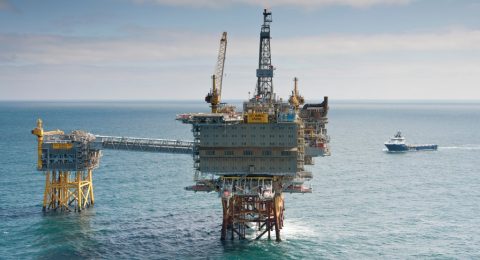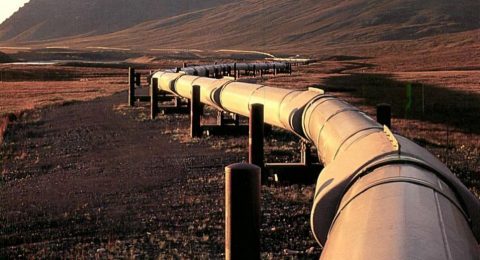
Methane emissions have become a central focus of global environmental policy, particularly in the oil and gas sector. Methane is a highly potent greenhouse gas, with a warming effect far stronger than carbon dioxide over short timeframes. Scientists estimate that methane has contributed to nearly 30% of the global temperature rise since the Industrial Revolution, highlighting the urgent need for effective mitigation strategies. Beyond environmental concerns, unmitigated leaks also represent lost energy resources and reduced operational efficiency.
Reducing methane emissions has become both an environmental responsibility and an operational priority for energy producers. Effective reductions require reliable measurement, reporting, and verification (MRV) systems. Satellite methane monitoring technology has emerged as a powerful tool, enabling detection of emissions across large areas, including remote or offshore facilities. By providing near real-time detection of emission sources, satellites support climate action and more sustainable energy operations. For Egypt, this technology can enhance environmental management while strengthening operational efficiency across the energy sector.
Understanding the Technology
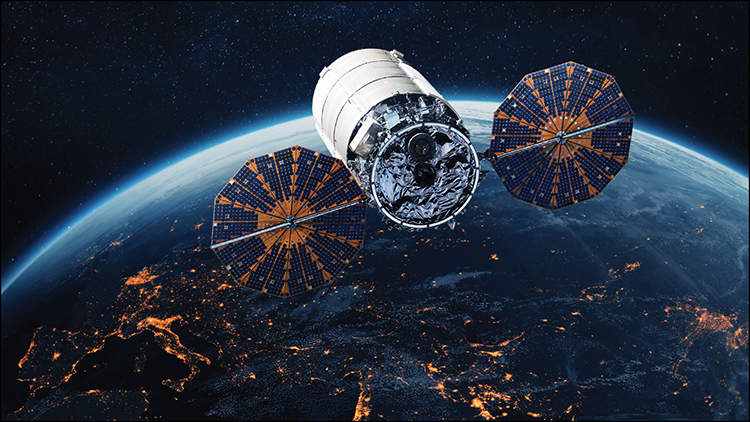
Satellite methane monitoring uses space-based systems to detect and measure methane in the atmosphere. These satellites observe emissions over wide regions or specific sources such as oil fields, pipelines, and gas facilities. “Methane in the atmosphere absorbs energy, which allows shortwave infrared sensors to measure the amount of methane present,” Mamdouh El Oufy, MENA Account Director Oil &Gas at GHGSAT, one of the satellite methane monitoring developers, explained to Egypt Oil and Gas (EOG). Satellite-mounted spectrometers detect subtle changes in reflected light and convert them into methane concentration measurements, identifying “super-emitters” and potential leakage sources.
“[By] using this technology, we can differentiate methane from other gases and identify methane plumes from oil and gas facilities, landfills, and other human activities across vast areas,” El Oufy noted. Satellite monitoring allows authorities and operators to map emissions and prioritize mitigation.
Satellite observations fall into two main types: point-source detection and area-flux monitoring. Point-source satellites focus on small areas with high precision, detecting plumes from specific facilities. The Carbon Mapper Coalition’s Tanager satellites exemplify this approach.
Area-flux satellites scan broader regions, like entire basins or countries, revisiting locations frequently to provide consistent monitoring over time. The European Space Agency’s Sentinel-5P with the TROPOMI spectrometer is a prominent example.
Today, more than 25 satellites track methane globally, including NASA’s EMIT, Germany’s EnMAP, and commercial GHGSat constellations. “The global oil and gas sector has access to methane detection data from public satellites capable of identifying the largest emissions, as well as from high-resolution GHGSat satellites that can detect smaller sources of around 100 kilogram per hour (kg/hr),” El Oufy highlighted.
Why It Matters
Satellite methane monitoring provides operational advantages, including rapid detection across large areas. Experts described the benefit as “speed, coverage, and repeatability at national scale,” allowing multiple facilities to be monitored simultaneously while tracking emissions over time.
“Satellite methane monitoring is increasingly deployed as a ‘screening and targeting’ layer, where wide-area satellites first flag potential emission hotspots, and higher-resolution satellites then help quantify those emissions and prioritize repair actions,” María Fernanda President of PlanetAI Nature Space, also one of the satellite methane monitoring innovators, told EOG. She added that the company use software and algorithms that work with existing multispectral satellite images, allowing large asset areas to be monitored without the need for specialized methane-detection satellites.
Satellites can monitor operations regardless of location. The advantage of satellites is that they can monitor oil and gas fields anywhere, regardless of how remote or extensive the operations are, experts noted. In contrast, “traditional ground-based monitoring requires personnel to visit every facility, even in remote locations, and the process must be repeated continuously,” El Oufy discussed.
Case Studies in Egypt’s Oil and Gas Sector
Satellite methane monitoring is increasingly important in the Middle East and North Africa, including Egypt. The country has committed to reducing methane emissions through the Global Methane Pledge and is strengthening monitoring and mitigation across its energy sector.
One of the key initiatives is the Oil and Gas Climate Initiative (OGCI) Satellite Monitoring Campaign, covering several countries including Egypt. “The most recent project in Egypt was conducted through OGCI, revealing multiple methane plumes from selected assets and helping identify and mitigate emission sources,” GHGSAT’s MENA Account Director said. Satellite data also supported broader assessments. “Various areas across Egypt have also been monitored to support the identification of problematic locations for future mitigation,” he noted.
The initiative demonstrates how emission hotspots can be identified and addressed. “The key insight is that satellite-based monitoring helps identify persistent high-emitting sources that can be prioritized for mitigation,” Fernanda underlined.
Given the geographic diversity of Egypt’s energy operations, satellite monitoring is especially valuable. “Egypt’s oil and gas sector is spread across large concessions including the Western Desert, Eastern Desert, Nile Delta, Gulf of Suez, and the Mediterranean,” El Oufy noted, adding that top-down satellite monitoring can help operators identify emission hotspots and guide mitigation efforts across these vast areas.
Supporting Egypt’s Energy Transition
Satellite monitoring provides accurate, repeatable data that strengthens emissions transparency and mitigation strategies. “Satellite monitoring can significantly accelerate emissions reduction by helping operators target the largest and most persistent leaks first,” Fernanda said, noting that this approach improves efficiency while reducing product loss.
Satellite systems also enhance MRV credibility. “Satellite-based monitoring enhances MRV systems by providing transparent evidence of emission reductions and supporting international climate commitments through transparent evidence of reductions , including retrospective baselining, since satellite archives allow looking back several years for ‘before/after’ quantification,” she said.
Beyond detection, satellite-based MRV can support carbon markets. “Satellite-based MRV systems can support the certification of methane reduction projects,” Fernanda revealed. Also, she noted “if operators demonstrably reduce methane emissions, satellite data, including historical baselines from archived imagery, can be used to document verified reductions and support the issuance of carbon credits”. For his part, El Oufy highlighted the potential impact saying, “such efforts could support reducing up to 65% of oil and gas CO₂-equivalent emissions by 2030.”
Satellite methane monitoring represents a transformative advancement for Egypt’s oil and gas sector, bridging the gap between environmental stewardship and operational efficiency. By combining global satellite capabilities with local expertise, the technology allows for rapid identification of high-emitting sources, supports transparent MRV practices, and strengthens the country’s climate commitments. Beyond immediate emission reductions, these systems offer long-term benefits, including improved resource management, operational cost savings, and the potential for carbon credit certification. As Egypt continues to modernize its energy infrastructure, integrating satellite-based monitoring into standard practices positions the country as a regional leader in sustainable energy development while providing a model for responsible greenhouse gas management worldwide.