As the global energy sector observes Women’s Month, much of the conversation focuses on either the initial entry of women into the field or their representation at the executive board level. Yet, the most critical phase of organizational transformation happens in the “middle”, the strategic bridge where operational reality meets long-term vision. This level of management is where the industry’s future is truly forged, requiring a unique blend of technical mastery, emotional intelligence, and relentless resilience.
In this special feature, Egypt Oil & Gas (EOG) turns the spotlight on two powerhouse leaders who have successfully navigated the “hollow middle.” From the complex legal frameworks of multi-billion dollar liquefied natural gas (LNG) portfolios to the high-stakes world of operational methods and controls, these women prove that middle management is not a career ceiling, but a strategic engine for growth. Their journeys reflect a shift from proving their presence to asserting their influence.
Navigating the “Hollow Middle”: Passion as an Anchor
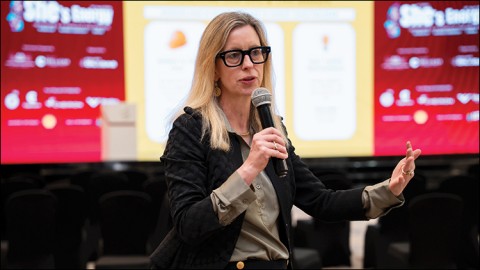
Industry data often highlights a drop in female representation at the mid-career stage, a phenomenon known as the “hollow middle.” For Omneya Abdellatif, Managing Counsel LNG and Head of Legal at Shell Egypt, the secret to surviving this phase is rooted in passion and aspiration. “When you genuinely love what you do, you don’t disengage,” she explains. For Abdellatif, consistency is the byproduct of passion, and growth only happens when engineers and lawyers alike step out of their comfort zones to take on “stretch” assignments.
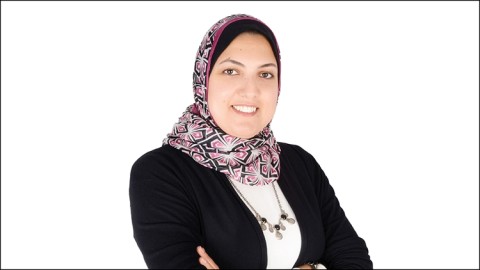
Similarly, Alaa Beshir, Methods and Control Manager at TotalEnergies Marketing Egypt, believes the path through the middle is paved with undeniable competence. In an industry where leadership has long been male-dominated, Beshir focuses on a simple principle: “Competence changes conversations.” By grounding every decision in data, standards, and results, she ensures that when systems run smoothly and safety records are strong, gender becomes secondary to operational success.
Neutralizing Bias Through Credibility
Unconscious bias can often cloud professional interactions. Both leaders agree that technical grounding is the ultimate equalizer. Abdellatif, who stepped into managerial roles early in her career, manages multi-billion dollar portfolios by ensuring her arguments are well-grounded and her integrity is evident. “Credibility neutralizes bias,” she asserts, noting that decisions gain acceptance because they are right, not because of who delivers them.
Beshir approaches bias with a pragmatic discipline, refusing to be distracted by side narratives. To ensure respect and implementation of her decisions, she creates transparent processes where roles and responsibilities are clearly defined. “When the framework is clear and consistent,” Beshir says, “there is little room for bias to interfere with execution.” For her, building trust is a matter of protecting the business and the team through risk-based reasoning.
Redefining Balance and Quieting Guilt
The internal struggle of “maternal guilt” is a reality many female leaders face. Abdellatif quieted that inner voice by adopting a perspective of temporary intensity, reminding herself that “this too shall pass.” Raised in a family that modeled both resilience and presence, she views strength and care as coexisting forces. She believes that being fully present at work enriches her family life because it is rooted in mutual support and genuine connection.
For Beshir, the solution lies in redefining presence from quantity to quality. She views her professional excellence as a form of care in itself. “Building a strong, meaningful career makes loved ones proud,” she notes. By acting as a visible leader, Beshir believes she is creating a legacy that makes it easier for the next generation of women to aim higher, transforming her personal success into a roadmap for others.
Evolving Definitions of Success
When they first entered the industry, both women viewed success through the lens of individual achievement. Today, their definitions have expanded toward legacy and impact. Abdellatif now defines success as professional mastery combined with resilience and strategic influence. “It is about being trusted, making a difference, and remaining true to myself while continuously evolving,” she shares.
Beshir’s definition has shifted from “survival and competence” to the systems she has built and the teams she has developed. Success, for her, is measured by the safety culture she has strengthened and the women who now feel more confident because she paved the way. “If my path helps normalize female leadership… then I consider that a truly successful life.”
Looking Ahead: Structural Change
To ensure the “hollow middle” becomes a thing of the past, both leaders advocate for structural evolution. Abdellatif is committed to strengthening early leadership pipelines through intentional sponsorship. She hopes to see more systems that reward capability and courage over tenure alone.
Beshir continues to look forward, eager to watch future leaders thrive. As these two leaders demonstrate, the future of Egypt’s energy sector depends on those who can operate at the technical core while leading with purpose. In their world, expertise is the only currency that matters, and impact is the final word.