March marks a global celebration of women’s contributions to society, and in the energy sector, it is a moment to spotlight leaders who are challenging the glass ceiling through technical excellence and purposeful mentorship. As industry enters an era defined by pragmatism and performance, the call for diverse leadership has shifted from a social aspiration to a strategic imperative. Today, female executives are not merely present in boardrooms; they are shaping more resilient, innovative, and sustainable business models.
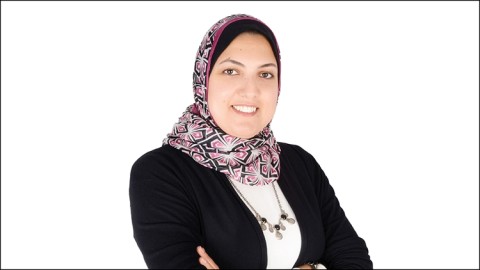
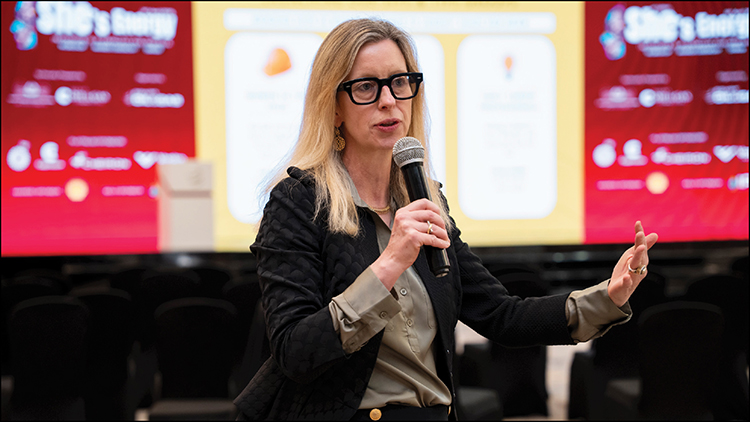
Among the leading figures in this landscape is Eleanor Rowley, Managing Director of Capricorn Energy Egypt. A geologist with a PhD from Cambridge and a career shaped within the executive ranks of global energy companies, Rowley represents a new generation of female leadership in the Mediterranean energy basin. As the founder of Egypt’s Women in Energy Network, she has built a dynamic platform that supports and mentors the next generation of Egyptian professionals, reinforcing the principle that merit and capability remain the industry’s true currency.
In this exclusive interview for our Women’s Month issue, Egypt Oil & Gas sits down with Rowley to reflect on her journey as a senior executive, the barriers she has navigated in a traditionally male-dominated field, and her message to the women shaping the future of Egypt’s energy sector.
Your career spans leadership roles across supermajors and small independents, like TotalEnergies and Capricorn, as well as international postings in the Netherlands, Cairo, Paris, Dubai, and New Delhi. What pivotal experiences shaped your path to becoming Managing Director of Capricorn Energy in Egypt?
I believe it all began with a passion for exploration, both the experience of living and working abroad and the drive to discover new oil and gas resources. That combination gave me the opportunity to build a rich and diverse career from the very beginning. I was fortunate to work on several flagship projects early on, which helped me develop my technical skills quickly. I was also posted to locations with limited resources, where I had to step beyond my defined roles, learn new skills, and often take on leadership responsibilities early in my career.
I also used moving companies as a way to secure next-level development, which can take longer if you stay in one company and wait for the promotion. I have learned to recognize opportunities, and my current position led me back to Egypt, the country I love most, letting me return to a company where I’d worked before.
With the March issue coinciding with International Women’s Day, what barriers have you encountered as a woman in the oil and gas industry, and how did you navigate them?
I think I have been quite lucky and have for the most part worked with great managers and teams where gender was not an issue. Having said that there are subtle behaviors that I regularly see that can undermine my effectiveness. The most obvious barrier is not always being an equal voice at the table. Often you will hear your idea repeated back to you by a male colleague, and at that moment it will be picked up by the group. To this day I still do not have a good strategy for dealing with this.
As the founder of Egypt’s Women in Energy Network, what motivated you to launch this initiative, and how do you envision it influencing opportunities for women in the sector?
When I returned to work in Egypt in 2021, I was impressed by the number of women in senior roles in the industry and building a network was the best way to showcase and champion the talent already present, whilst helping to mentor and develop the next generations.
Egyptian women are a force of nature. Our network has shown that when women get together and organize the sky is the limit! We have built a rich program of events under three pillars: Lead Woman, Career Woman and Well Woman. These events allow a combination of networking and development opportunities, and perhaps most importantly inspire ladies to emulate role models already present here in the industry in Egypt.
What guidance would you share with young women aiming for leadership roles in oil and gas, particularly in emerging markets?
Focus relentlessly on your discipline and become best in class at what you do. In parallel, as you progress, develop broader business acumen and be hungry to learn how a business is run. Request a senior manager as a mentor, with a focus on building commercial skills. There is a lot of unconscious bias from male leaders assuming women can’t run a business, so you need to make it very explicit that you can—and be constantly at the table, asking questions and showing you are ready to contribute in the wider business arena.
Who were the mentors or role models that most influenced your career, and how did they shape your leadership style?
Firstly, one of my previous mangers has been key in showcasing a leadership style that resonates for me which is a combination of a strong focus on technical and commercial excellence, combined with a real love of working collaboratively in a team and supporting your staff to develop themselves.
Secondly one of my coaches has been important in helping me develop and shape what my core values are. Having these values front and center at all times, helps light the path forward and allows me to lead authentically.
In your view, what steps should international companies take to create more inclusive environments that empower women in technical and leadership positions?
Ensure that candidate lists for roles have cast a wide net and include women and check for unconscious biases during the recruitment process. For example, never assume a woman is not suitable for a role because of her other commitments. Always ask her the question – are you able to move to X place, are you ready to step up and take this more responsible role? Nine times out of 10 she will say yes, so do not miss out on fully utilizing your female employees through incorrect impressions of their priorities.