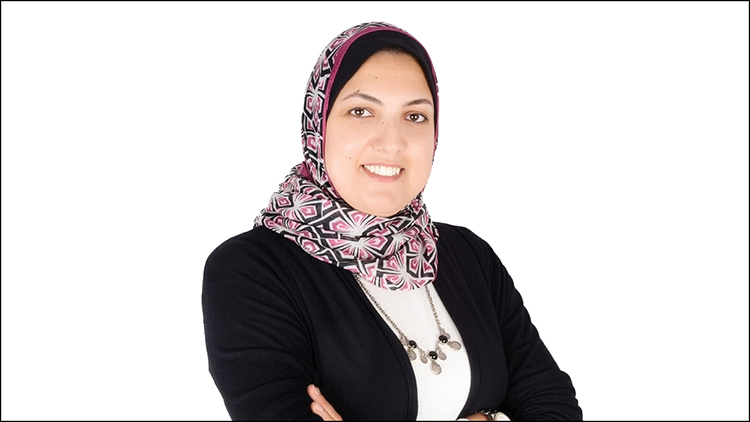
In an industry long defined by global heavyweights, Mona Al Adawy has forged a distinctive path built on vision, resilience, and innovation. As Founder and CEO of GeoEnergy, she transformed a bootstrapped startup into one of the region’s fastest-growing oil and energy services firms, now serving more than 80 clients and delivering over 2,000 successful projects through a team of 60 highly skilled professionals.
Under her leadership, GeoEnergy has earned a reputation for reliability and client-centric delivery, positioning itself as a top-tier provider of upstream data management solutions across the Middle East and Africa. At the heart of this success lies technology. Mona spearheaded the creation of eco7, a fully customizable content management system tailored specifically for the energy sector. Adopted both internally and by clients, eco7 has enhanced collaboration, strengthened data security, and improved organizational efficiency by more than 25%.
Her drive extends beyond operational excellence. Passionate about digital transformation and sustainable growth, Mona continues to expand GeoEnergy’s footprint while advising businesses on resilience and innovation in a rapidly evolving energy landscape. Through her leadership, she exemplifies how entrepreneurial vision can redefine competitive advantage in one of the world’s most demanding sectors.
Mona Al Adawy sat with Egypt Oil & Gas to discuss the strategic importance of upstream data management in the Middle East and Africa, her journey as a woman building a technology-driven energy company, and how diversity, innovation, and inclusion are shaping the future of the sector. In this conversation, she reflects on the challenges she faced in a traditionally male-dominated industry and outlines why unlocking the full potential of talent is critical for the energy industry’s next phase of growth.
GeoEnergy is recognized for its expertise in upstream data management. Could you explain what this entails and why it is so critical for the Middle East and Africa’s energy industry?
Upstream data management is the structured handling, digitization, quality control, processing and interpretation support, and governance of subsurface data such as seismic data, well logs, geological reports, maps, and production information. In many countries across the Middle
East and Africa, valuable historical data exists in paper archives or fragmented systems which is something that should be eliminated as we are in the digital transformation era.
Without reliable data, investment decisions are driven by assumptions rather than evidence. Structured data enables better exploration targeting, more accurate reservoir models, stronger technical due diligence for farm-in opportunities, and accordingly a faster decision-making process. At GeoEnergy, we see data not as an archive function, but as a strategic asset. When properly managed, it transforms uncertainty into clarity and significantly enhances investment confidence.
You chose to study geology and chemistry and built a career in a male-dominated industry. What challenges did you face, and what motivated you to pursue this path?
When I chose geology and chemistry, the decision was actually quite practical at first. Friends advised me that these fields offer strong employment opportunities, and that was important. At the same time, I chose the Faculty of Science because I genuinely loved science. I was always curious about how the Earth works, and how scientific knowledge translates into real-world value.
The real challenge was not the technical work, it was the “perception”. There were moments when I felt I had to demonstrate credibility more than once. Early in my career, I understood that credibility would not be given; it had to be earned by “consistent work”. I focused on strengthening my technical foundation, delivering measurable results, and maintaining professionalism in every engagement. Over time, performance builds trust, and trust builds “reputation”.
I am deeply passionate about using technology to optimize resources and improve processes. Early in my career, I saw a clear gap in the market, where this is no a strong national company delivering upstream technical and digital services at true international standards. That realization became a driving force behind building GeoEnergy.
What motivated me and still motivates me is “impact”. Impact matters more than labels. I believe expertise has no gender. Energy is a strategic sector that shapes national development, and I wanted to contribute meaningfully to that transformation. Today, beyond my own journey, I am driven by the responsibility to open doors for the next generation of women in science and energy, showing them that leadership in this industry is not only possible it is necessary.
How do you foster diversity and inclusion within GeoEnergy, and what impact has this had on your team culture and company success?
Diversity at GeoEnergy is intentional, not accidental. We recruit based on competence, integrity, and potential, ensuring fair opportunities across both technical and leadership roles. Today, women represent around 20% of our workforce and are present across all company functions.
We actively invest in training, mentorship, and cross-functional collaboration to ensure that talent continues to grow based on merit and performance. From a business perspective, diversity is not only a value, but also a strength. Diverse teams bring wider perspectives, sharper problem-solving capabilities, and greater adaptability, especially in complex technical environments.
Can you share examples of women leaders or mentors who inspired you along your journey?
I have been inspired by women who combine intellectual strength with resilience, integrity, and long-term vision. In Egypt, leaders such as MP and financial services veteran Nevine El Tahri have been powerful examples of strategic thinking and institutional impact in the financial and investment landscape.
Likewise, Dalia Ibrahim, CEO of Nahdet Misr Publishing House, one of the Arab World’s most influential education and publishing groups, has demonstrated how knowledge-driven businesses can shape generations through education and publishing.
Beyond well-known figures, I have also been inspired by academic mentors and professional women who demonstrated scientific rigor, discipline, and quiet perseverance. Also, I owe my Quraan teacher a lot as I learned from her the value of focus, consistency, and the persistence.
Do you believe the energy sector is evolving to become more inclusive and female-friendly? What changes still need to happen to accelerate this progress?
The energy sector is evolving, but progress must accelerate. Today, we see more women in technical roles, executive positions, and regulatory leadership across the region. This is a positive shift.
However, structural barriers remain, especially in access to field exposure, senior technical decision-making roles, and board representation.
To move forward, organizations must embed inclusion into policy and performance metrics not treat it as a symbolic initiative. Mentorship programs, leadership pipelines for women in STEM, flexible work frameworks, and measurable accountability will be key drivers.
Inclusion is more than a social imperative, it is a strategic advantage. The energy transition and digital transformation demand the full spectrum of available talent, and the future of our industry depends on unlocking it.