While the world moves towards meeting climate goals heavily based on decarbonization and green energy, hydrogen is emerging as one of the most promising solutions. It can replace coal, oil, and natural gas in sectors that are notoriously hard to electrify, such as steelmaking, cement, and chemicals. Beyond industry, hydrogen is increasingly powering buses, trucks, trains, and even aircraft, offering zero-emission alternatives to diesel. It also plays a strategic role in reducing dependence on imported fossil fuels and diversifying energy supply.
Crucially, hydrogen makes storing renewable energy from solar and wind possible for long durations by acting as a flexible energy carrier: it can be produced when renewables generate surplus electricity and then used later when demand is high or renewable output is low.
In Egypt, investment in hydrogen is still in its early stages, yet the potential is immense. Europe’s rising demand for green hydrogen opens opportunities for Egypt to position itself as a supplier, leveraging its abundant solar and wind resources to store excess power and export clean energy. Domestically, hydrogen can reinforce Egypt’s industrial base, supporting energy-intensive sectors such as petrochemicals, fertilizers, and steel, while also aligning with the country’s broader energy diversification strategy.
Hydrogen Egypt (H²EG), an international association, was founded to align Egypt with the global push for carbon neutrality and to accelerate the country’s role in the hydrogen economy. The association helps leverage Egypt’s renewable resources to produce green hydrogen, opening export channels to Europe and Asia. It also acts as a collaborative platform, connecting local and international companies in hydrogen and ammonia projects, thereby strengthening Egypt’s position in the emerging global hydrogen market. By engaging with policymakers, industry leaders, and investors, Hydrogen Egypt is working to ensure that Egypt becomes a regional hub for clean hydrogen and a key contributor to global Decarbonization efforts.
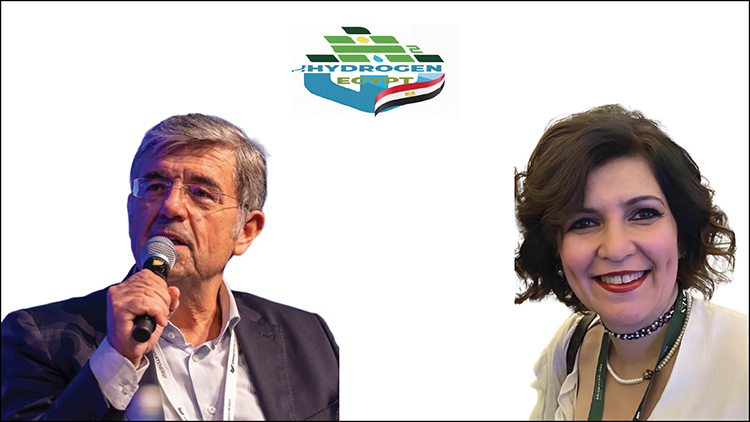
Against this backdrop, Egypt Oil & Gas (EOG) sat down with Khaled Nageib Hydrogen Egypt CEO and Managing Director and Dalia Samir the Co-Founder and Business Development Director of the association to explore where Egypt currently stands on the road to hydrogen, and to discuss the challenges and opportunities that lie ahead in shaping the country’s clean energy future.
What motivated the creation of Hydrogen Egypt?
Hydrogen Egypt was inspired and supported by Hydrogen Europe, whose expertise and network helped us establish a similar platform in Egypt. For the first two years, we used their logo to reflect this guidance and collaboration while building local capacity. Today, Hydrogen Egypt operates independently, bridging industry, technology providers, investors, and regulators to translate Egypt’s hydrogen ambition into practical, bankable projects.
Our mission is to leverage Egypt’s renewable resources and industrial base to create green hydrogen, ammonia, and decarbonization solutions serving domestic and regional markets.
Hydrogen Egypt works with 400+ companies and 30+ associations. How do these partnerships translate into tangible projects in Egypt?
These partnerships form a real execution ecosystem, converting collaborations into tangible projects through green ammonia and fertilizer initiatives with industrial partners. This includes hydrogen injection pilots in cement and steel production, alongside port-linked export initiatives through the Egyptian Ports Development Group, which specializes in modernizing Egypt’s ports and terminals.
Partnerships are actionable, enabling feasibility studies, technology transfer, pilot operations, and bankable investment structures that directly advance Egypt’s hydrogen and Decarbonization agenda.
Does Hydrogen Egypt engage with regulators to align taxation, subsidies, and investment frameworks with global best practices? Give examples.
Yes. Hydrogen Egypt acts as a bridge between government and industry. Examples include advising on customs, tax treatment, and incentives for electrolyzes and renewable inputs; aligning carbon accounting and certification with European Union (EU) standards for Renewable Fuels of Non-Biological Origin (RFNBO) like green hydrogen; and coordinating port and logistics regulations to enable hydrogen export infrastructure. These engagements ensure Egypt remains an investable, globally competitive market.
Egypt hopes to become a hydrogen hub by 2040. What qualifies it for this position?
Egypt is uniquely positioned due to its abundant solar and wind resources, existing gas and ammonia infrastructure, strategic ports, and geographic proximity to Europe, Africa, and Asia.
Over the next decade, Egypt will function as a dual-role hydrogen hub, acting as an exporter of green hydrogen and ammonia to global markets and serving as a regional Decarbonization platform. This will enable Egypt to support hard-to-abate industries across Middle East and North Africa (MENA) and the African continent.
Hydrogen Egypt is helping realize this vision through projects like partnering with the EU-funded TRIERES Hydrogen Valley project in Greece to build a cross-Mediterranean hydrogen ecosystem, linking renewable hydrogen production in Egypt with infrastructure and demand in Europe.
What is the possibility of integrating hydrogen into Egypt’s broader energy mix alongside natural gas and renewables?
Hydrogen integration is highly feasible and complementary. Near-term options include blending hydrogen with natural gas in industrial and power applications, fuel-switching pilots in heavy industry and transport, and using renewables as a backbone for green hydrogen production. Hydrogen Egypt supports these pilots and industrial projects, ensuring integration without compromising energy security.
What policy changes or incentives are most critical to accelerate hydrogen adoption in Egypt?
The key priorities are clear hydrogen certification and offtake regulations, predictable fiscal incentives and tax frameworks, streamlined permitting, land allocation, and industrial pilot approvals. Also, supporting technology localization and export-oriented infrastructure is crucial. These measures reduce investor risk and accelerate industrial-scale hydrogen deployment.
What do you think makes scaling hydrogen infrastructure in Egypt challenging?
Challenges include high capital expenditure for infrastructure, storage, and production. The lack of coordination across ports, industrial zones, and utilities is another obstacle. There is also the uncertain demand for different kinds of hydrogen in both domestic and export markets. Hydrogen Egypt mitigates these by coordinating government facilitation, industrial anchor agreements, and integrated project planning.
What financing models are proving most effective for hydrogen projects in Egypt?
Blended finance is the most effective approach in Egypt’s case. This involves combining facilities from development financing institutions, sovereign funds, export credit agencies, private investors, and strategic off takers.
Egypt can also resort to early-stage grants or concessional funding to de-risk pilot infrastructure. Moreover, project finance structured around long-term offtake agreements can be a resort, particularly for ammonia exports and industrial clusters. This model of mixing different means of financing balances risk and ensures projects are bankable.
How do you see Egypt’s hydrogen industry evolving by 2030?
By 2030, Egypt will have operational hydrogen clusters, particularly in green ammonia and fertilizers, decarbonized cement and steel production, and hydrogen-based transport and shipping fuels. Certified hydrogen exports to Europe will complement growing domestic industrial demand, creating a fully functioning hydrogen ecosystem.
What message would you give to international stakeholders about Egypt’s hydrogen potential?
Egypt is not just a future opportunity; it is a current market in execution. With a strategic location, renewable abundance, industrial readiness, and government backing, Egypt is one of the most compelling hydrogen investment destinations. Hydrogen Egypt facilitates projects, knowledge transfer, and bankable opportunities for international partners.
If you had to summarize Egypt’s hydrogen ambition in one sentence, what would it be?
Egypt aims to become the Mediterranean’s most competitive and integrated green hydrogen and ammonia hub, serving domestic industry and global markets.
What headline would you want to see about Hydrogen Egypt five years from now?
Hydrogen Egypt emerges as the leading platform for industrial decarbonization and green hydrogen exports in the MENA region.