In the oil and gas industry, infield work has long been associated with intensity: long rotations in remote desert locations, offshore platforms surrounded by open sea, high-pressure operations running around the clock, and worksites where most of the workforce is male. It is physically demanding, logistically complex, and often far from family and comfort.
Yet for many women who choose this path, the field is not defined by hardship alone. It is defined by growth, impact, and the satisfaction of seeing engineering decisions come to life in real time.
In celebration of International Women’s Day, Egypt Oil & Gas brings together the voices of three female infield engineers who shared candid reflections on their journeys , from their very first onsite experiences to the daily technical challenges of operating in some of the industry’s most demanding environments. Working in deserts and offshore installations, often as the only woman on location, they have navigated operational pressure, technical scrutiny, and logistical intensity, and emerged stronger, more confident, and deeply committed to their craft.
First Steps Onsite: Earning Credibility
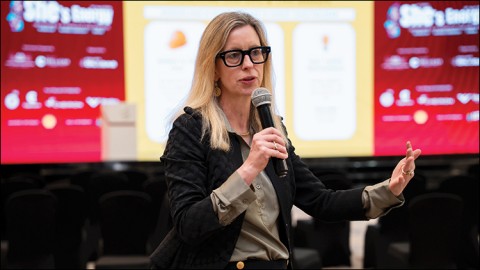
For Doha Youssef, Well Construction Measurements Field Engineer at SLB, her first field assignment marked the transition from theory to reality. After years of studying petroleum engineering, stepping onto a drilling site was more than a career milestone; it was a personal achievement. “It felt like a dream come true,” she recalls. But the excitement quickly met the realities of a high-pressure operational environment, where every decision influences safety and performance.
To establish credibility, she focused on what she could control: preparation and consistency. She immersed herself in the drilling program, tools, and measurements, ensuring she understood the technical details thoroughly. “Once the crew saw that I was technically solid, dependable, and not afraid of field conditions, respect naturally followed.” Today, only a few years later, she has progressed into a senior onsite role, mentoring trainees and supporting younger engineers as they navigate their own first steps in the field.
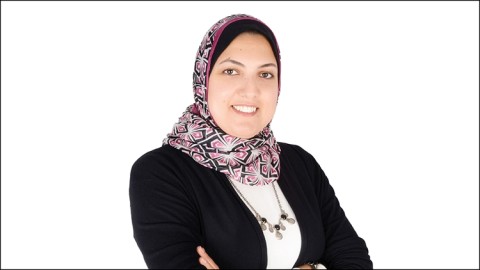
Amira El-Banbi, Product and Service Delivery Manager at SLB, had an equally intense introduction to field life. As a young Egyptian engineer stepping onto a rig for the first time, she quickly realized that “credibility in the field isn’t given by a title; it’s earned through preparation and action.” The pace was fast, the environment unfamiliar, and the stakes high. Rather than being intimidated, she focused on mastering tool configurations, logging objectives, and contingency plans, understanding not only what was being done, but why.
Over time, her consistency built trust. Her technical input began to carry weight in discussions, and her reliability strengthened team dynamics. That foundation eventually led her to become one of the first Egyptian female wireline engineers assigned to deepwater campaigns in Egypt during 2023–2024, a milestone that reflects both personal resilience and evolving industry norms.
Rana Abdallah, Electrical Engineer at bp mentioned that her first assignment came on bp’s more than $10 billion West Nile Delta gas development project. Walking onto a large-scale construction and commissioning site as a recent graduate and the only female field engineer, she sensed the unspoken question: “Can she handle this?” Her answer came not in words, but in performance.
She grounded herself in rigorous preparation, studying drawings, inspection plans, and system documentation in detail. When issues arose, she traced root causes methodically rather than reacting emotionally. “Credibility onsite comes from your presence and consistency,” she explains. By being physically present during installations and energization phases, engaging directly in troubleshooting, and respecting technicians’ practical experience, she gradually shifted the dynamic. Conversations became collaborative. She moved, in her words, “from being assessed to being consulted.”
Choosing the “Hard” Technical Path
For all three engineers, choosing the most technically demanding side of oil and gas was not accidental; it was intentional.
Youssef was drawn to operations where decisions are made in real time. “Drilling and measurements combine engineering, problem-solving, and field execution, it’s where theory meets reality.” Field exposure across Egypt and Oman accelerated her learning curve, broadening her understanding of operational efficiency and cost awareness. What keeps her motivated is impact: “Every decision, calculation, measurement, or recommendation directly affects safety, performance, and value.” Despite the physical demands, she finds fulfillment in contributing to decisions that shape outcomes.
El-Banbi’s motivation stemmed from complexity. “I’ve always been drawn to complex systems and environments where engineering decisions have tangible impact.” In wireline evaluation, she found the intersection of physics, geology, data interpretation, and real-time judgment. Logging data, when executed correctly, influences multimillion-dollar development decisions. That level of responsibility made long hours worthwhile. The demanding environment pushed her to grow, technically and personally , while strong institutional support reinforced her confidence.
Abdalla approached her career path with strategic clarity. “If you want to influence the future of energy, you have to understand its backbone: the physics, the failure modes, and the grid behavior.”
She admits that the demands are real: long hours, high accountability, and challenging technical reviews. But responsibility at that level is a privilege. “When you operate at the technical core of energy systems, whether in oil and gas or low-carbon infrastructure, your decisions shape reliability, sustainability, and trust. And for me, that influence is worth the hard path.”
In a male-dominated field environment, she relied on technical depth as her strongest voice. “Engineering calculations don’t care about gender, they care about accuracy.”
Balancing Intensity with Sustainability
Field life demands resilience , but sustainability requires structure.
“Field work requires discipline and strong planning,” Youssef explains. She prioritizes communication with family and incorporates daily exercise to manage stress and maintain focus. For her, rotations are about intentional separation: time onsite is fully dedicated to work; time off is true recovery. Even in remote environments, she finds grounding in small rituals , reflection, appreciation of natural surroundings, and mental reset after long shifts. “The key is balance, boundaries, and remembering why I chose this career.”
El-Banbi learned early to treat personal time with the same discipline as operational commitments. As her role evolved into leadership, sustainability became less about perfect balance and more about energy management. “Sustainability in this career isn’t about achieving perfect balance; it’s about protecting your energy and ensuring you can consistently perform at a high level over the long term.”
Early in her career, Abdalla equated strength with endurance, pushing through exhaustion without pause. “Real strength requires structure,” she later realized. Today, she protects recovery time, prioritizes fitness and mental clarity, and sets boundaries that allow sustainable performance. “Sustainability isn’t about reducing ambition. It’s about building the resilience and structure required to sustain ambition over decades.”
Making Their Voices Heard
In high-pressure troubleshooting environments, being the only woman in the room adds another layer of complexity. Yet for these engineers, influence is built on clarity and competence.
“Clarity and technical accuracy matter more than anything,” Youssef says. She ensures her contributions are backed by data and clear logic. Her background in acting has enhanced her communication skills, helping her remain composed under pressure. “When your solutions work and you remain calm under pressure, your voice naturally becomes trusted , regardless of gender.”
The approach is equally pragmatic for El-Banbi. “In high-pressure troubleshooting, opinions matter less than solutions.” She contributes early to discussions, grounding her input in tool behavior, system diagnostics, and historical data. “Confidence comes from competence,” she adds, reinforcing that credibility is earned through consistent technical value.
Abdalla emphasizes structured thinking. “I don’t compete for volume , I contribute with clarity.” By separating assumptions from facts and presenting quantified alternatives, she shifts discussions from opinion to engineering judgment. “Technical confidence doesn’t require theatrics. When your analysis is rigorous and your reasoning is composed, people listen.”
Redefining the Narrative
To young women hesitant about the oilfield’s “rough” reputation, their advice is clear and unified.
“Don’t let the reputation scare you away from your passion,” Youssef says. Guided by her “You Only Live Once” philosophy, she refuses to live with unanswered “what ifs.” Challenges, she believes, shape character rather than limit potential.
“The oilfield is demanding , but it is also incredibly rewarding,” El-Banbi adds. Early exposure to responsibility accelerates growth. The sector is evolving, creating space for curious and capable engineers regardless of gender.
Abdalla offers a broader perspective. The energy sector today spans far beyond traditional stereotypes, extending into carbon capture, hydrogen, and advanced infrastructure systems. Success, she notes, has always been determined by “competence, preparation, and resilience” , not gender. If a young woman loves engineering, she should not disqualify herself because of perception. She deserves not only to enter the industry, but to shape its future.
Looking Ahead
Will we still speak of “female engineers” in ten years?
“I believe we will talk less about ‘female engineers’ and more about strong engineers,” Youssef says, optimistic that capability and impact will take center stage.
El-Banbi agrees progress is underway but acknowledges that representation still matters. Visibility shapes who feels welcome to enter the field. As more women lead complex operations and deliver results, gender will naturally become secondary to expertise.
True progress, Abdalla suggests, will come when a young engineer’s presence onsite no longer raises silent questions. Until then, she embraces her identity fully: an Egyptian, a woman, and an engineer shaping the future of energy.
Together, their stories reflect an industry in transition. In the deserts, offshore platforms, and commissioning yards where pressure is constant and margins for error are small, credibility is built through competence. And in those environments, technical skill , not stereotype , ultimately defines the engineer.