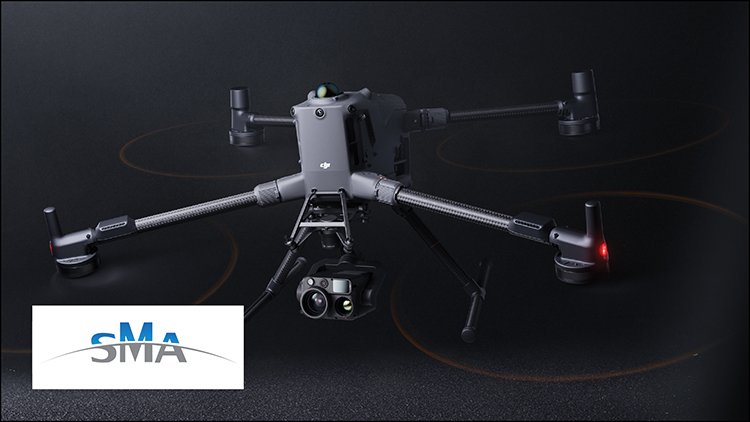
SMA and its affiliates are at the forefront of integrating drone technology into oil and gas inspection, monitoring, and emissions quantification across Egypt. With decades of expertise in safety, environmental compliance, and industrial services, SMA delivers innovative aerial inspection solutions.
Its industrial drones-equipped with Optical Gas Imaging (OGI), gas sniffer sensors, thermal, visual, and high-resolution cameras-help operators meet the highest environmental and safety standards. These solutions complement ground surveys, enabling comprehensive inspections of complex, hard-to-reach assets while reducing operational disruptions and personnel exposure to hazardous environments.
From methane emission quantification aligned with OGMP 2.0 Level 5, to live flare stack inspections and long-distance pipeline monitoring, SMA’s drone services provide actionable, real-time data that supports proactive maintenance, regulatory compliance, and stronger environmental stewardship across the oil and gas value chain.
Using Drones at Oil and Gas Sites
Drones are an increasingly valuable tool for inspecting, monitoring, and quantifying emissions in the oil and gas industry. Here are some of the key applications:
- Oil and Gas Inspection:
Drones equipped with advanced Optical Gas Imaging (OGI) sensors and high-resolution cameras are revolutionizing oil and gas leak monitoring and inspection. These state-of-the-art tools can detect a wide range of gases, including:
- Methane
- Hydrocarbons
- Volatile Organic Compounds (VOCs)
These versatile drones are deployed across a variety of critical oil and gas facilities, ensuring comprehensive monitoring and inspection of:
- Offshore platforms and onshore production facilities
- Pipelines and storage tanks
- Refineries and processing plants
Drones offer a significant advantage in terms of efficiency compared to traditional ground-based methods. Their ability to cover large areas quickly and accurately helps oil and gas companies:
- Reduce inspection times
- Minimize operational disruptions
- Ensure continuous monitoring
Access hard-to-reach or hazardous areas, allowing for comprehensive inspections without putting personnel at risk
Collect data that helps identify equipment issues, leaks, corrosion, and other problems early, enabling proactive maintenance and repairs
- Emissions Quantification:
- Drones can be outfitted with specialized gas sensors and imaging systems to measure and quantify gas emissions from oil and gas operations.
- They offer significant advantages for methane quantification.
- The data collected helps oil and gas companies better understand their emissions footprint, identify and address leaks, and comply with regulatory requirements.
The system provides advanced real-time data visualization and analytical capabilities. Users can access intuitive and insightful information for timely decision-making, enhancing operational efficiency and responsiveness to methane emissions.
By utilizing drones equipped with gas sniffer sensors, companies can conduct inspections in hazardous areas without putting personnel at risk. This not only improves safety but also allows for more frequent and thorough monitoring of potential leak sources.
In addition to methane, the sniffer sensor can detect and quantify various gases simultaneously, providing a comprehensive overview of air quality and emissions. This feature is particularly useful in industrial settings where multiple pollutants may be present.
- Flare Stack Inspection
- Drones revolutionize flare stack inspections by being fast, safe, and cost-effective.
- Traditional flare stack inspections are dangerous, time-consuming, and costly, as flare stacks must be shut down during manned inspections. With drones, engineers can carry out inspections while the flare stack is live, dramatically reducing costs.
- Stabilized drones capture accurate and actionable data offshore and onshore, covering angles impossible to attain with conventional methods.
Key Differences between drone-based inspections and traditional aerial overflights
- Enhanced Safety
Drones allow for inspections in hazardous environments without putting human operators at risk, significantly improving safety during assessments.
- Cost-Effectiveness
Drone inspections are considerably less expensive than conventional fly-over techniques, reducing the overall cost of pipeline monitoring and maintenance.
- Speed and Efficiency
Drones can cover vast stretches of pipeline quickly, flying at speeds of up to 60 MPH (100 km/h). This efficiency allows for faster inspections compared to manual methods.
- High-Resolution Data Collection
Equipped with high-resolution cameras, thermal sensors, and LiDAR systems, drones can capture detailed images and data, enabling precise assessments of pipeline conditions.
- Real-Time Data Analysis
Drones can transmit data in real time, allowing for quick analysis and decision-making, which is crucial for maintaining pipeline integrity and safety.
The data collected through drone-based oil and gas inspections and emissions quantification can be integrated with asset management systems and environmental reporting to help the industry improve safety, operational efficiency, and environmental stewardship.