Today, global energy markets are shaped as much by politics as by geology. Russia, long established as one of the world’s largest suppliers of oil and gas, wields significant geopolitical leverage through its energy exports. Yet this influence is increasingly challenged by political instability and the mounting pressure of Western sanctions. Companies such as Lukoil and Rosneft, central to Russia’s energy sector, find themselves at the heart of this confrontation—caught between domestic ambitions and international restrictions.
Political Context and Instability
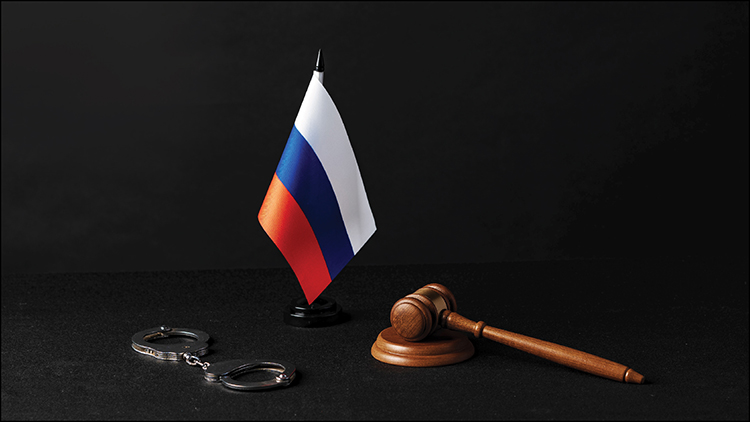
The United States (US) and European Union (EU) have responded to Russia’s actions against Ukraine with sweeping sanctions that target its leading oil and gas firms. These measures range from bans on financing and advanced technology transfers to restrictions on exports and forced divestments of assets. While the direct consequences are felt most acutely by Russian companies, the ripple effects extend far beyond national borders, disrupting global supply chains and reshaping energy markets.
The US has been intensifying pressure on Russia’s energy sector by imposing full blocking sanctions on Lukoil. Following its designation to the Specially Designated Nationals List (SDN List) in late 2025, the company is now undergoing a forced sale of its global holdings. Investors and stakeholders face an end of February deadline to finalize the divestment of these international assets.
US had further imposed sanctions on Rosneft as well as Lukoil and was threatening tariffs on countries that buy Russian energy products despite talks on ending the war in Ukraine, Russian Foreign Minister Sergei Lavrov, noted, according to the Mosco Times.
In October 2025, the European Commission backed the adoption of the EU’s 19th package of sanctions against Russia. The measures include a phased ban on Russian liquefied natural gas (LNG), set to take effect on 1 January 2027 for long-term contracts, while short-term agreements must be phased out within six months. The package also removes previous import exemptions granted to Rosneft and Gazprom.
However, exemptions remain for oil originating from third countries, such as Kazakhstan, and for shipments to countries that comply with the established Oil Price Cap. In addition, the EU has banned a specific type of liquefied petroleum gas (LPG) to close loopholes, following reports that it had been used to bypass earlier LPG restrictions, according to the European Commission.
With the expansion of US sanctions, Russia’s four largest oil producers—including Gazprom Neft and Surgutneftegas, which were targeted by the Biden administration in early 2025—are now under significant pressure. Collectively, these firms represent approximately 75% of national production and 80% of total exports. This coordinated tightening is projected to erode oil and petroleum revenues, which have traditionally served as the cornerstone of the Russian federal budget, according to the European Council on Foreign Relations.
Sanctions and Changing Market Dynamics
To assess the impact of US sanctions, it is essential to examine the operational footprint of both companies and how restrictions are reshaping their overseas activities.
For Lukoil, the Middle East represents the core of its international upstream portfolio, yet sanctions have begun to affect operational continuity and financial flows. The company holds a 75% stake in Iraq’s West Qurna-2 oilfield, where production remains stable at 465,000–480,000 barrels per day (b/d). However, payment constraints linked to sanctions have prompted Iraqi authorities to approve a temporary operational takeover by the state-run Basra Oil Company to prevent disruptions and ensure uninterrupted output. This arrangement reflects how sanctions can indirectly shift operational control, even when assets continue producing.
Across Africa, Lukoil maintains minority stakes in strategic concessions, including Ghana’s Deepwater Tano (38%), Congo’s Marine XII (25%, alongside Eni), Nigeria’s OML 140 (18%, with Chevron), Egypt’s Meleiha concession (24%, with Eni), and a 50% stake in the West Esh El-Mallaha (WEEM) concession with Tharwa Petroleum. While production has not halted, sanctions increase financing costs, complicate profit repatriation, and limit access to Western service providers and technology—factors that could gradually affect project timelines and investment decisions.
Rosneft faces similar structural pressures. Its largest overseas holding is a 49% stake in India’s Nayara Energy, which includes the Vadinar refinery—accounting for roughly 8% of India’s refining capacity. Sanctions exposure has heightened scrutiny over crude sourcing, product exports, and financial transactions tied to the refinery.
In Egypt, Rosneft’s 30% stake in the Zohr gas field remains a strategically significant asset. Recognising the field’s importance to Mediterranean gas supply, the UK granted limited exemptions in late 2025 to safeguard energy security. This illustrates how geopolitical and energy security considerations can temper the practical enforcement of sanctions.
In Iraq’s Kurdistan Region, Rosneft’s historical 60% stake in the Kurdistan export pipeline and exploration interests have been further complicated by both sanctions-related financial constraints and ongoing legal disputes between Erbil and Baghdad, adding layers of operational uncertainty.
Reflecting broader restructuring pressures, Lukoil announced on January 29 an agreement with US investment firm Carlyle to divest LUKOIL International GmbH, which manages much of its international portfolio. The deal—excluding assets in Kazakhstan—remains subject to regulatory approvals, including clearance from the US Treasury’s Office of Foreign Assets Control (OFAC). The proposed divestment signals a strategic recalibration aimed at insulating core assets and navigating sanctions exposure more effectively.
Overall, while production from key assets continues, sanctions are increasingly reshaping governance structures, financial mechanisms, partnership dynamics, and long-term investment strategies for both Lukoil and Rosneft.
Reshaping Oil Trade
The sanctions of Russia have been impacting buyers, according to Daniel Spiro, an associate professor at the department of economics at Sweden’s Uppsala University. Spiro told France24 in January 2026 that “for maybe the first time, it seems to have affected India’s and China’s willingness to buy Russian oil.” He said, “India decreased the volumes and China seems to have demanded a higher discount on the oil it buys. And this hasn’t really been the case previously,” according to Reuters.
Russian export dynamics experienced a notable shift toward the end of 2025 and into early 2026. According to data from the Helsinki-based Centre for Research on Energy and Clean Air (CREA), China’s seaborne crude imports from Russia surged by 23% in December, even as Indian shipments plummeted by 29%. By January, a sharp increase in ‘undisclosed’ buyers suggested a rise in oil being held at sea. Borys Dodonov of the Kyiv School of Economics noted that as of mid-January, numerous tankers remained idle near the Chinese and Indian coasts, idling offshore while seeking refineries to finalize a sale, according to the Financial Times.
The tightening web of US and EU sanctions has placed Russia’s energy giants at a crossroads, forcing them to recalibrate strategies in the face of shrinking access to capital, technology, and international markets. Lukoil and Rosneft, once symbols of Moscow’s global reach, now grapple with divestments, operational disruptions, and the erosion of long-standing partnerships. Yet the consequences extend far beyond Russia’s borders. Ultimately, the sanctions regime is not merely a punitive measure—it is a structural force reshaping the geography of energy supply and demand. As Russia’s leverage weakens and new patterns of trade emerge, the balance of power in global energy is being redrawn.