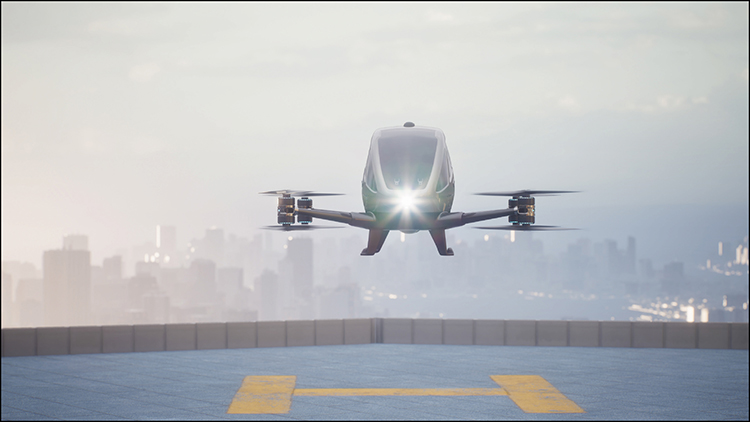
Electric aviation is emerging as one of the most promising pathways to reduce emissions, operating costs, and noise in air transport; particularly for short-haul and regional flights. While full commercial deployment remains in its early stages, research, regulatory frameworks, and pilot projects are accelerating globally.
Core Technology
Electric aviation refers to aircraft propulsion systems that rely on electric motors powered by onboard energy sources, rather than traditional combustion engines that burn fossil fuels. These systems range from fully electric aircraft, where battery-powered electric motors provide all the thrust, to hybrid-electric aircraft, which combine electric propulsion with traditional engines or alternative fuels.
Ahmed Elbermbali, Sustainability Growth Director at Bureau Veritas Group emphasized to Egypt Oil and Gas (EOG) that “Electrification of all modes of transport is happening, it’s just a matter of time that we will see more heavy modes of transport being electrified.”
Current battery technology is already good enough to power air taxis, which are small electric aircrafts that can take off and land vertically (called eVTOLs).
These systems deliver instant torque for efficient takeoffs, zero in-flight emissions, and noise levels up to 80% lower than traditional jets, making them particularly suited to urban and regional flights under 300 km.
Indeed, “air taxi makes great sense in highly populated areas to help avoid car traffic and create air corridors between key important destinations,” El Brembali added. Pure battery-electric aircraft are best suited to small platforms, while hybrids and hydrogen fuel cells target longer routes, with advances in energy density enabling ranges of up to 160 km for eVTOL models.
Furthermore, sustainability expert Mariam Yassin explained that electric and hybrid-electric aviation differ from other sustainable aviation pathways, particularly Sustainable Aviation Fuel (SAF) and hydrogen-powered flight, in their infrastructure requirements, technological maturity, operational scope, and timelines for large-scale deployment. “While all aim to decarbonize the aviation sector, their approaches and immediate applicability vary significantly,” she told EOG.
Global Imperative, Egypt’s Opportunity
Globally, aviation accounts for approximately 2–3% of transport-related CO₂ emissions. Electrification, alongside sustainable fuels and operational improvements, is one of the key innovation pathways recognized by the International Civil Aviation Organization’s (ICAO) global environmental framework. ICAO sets global standards for aviation safety, air navigation, airspace management, security, and environmental protection, including aircraft noise and emissions.
Electric and hybrid-electric aircraft offer meaningful emissions and noise reductions, particularly on short routes where battery limitations are less restrictive. Lifecycle assessments indicate that electrified aircraft can reduce lifecycle pollutant emissions by roughly 50% compared to conventional aircraft. Noise reduction is another critical advantage, as electric motors operate far more quietly than jet turbines, improving community acceptance around airports — a key consideration for urban air mobility.
For countries like Egypt, electrification is inevitable; the real challenge lies in how and where it can be seamlessly integrated into existing aviation and energy frameworks.
In Egypt, sustainability is embedded in national development strategies, including Egypt Vision 2030, which emphasizes decarbonization, clean energy deployment, and technology transfer. The civil aviation sector is closely tied to tourism and trade and therefore has a strong incentive to align with climate objectives. Egypt’s push to locally produce SAF from waste oils underscores this direction, with state-backed projects expected to reduce CO₂ emissions by 400,000 tons annually once operational.
At the same time, high-level discussions between Egyptian officials and Archer Aviation — a leading eVTOL developer — point to growing interest in electric aviation’s role in urban and advanced air mobility. As Elbermbali noted, “in a city with over 20 million people like Cairo it could create a lot of value first for tourists and second for some business cases.”
“Electric aviation will make only a limited contribution to Egypt’s decarbonization targets in the near term, but it is an important long-term component,” Yassin commented. It aligns closely with Egypt’s renewable energy strategy as it has the potential to support a truly zero-emission aviation ecosystem while reinforcing Egypt’s position as a regional leader in sustainable technology. She added that while SAF will likely deliver greater near-term emissions reductions through 2040, electric aviation will grow in importance as technology matures and renewable energy capacity expands.
Emerging Potentials in Egypt
Signals from policy, pilot projects, and private investment show that Egypt is moving beyond preparation, positioning itself as an early adopter and a regional hub for urban and regional electric air mobility.
“At the policy level, the government is creating a favorable environment for aviation innovation,” Yassin said. A key milestone is the March 2025 agreement with the International Finance Corporation (IFC), which will advise on introducing Public-Private Partnerships (PPPs) across 11 airports. “This program is designed to leverage private sector innovation and efficiency,” she explained, creating space for investors to introduce advanced technologies, including electric and hybrid-electric aircraft. These efforts are reinforced by Egypt Vision 2030 and the country’s renewable energy target of 42% by 2030, which together provide the clean-energy foundation required for electric aviation to deliver genuine emissions reductions.
On the commercial side, the strongest signal of readiness is the launch of a commercial air taxi service in October 2025 by Air Taxi Egypt, a subsidiary of Abu Dhabi Aviation. Backed by ADQ, the project targets premium tourism routes such as Cairo–El Gouna, as well as congested urban mobility in Greater Cairo. This reflects a broader global trend, as “many cities have been testing these eVTOLs and plan to deploy them commercial in the coming months,” Elbermbali underscored.
The partnership with Archer Aviation brings cutting-edge aircraft and operational expertise to Egypt, while the development of vertiports and charging facilities marks a critical infrastructure step. “[This project] creates the first operational footprint for electric aviation in the country,” Yassin noted. Taken together, the initiative serves as a high-impact pilot demonstrating both technical feasibility and market demand, and “its success will likely attract further investment and encourage the development of a broader ecosystem,” she elaborated.
Barriers and Risks
Despite these positive signals, deploying electric aviation in Egypt faces significant challenges across infrastructure, regulation, technology, and economics. As Yassin observed, “these challenges are global, but they are more acute in emerging markets.”
Infrastructure remains the most immediate hurdle. “Most airports were never designed for high-power aircraft charging,” she said, noting that a single major hub could require around 900 kilowatts of charging capacity. Grid reliability is equally critical. “Airports require near-100% uptime, potentially necessitating on-site energy storage solutions,” sustainability expert mentioned.
Regulatory readiness is another constraint. “For eVTOLs to be commercially available, it requires a bundle of work from regulatory agencies, businesses, tourism agencies and others,” Elbermbali explained. Additionally, experts saw that the global standards for certifying electric and eVTOL aircraft are still evolving, requiring Egypt to adapt frameworks from bodies such as EASA (European Union Aviation Safety Agency) or the FAA (US Federal Aviation Administration). Managing low-altitude eVTOL traffic in a dense city like Cairo is widely viewed as “a new regulatory and technological challenge,” Yassin highlighted.
Technology limitations also persist. “Battery energy density remains the core constraint,” Yassin explained, while Egypt’s high ambient temperatures can accelerate battery degradation and reduce efficiency. Economically, upfront investment costs are substantial, meaning early deployment will likely focus on premium tourism and niche business routes.
Addressing these challenges will require coordinated action between government, regulators, investors, and technology partners. As Elbermbali suggests, “all have to come together to put the necessary infrastructure required to bring these transport services to Cairo and other key destinations,” supported by a phased rollout beginning with limited air taxi services.