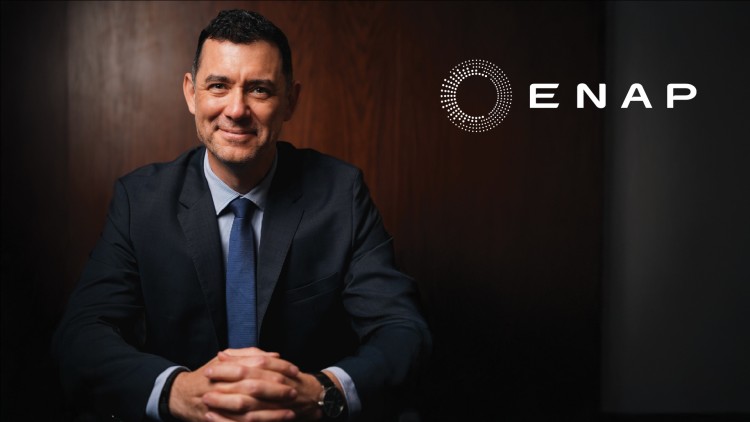
ENAP Sipetrol is expanding its footprint through a balanced strategy of exploration-driven growth and a commitment to sustainability. Gustavo Guisolfo, General Manager of ENAP Sipetrol Egypt, discusses the company’s recent milestones, its approach to low-carbon operations, and its vision for the future of Egypt’s energy sector.
What are the company’s latest developments and operational achievements in Egypt?
This year, ENAP Sipetrol has successfully sustained production levels in the East Ras Qattara (ERQ) concession by drilling four development wells, targeting different reservoir levels. Furthermore, through this joint venture (JV), the company was able to unlock bypassed oil in the Lower Bahariya formation by drilling three development wells. Additionally, a new well targeting Upper Bahariya Formation achieved an initial production rate of 900 bbl/d.
The most important thing here is that in 2025, we had reached two years without lost time injuries, accumulating around 3.8 million working hours. Safety is the first parameter of success for operations, and working with Petroshahd as a team is the cornerstone to improvement.
The company has also marked a major milestone in the West Amer concession with the successful completion of a 3D broadband seismic acquisition campaign spanning around 822.4 km², delivered with zero downtime and zero HSE incidents.
The operation was conducted in collaboration with renewable energy operators in the area to ensure both efficiency and environmental responsibility.
The Broadband 3D seismic acquisition in the West Amer block is a first-of-its-kind technology application in Egypt. What is its significance in accelerating drilling activities and production?
In the absence of a legacy velocity model, the team developed a new interval velocity model using available well data. A machine learning technique (Loginov et al., 2024) was applied to automatically identify subsurface horizons within the PSTM seismic volume, which, combined with sonic log data, formed the foundation for building the initial model.
Furthermore, to enhance near-surface resolution, the team applied MWI techniques, drawing on leading regional practices (Gou et al., 2025). Using a blended acquisition design that enabled continuous data recording, interferometric methods (Le Meur et al., 2020) were employed to create virtual seismic sources from ambient noise, extending the usable frequency range down to 0.5 Hz, beyond conventional limits.
The integration of these results refined the near-surface velocity model to 1 km depth. Non-linear tomography was performed to improve model accuracy above the Miocene evaporites.
This updated model served as the foundation for acoustic Time-domain Low-Frequency Full Waveform Inversion (TLFWI), which ENAP executed for the first time onshore Egypt. In that, it incorporated both diving and reflection waves (3–12 Hz). But despite the geological challenges in the area, the results yielded a geologically consistent and highly accurate model.
Moreover, our company continues to collaborate with Viridien, the global digital and Earth data company, to enhance seismic imaging and unlock new subsurface insights. The project workflow included: (a) developing an initial well-based velocity model with MWI and tomography updates; (b) generating raw Kirchhoff Pre-Stack Depth Migration (KPSDM) using the initial model; (c) applying 12 Hz TLFWI; and (d) producing raw KPSDM based on the updated TLFWI model. A sonic profile from an available well was overlaid on the velocity models, while dip surfaces derived from dipmeter values were superimposed on the KPSDM sections.
How has the interpretation of this data shaped your drilling plans? What potential do you see in the area for new discoveries?
We are currently finalizing the updated geological and geophysical interpretation based on the provisional seismic cube. We hope to enhance the seismic data we have and integrate them with geological modeling. This will fully unlock the potential of the Gulf of Suez (GOS), identify new prospects, and help with optimizing future drilling locations. We are enthusiastic.
How is the company balancing its traditional oil and gas operations with its growing commitment to low-carbon energy and environmental responsibility?
Since 2020, we have been utilizing associated gas [produced together with crude oil], which has significantly reduced our carbon footprint and optimized field operating costs at the same time.
Additionally, the company has implemented bi-fuel powering systems in the Shahd and Shahd SE areas. This reduced diesel consumption by approximately 35% and further minimized CO2 emissions.
Since January 2024, we have saved more than 3 million liters of diesel and reduced close to 3.000 tons the emissions of CO2.
We are now considering using solar energy to further reduce diesel consumption and GHG emissions so we can support the state’s goals, All of which reflects our commitment to sustainable operations.
What are the company’s priorities in terms of upstream growth? Are there new projects ahead?
ENAP Sipetrol aims to achieve growth through both organic and inorganic expansion. We plan on exploring new opportunities in Egypt and the broader region. The company is highly focused on enhancing recovery from existing fields and evaluating new exploration areas aligned with national energy objectives.