Founded in 1988, Britoil Offshore Services (Britoil) has evolved from a niche Singapore-based provider into a global offshore player. Built on operational reliability and disciplined investment, the company’s trajectory shifted decisively in 2021 with strategic backing from HICO Investment Group and Pérez y Cía. Group. This partnership accelerated modernization and culminated in the landmark 2023 acquisition of Vroon Offshore Services, a move that doubled Britoil’s fleet and expanded its reach across the Mediterranean, North Sea, and Asia-Pacific.
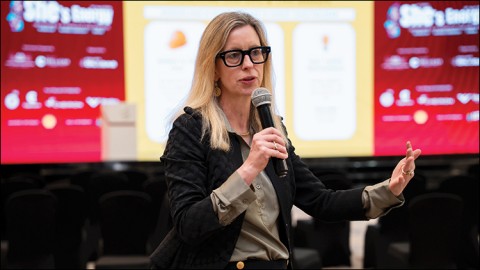
In this interview, Andrea Cavo, Head of Strategic Business Unit – Europe, Mediterranean & Americas at Britoil Offshore Services outlined a future defined by versatility and regional depth. He explained that the company’s fleet of Anchor Handling Tugs and Platform Supply Vessels now supports the full lifecycle of offshore assets, from exploration to decommissioning. A key highlight is the company’s proactive embrace of the energy transition: converting vessels such as the BOS Princess for geotechnical drilling and trialing sustainable fuels, Britoil is positioning itself at the intersection of oil and gas and the growing offshore wind market.
Cavo noted that central to Britoil’s strategy is a localized approach to global operations. In Egypt, Britoil builds on a long-standing partnership with Pan Marine Petroleum Services to support operators including Petrobel, BP, and Chevron. By combining a modern, high-spec fleet with dedicated business units that ensure client proximity, Britoil is not merely supplying vessels’ it is delivering technical expertise and sustainable frameworks to navigate an evolving offshore energy landscape.
Since inception, what milestones shaped Britoil’s position as a leading offshore services provider?
Since its founding in 1988, Britoil has built its reputation in the offshore sector on operational reliability, disciplined fleet investment, and long‑term partnerships with offshore energy operators. Starting with anchor‑handling, towing, and marine transportation services, the company steadily expanded its capabilities and geographic reach over nearly four decades.
A major milestone came in 2021, when strategic investments from HICO Investment Group and Pérez y Cía. Group strengthened the platform for long‑term growth. With the backing of these partners, we were able to acquire modern tonnage as well as selected unfinished hulls, which were subsequently reactivated and completed as newbuild vessels tailored to today’s market requirements. This approach enabled the company to modernize the fleet efficiently, reinforce organizational capabilities, and respond quickly to evolving offshore market demands.
In 2023, Britoil further expanded its global presence through the acquisition of Vroon Offshore Services, significantly strengthening its footprint in the Mediterranean, North Sea and Black Sea while doubling the scale of its operations. Building on this momentum, Britoil launched a newbuilding program in 2025 for six anchor‑handling tug vessels, with options for two additional units. Together, these developments reflect Britoil’s long‑term approach to growth and its continued commitment to supporting offshore energy operations worldwide.
Would you highlight how projects with key clients have driven Britoil’s growth and expertise, giving examples?
Britoil’s growth has been closely shaped by long‑standing collaborations with major international operators and Engineering, Procurement and Construction (EPC) contractors. Working alongside companies such as ENI, Total, and Shell, as well as EPC partners including McDermott, Subsea 7, and Larsen & Toubro, has enabled the company to develop deep operational experience across a wide range of offshore activities.
Through these projects, Britoil has supported complex operations including anchor handling, offshore construction support, and marine logistics in demanding environments. Exposure to large‑scale offshore developments across multiple regions has strengthened both technical capabilities and operational discipline.
Importantly, Britoil’s work with these clients is not confined to a single geography. The company supports operators globally, deploying its fleet and expertise wherever projects are awarded, while maintaining strong local support to meet regional operating and regulatory requirements. Beyond day‑to‑day operations, these partnerships have also fostered collaboration in areas such as operational efficiency and sustainability, reinforcing Britoil’s position as a reliable and adaptable offshore support partner.
How has the Vroon acquisition enhanced Britoil’s fleet and market share in the Mediterranean?
The acquisition of Vroon Offshore Services in 2023 was a transformational step for Britoil. It effectively doubled the company’s fleet size and expanded its operating footprint into the Mediterranean, Black Sea and the North Sea, complementing its established presence in the Middle East, Africa, and Asia Pacific.
Importantly, the addition of a management office in Genoa strengthened Britoil’s regional presence, enabling closer engagement with Mediterranean clients and continuity for existing operations. The combined fleet also benefits from a relatively young average age, enhancing reliability and competitiveness in demanding offshore markets.
What key features do Britoil’s vessels provide in offshore oil and gas operations?
Britoil operates a diverse fleet comprising Anchor Handling Tug Vessels, Anchor Handling Tug Supply Vessels, Platform Supply Vessels, and Multi‑Purpose Support Vessels. These vessels are designed to perform safely and efficiently across a wide range of offshore oil and gas activities, including anchor handling, towing, marine logistics, construction support, and standby duties.
High bollard pull capabilities, dynamic positioning systems, and generous deck and cargo capacities enable the fleet to support complex offshore operations while meeting stringent safety and performance requirements. Collectively, the vessels are capable of supporting every stage of the offshore oil and gas field lifecycle, from geotechnical survey work and construction through drilling, production support, and decommissioning activities.
These operations are supported by Britoil’s headquarters in Singapore, which serves as a central hub for global operations and technical oversight, ensuring consistent standards, operational excellence, and reliable support across the worldwide fleet.
How is Britoil adapting its fleet to support offshore renewables alongside oil and gas?
As offshore energy continues to diversify, Britoil has been adapting its fleet to support renewable projects, particularly offshore wind. Where appropriate, we configure vessels to support activities such as environmental mitigation measures, geotechnical and geophysical surveys, and offshore construction support, building on capabilities developed through decades of oil and gas operations.
A clear example is the conversion of BOS Princess into a geotechnical drilling vessel under a long‑term partnership with Seas Geosciences. Purpose‑designed to support offshore wind developments, the project reflects how we leverage existing offshore expertise while investing in capabilities aligned with the energy transition.
In parallel, vessels such as BOS Prelude have supported offshore wind work in Europe, including projects in Germany. Together, these initiatives demonstrate Britoil’s approach of maintaining fleet flexibility while supporting both conventional offshore energy projects and renewable developments with the same focus on safety, reliability, and operational performance.
What initiatives define Britoil’s sustainability strategy?
Sustainability is embedded in Britoil’s operations through a structured Environmental, Social, and Governance framework aligned with the United Nations Sustainable Development Goals. Rather than treating sustainability as a standalone initiative, the company integrates it into day‑to‑day decision‑making across fleet operations, people development, and governance.
From an environmental perspective, Britoil focuses on reducing emissions, improving operational efficiency, and minimizing its impact on the marine ecosystems in which it operates. A notable milestone was the successful trial of 100% Hydrotreated Vegetable Oil onboard BOS Champagne, conducted in collaboration with ENI and industry partners, demonstrating the practical viability of lower‑carbon fuels within offshore operations.
Partnerships play a central role in Britoil’s sustainability journey. Over the past year, the company has partnered with The Mission to Seafarers to support initiatives that care for vulnerable seafarers. More recently, Britoil became a founding member of the Maritime Association of Clean Seas, reinforcing its commitment to driving meaningful impact through collective action.
Alongside environmental initiatives, Britoil places strong emphasis on workforce safety, skills development, and robust governance practices, supporting responsible operations and long term resilience.
Looking ahead, how will Britoil grow its portfolio and regional leadership?
Looking ahead, Britoil intends to build on its expanded fleet and geographic reach by continuing to invest in modern assets, operational efficiency, and emerging offshore energy segments. Growth will be supported by a disciplined fleet strategy and the strengthening of its regional Strategic Business Unit (SBU) offices, which allow the company to remain close to clients while responding quickly to local market requirements.
Through these regional SBUs, we combine global operational oversight with strong local execution, enabling Britoil to support projects across multiple geographies with consistent standards and reliable delivery. This approach positions the company well to scale its portfolio, deepen regional leadership, and support both conventional offshore energy projects and new opportunities as the energy landscape continues to evolve.
What role does Britoil play in supporting Egypt’s offshore projects and operators?
Egypt is a fundamental part of Britoil’s operating footprint. Drawing on decades of offshore experience accumulated both on the Mediterranean as well as Red Sea side with key clients such as Petrobel, Chevron, BP, Burullus, GUPCO, PMS, etc, we work closely together with our long lasting partner Pan Marine Petroleum Services to deliver safe, reliable, and efficient offshore solutions.
With the invaluable support of Pan Marine Petroleum Services, Britoil’s role extends beyond vessel provision. The company supports operators by aligning closely with project requirements, local operating conditions, and regional standards, ensuring continuity and operational reliability throughout offshore project lifecycles. Its proven ability to operate in challenging offshore environments, combined with long‑standing experience supporting major international oil companies, has established Britoil as a trusted partner for offshore activities in Egypt and the wider region.
How is Britoil building partnerships with operators in Egypt and the Mediterranean?
Britoil’s partnerships are built on long term collaboration, local presence, and operational reliability. In the Mediterranean, our Genoa management office strengthens engagement with regional operators and partners, while established relationships with international clients across the Britoil group support continuity across Egypt and the wider region.
By combining a capable, modern fleet with a collaborative and adaptable approach, Britoil positions itself as a long term partner for operators navigating both today’s offshore demands and tomorrow’s energy landscape.