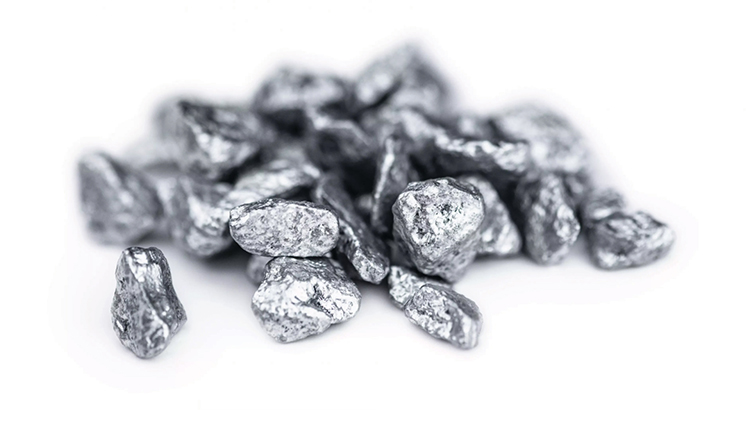
Silver has long been treasured for its beauty, but in today’s world, its true value lies in its versatility. Silver became widely used in various industries, including catalysts, electric vehicles, energy-saving appliances, medical devices as well as components of modern electronics such as computers, cell phones, and solar panels. Thus, its industrial and commercial scale has surged in recent years, evolving far beyond its traditional use in jewelry and silverware.
Silver is found on the Earth’s surface in quantities about five to seven times less abundant than gold. However, as geologists and miners delve deeper underground, it becomes roughly 19 times more abundant than gold. Notably, silver is commonly associated with a range of other metals beyond gold, including copper and zinc.
The costly and complicated process of separating silver from other metals led to seeking many alternatives for silver recovery-most notably recycling the discarded electronics like computers and smartphones, where silver is widely used for its excellent conductivity in circuit boards, switches, and connectors.
Dr. Anže Zupanc, Prof. Timo Repo, and others have presented a green, closed-loop recycling method using natural fatty acids as solvents for the recovery of silver metal from electronic waste (e.g., silver-plated plastics and computer keyboards).
In the study titled “Sustainable urban mining of silver with fatty acids,” published in Chemical Engineering Journal in 2025, the researchers found that through utilizing natural fatty acids, they recover up to 98% of pure silver metal.
“Traditional silver recycling protocols are based on dangerous acids, like nitric acid, or toxic leachates like cyanide,” wrote Dr Zupanc, noting that the more we use environmentally acceptable modern approaches, the more metals are dissolved.
Though cyanide and chemical leaches processes that dissolve gold or silver from ore using a cyanide solution-are widely used in gold and silver recovery, they pose risks to the environment due to their toxicity.
“We started thinking which carboxylic acid type would be inexpensive, safe, and non-volatile, to be easily recycled. We realized soon that fatty acids incorporate all these properties and can be produced from cooking oil, which is rarely upcycled. We are, therefore, recycling waste with another recyclable waste, which is in line with sustainable development, green chemistry, and circular economy,” he told Egypt Oil and Gas.
In the study, the researchers first placed electronic waste in natural fatty acids, like those found in vegetable oils (oleic, linoleic, linolenic) and added a small amount of hydrogen peroxide to help the silver dissolve into the liquid.
After a few hours of heating and stirring, the silver turns into a silver-fatty acid compound. To get the silver out, they added another liquid called ethyl acetate, which turns the silver compound into a solid form.
This solid is then mixed with alcohol and exposed to light, which changes the silver compound back into pure silver metal.
“Our approach combines safety and sustainability with efficiency and selectivity. Our leaching media is safe for the workers, recyclable, and biodegradable. At the same time, it selectively targets silver and, under light-assisted conditions later in the process, separates it from all the metals that we tested, which is an additional attribute in reducing the processing steps for acquiring pure metallic silver,” Zupanc said.
The method was tested on some metals combined with silver, including gold, platinum, nickel, aluminum, iron, palladium, Copper, zinc, tin, and lead.
Zupanc explained that industrial applications are important for resolving the problem of the piling of out-of-use solar panels that are generally short-lived and include large amounts of silver.
“Silver is also present in other WEEE, like cell phones and computers. We showed in the research how this process can be used for the recycling of silver from computer keyboards,” said Zupanc.
This innovative method is validated in a laboratory environment, reaching TRL 4 (Technology Readiness Level 4) and is yet to move to the next phase of development.
During the process, the researchers encountered different issues regarding the presence of different additives in real-life waste. “Real-time monitoring of dissolved silver also needs to be considered in the presence of ‘less noble’ metals to supply quantitative silver leaching, as over time, silver can precipitate on them. We anticipate that heat and mass transfer might be the challenges that need to be addressed in the future, especially for scaling up the process,” Zupanc concluded.
The total global supply of silver in 2024 was about 1.015 billion ounces, a 2% increase from the previous year, according to the Silver Institute. This was driven by a hike in production that reached 819.7 million ounces and by recycling 193.9 million ounces,the highest in 12 years due to high prices.
The percentage of silver used by industry is the highest by far, reaching about 58% of total silver use in 2024, particularly for electronics, solar panels, and brazing alloys that are used in construction, cars, and aerospace.