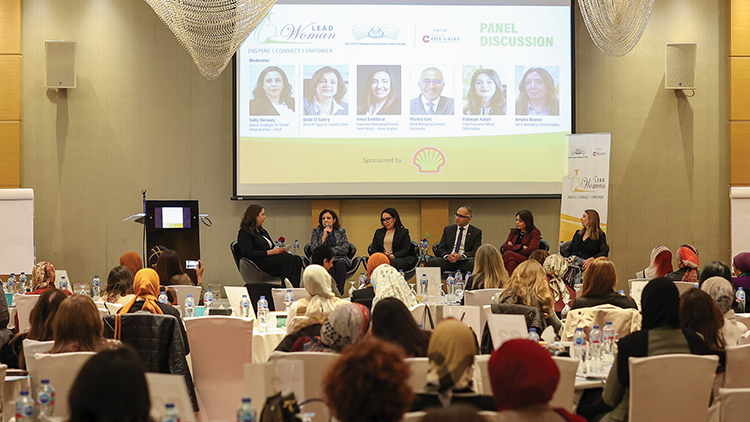
Female leaders from Egypt’s energy sector gathered on December 10, 2025 for Lead Woman, a comprehensive leadership development event organized by Egypt’s Women in Energy Network and sponsored by Shell. The full‑day program combined panel discussions, keynote addresses, and interactive workshops designed to strengthen leadership capabilities, foster cooperation, and expand professional networks across the industry.
The event brought together senior executives from major energy companies operating in Egypt, including Shell, Baker Hughes, Chevron, TAQA Arabia, Agiba Petroleum Company, and Rashpetco. Participants engaged in candid conversations about career advancement, authentic leadership, and the evolving role of women in shaping Egypt’s energy future.
Setting the stage for transformation
The day opened with Sarah Khalil, Commercial Manager at Chevron, serving as the official hostess of the event and setting an energizing tone for the discussions ahead. Khalil later reflected on the significance of the gathering, noting that the collective presence of over 100 female leaders represented a milestone for the industry.
“From the master of ceremonies (MC’s) podium, I felt the collective energy of over 100 female leaders,” Khalil said. “The Lead Woman event didn’t just fill a room; it energized the future of our entire industry.”
Eleanor Rowley, Managing Director at Capricorn Energy PLC and Founder of the Women in Energy Network, delivered opening remarks that framed the day’s objectives. Rowley emphasized the importance of creating spaces where women can develop critical leadership competencies while learning from diverse role models.
“This event is about sharing leadership stories, finding new role models, learning about the values that shape our leadership styles and practicing key competencies like public speaking,” Rowley explained.
Dalia ElGabry, Vice President Egypt and Country Chair at Shell, followed with a welcome address that underscored Shell’s commitment to advancing gender diversity in the energy sector. ElGabry shared insights on the transformative power of mentorship relationships, emphasizing that effective mentorship requires clarity and mutual engagement from both parties.
“Mentorship is a two-way journey,” ElGabry stated. “Find a mentor and be clear about what you want from the mentorship experience.”
Embracing Growth Beyond Comfort Zones
Amal M. Belkhirat, Executive Managing Director North Africa at Baker Hughes, delivered the keynote address, challenging attendees to embrace discomfort as a catalyst for professional growth. Belkhirat’s message resonated throughout the day as a central theme connecting leadership development with personal courage.
“Be open and stay out of your comfort zone, this is where growth happens and true leadership begins,” Belkhirat said.
Her remarks set the foundation for the panel discussion that followed, where industry leaders explored the practical realities of advancing women’s careers while building cultures of genuine allyship.
The dialogue moved from personal career stories to the structural barriers that still shape women’s progression, including limited access to informal networks, assumptions about women’s mobility and technical roles, and the tendency to overlook them for P&L positions. Panelists stressed that genuine allyship requires leaders to challenge these patterns in talent reviews and succession planning, not just in speeches.
Leadership, Allyship, and Breaking Barriers
The panel discussion, moderated by Sally Kenawy, Senior Strategist for Global Integrated Gas at Shell, brought together five distinguished leaders representing different facets of Egypt’s energy industry. Kenawy framed the conversation by acknowledging the historic nature of assembling so many senior women in one forum and linking inclusion to business performance and innovation.
“Being in a room with over 100 female leaders from Egypt’s energy industry is an incredible achievement,” Kenawy observed. “Thanks to leaders like our panelists, who are paving the way toward a more inclusive future for all?”
Pakinam Kafafi, Chief Executive Officer at TAQA Arabia, addressed a common misconception about leadership, emphasizing that effective leadership is cultivated through experience rather than innate ability.
She described how moving into roles with full commercial accountability—rather than remaining in support functions—was essential to her own development, and urged companies to treat leadership pipelines as long‑term investments.
“Only 1% are born leaders,” Kafafi noted. “Leadership is built over time, trust your skills and confidence will follow.”
Amalia Bianco, General Manager and Managing Director at Agiba Petroleum Company, urged participants to embrace confidence in their perspectives and contributions. She spoke about ‘constructive dissent’ in the boardroom, encouraging women to present differing views even when they are the only female voice at the table, and to clearly communicate their impact rather than assuming that performance speaks for itself.
“Own your voice, believe in your perspective, and let it be heard,” Bianco stated.
Khaled Gad, General Manager and Managing Director at Rashpetco, provided the male perspective on allyship, defining it as an active commitment to creating conditions for women’s success. He outlined practical actions male leaders can take, from insisting on gender‑balanced shortlists for critical roles to ensuring women gain exposure to complex operational assignments and are publicly credited for their contributions.
“True male allyship lies in empowering female talent to recognize and unlock their full potential,” Gad explained.
Collectively, the panel reinforced that inclusive leadership is not a separate ‘women’s agenda’ but a business imperative that shapes safety, performance, and the sector’s capacity to innovate in a rapidly changing energy landscape.
Authentic Leadership Workshop
Following the panel, Ahmed El Ibyari, Founder and Research and Development Director at Intellect, led an interactive workshop on authentic leadership. The session explored how leaders can leverage emotional intelligence and vulnerability to build stronger connections with their teams and stakeholders, particularly in high‑pressure operational environments.
El Ibyari invited participants to recall moments when they felt most authentic versus most constrained at work, using these examples to surface the values driving their decisions. Through short reflection exercises and pair discussions, attendees practiced reframing self‑doubt into curiosity—asking what they could learn from challenging situations rather than questioning their own legitimacy in the room.
“Women bring personal stories forward with emotional intelligence, using vulnerability to create genuine human connection,” El Ibyari observed.
The workshop also addressed common leadership traps, such as over‑reliance on technical expertise, micromanaging under pressure, or avoiding difficult conversations. Participants explored ways to delegate effectively, listen more intentionally, and set direction without losing their individual leadership style. For many, the discussion provided tools to balance accountability for results with empathy for teams navigating demanding schedules, complex projects, and continuous change.
Public Speaking as a Leadership Tool
The afternoon featured a comprehensive public speaking workshop delivered by Toastmasters International, designed to strengthen participants’ executive presence and communication skills.
The workshop was led by four experienced Toastmasters coaches: Dahlia Eldeeb, Deputy General Manager at Deeb Engineering Industries and Program Quality Director for District 20; Dina Abu‑Saif, Motivational Speaker and Former President of Cairo Toastmasters Club; Miral Dera, Personal Branding Consultant and Area 26 Director; and Soha Kotb, Co‑Regional Director of the McGuire Programme for MENA and Division G Director.
Participants were divided into four groups for hands‑on practice sessions where they developed and delivered short presentations. The coaches broke public speaking down into concrete skills—structuring a message with a clear opening, key points and closing; using stories and data together; and managing body language to project confidence in front of technical and non‑technical audiences alike.
The collaborative format allowed women to support one another while building confidence in their public speaking abilities. Each group selected three speakers to represent their team, creating an inclusive environment where peers championed peers. In feedback rounds, the coaches focused on voice modulation, eye contact, pacing, and the effective use of pauses, helping participants transform nerves into purposeful energy.
Several attendees used their practice speeches to test messages they hope to take back to their companies, including calls for stronger safety culture, more inclusive talent processes, and bolder participation of women in decision‑making forums. By the end of the session, many described public speaking not as a hurdle, but as a powerful leadership tool they felt more prepared to use.
Reflections and Key Takeaways
The event concluded with a closing discussion led by Eleanor Rowley, who invited participants to share their key takeaways from the day. The reflections revealed common themes around the importance of building support networks, seeking mentorship and sponsorship opportunities, and maintaining authenticity while navigating leadership roles.
Participants expressed appreciation for the opportunity to connect with peers facing similar challenges and to learn from leaders who have successfully advanced to senior positions. Many committed to concrete next steps, such as mentoring a junior colleague, volunteering to lead a high‑profile presentation, or initiating conversations with their leadership teams about allyship and inclusion.
The Lead Woman event demonstrated Shell’s ongoing commitment to fostering diversity and inclusion within Egypt’s energy sector while providing practical tools and connections that participants can leverage to advance their careers.
The Women in Energy Network continues to serve as a vital platform for building community, sharing knowledge, and advocating for systemic changes that create more equitable opportunities for women across the industry