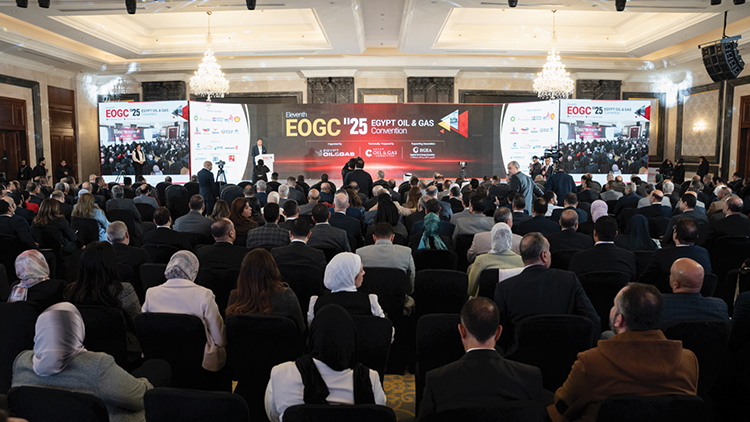
The 11th edition of the Egypt Oil and Gas Convention (EOGC2025) convened the industry’s leading voices for a single day of dialogue, reflection, and forward-looking strategy. For more than a decade, this annual gathering has shaped the trajectory of Egypt’s energy sector, and this year’s theme—Collaboration That Powers Progress—returned the spotlight to the upstream value chain.
The one-day event opened with strong remarks that set the tone for the day, underscoring both the importance of the convention and the sector’s achievements and challenges.
“This is the only gathering where the entire ecosystem—government and private sector—stands side by side to honestly review our upstream progress,” said Eng. Mohamed Fouad, CEO of Egypt Oil & Gas and co-chairman of the Egypt Oil and Gas Committee. His words resonated through the hall, framing the collaborative spirit that carried into every session.
Technically prepared by the Egypt Oil & Gas Committee, the convention reflects the Committee’s evolution since its inception in 2012. Once a traditional advisory body, it has been restructured into a dynamic “technical support hub” designed to accelerate industry modernization. Led by global energy giants such as Apache, Shell, and TotalEnergies, the Committee drives specialized task forces in areas like brownfield optimization, digitalization, and decarbonization.
“We have transformed the Egypt Oil & Gas Committee from a roundtable into a strategic force multiplier for the industry,” Fouad noted.
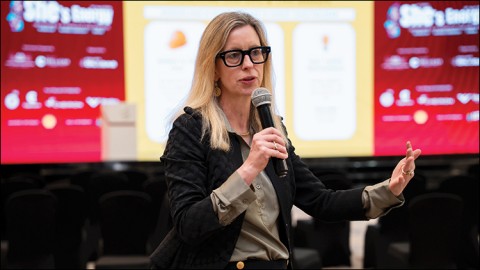
Representing the international private sector, Iman Hill, Country Manager and Managing Director of Vaalco Energy Egypt and chairwoman of the Committee, added: “Each year, the convention reviews the progress achieved by our task forces. This is what Egypt Oil & Gas brings to the table: bridging gaps, sharing knowledge, and empowering collaboration. We all want a sustainable environment that makes investment in Egypt straightforward, so that when our companies make capital allocation decisions, Egypt becomes an easy choice.”
Energy Future Is Action, Not Symbolism
In his opening remarks, Minister Karim Badawi underscored the centrality of collaboration in driving Egypt’s energy future. He highlighted the convention’s role as a trusted forum for over a decade, where industry leaders reflect, strategize, and chart the course ahead. He also underscored the importance of the ministry’s six pillars for modernization of the energy sector.Those pillars provide the foundation of collaboration, partnership, to be able to provide Egypt the capability to actually deliver unprecedented economic growth over the next years, according to Badawi.
“We are all working to enable and provide petroleum products for Egypt’s 120 million people. Focusing on upstream activities is the most cost-effective and reliable way. This is realized through maximizing the production from our existing fields with proper reservoir management, accelerating exploration activities across Egypt, and reducing time from discovery to production to enable the growth of the country,”he said.
An Insightful live Interview
In a candid exchange, EOG’ CEO Mohamed Fouad, CEO engaged H.E. Karim Badawi, Minister of Petroleum and Mineral Resources, on the ministry’s six-pillar modernization strategy that is reshaping the industry.
Key highlights included the rollout of the R-factor incentive model and a $4 billion refinery investment program, framed within a “Strategic Triangle” of upstream success, regional collaboration, and workforce empowerment. Together, these elements point to 2026 as an inflection point—where advanced technology and pragmatic partnerships converge to reinforce Egypt’s position as the Mediterranean’s leading energy hub.
Translating Field Innovation into Operational Excellence
The first half of the day featured a dynamic presentation showcasing success stories drawn from six technical workshops organized by EOG in collaboration with the Egyptian General Petroleum Corporation (EGPC) during 2024 and 2025. These workshops, held across six exploration areas nationwide, brought together in-field engineers from multiple operating companies to share their experiences in tackling and overcoming challenges related to technology, energy sources, machinery, and pipeline installations.
Opening the session, Heba El Karrar, Communications and Social Investment Lead at Shell Egypt and Master of Ceremonies for EOGC25, emphasized that the presentation and the success stories it included highlight a transformative “back to basics” approach. By shifting the industry’s focus from theoretical boardroom discussions to practical, on-ground technical integration, the workshops bridged knowledge across the Gulf of Suez, the Mediterranean, and the Western Desert.
Osama Elshenoufy, North-East Africa Director at Weatherford, underscored the workshops’ unique philosophy:“When we started last year, EGPC directed us to focus on field staff only. The main message was to empower the people in the field. The other was not to showcase only success stories, but to share challenges and failures before success.”
This approach has proven vital in empowering specialists and fostering a culture of knowledge-sharing. According to Tamer Edrees, Deputy Chairman for Production at EGPC, the workshops directly contributed to a major operational milestone: halting and reversing production declines that previously averaged between 33% and 45%. He noted that as the sector embarks on the first year of an ambitious five-year strategic plan to bridge the gap between domestic production and consumption, these workshops have surfaced critical innovations — such as solar-powered wells that save 90,000 liters of diesel and reduce CO₂ emissions by 242 tons annually.
Among the success stories presented was the deployment of AI-driven machine learning to analyze well sections that could not be measured due to drilling complications, saving $100,000 in evaluation costs. Other technical achievements included the adoption of 4D seismic imaging, debris-free hydromechanical perforation, and the use of high-temperature RTP pipelines alongside competency assurance systems.
Specialists from PetroBakr, PhPC, Petroshahd, Rashpetco, Bapetco, and GPC—the hosts of the six workshops—demonstrated how proven innovations are being scaled. From high-temperature RTP pipelines to the Competency Assurance Management System (CAMS), the objective is to ensure these “best practices” are replicated across all sister companies.
During the presentations, Minister of Petroleum and Mineral resources Karim Badawi, stressed that while the technical results are impressive, the broader mission is to communicate this high-tech evolution to the public and academia. By positioning Egypt’s energy sector as modern and technology-driven, the strategy of “action over symbolism” not only enhances operational efficiency but also instills national pride among the workforce and signals to global investors that Egypt remains a sophisticated, competitive destination for energy capital.
Unlocking Innovation and Resilience
The convention’s three panels offered a rich exploration of the forces shaping Egypt’s upstream sector and its future trajectory. Together, they delved into a range of critical issues—from operational efficiency and technological innovation to collaboration models and investment frameworks—that highlight how the industry is evolving.
Taken together, these discussions painted a compelling vision of an upstream sector that is resilient, collaborative, and future-focused.
The Low-Cost, High-Value Revolution
At the “Low-Cost, High-Value Revolution” panel, industry leaders gathered to explore how the oil and gas sector is redefining efficiency—delivering “more with less” and proving that sustainability, innovation, and profitability can coexist. The discussion reflected a broader shift in global energy thinking: companies are under pressure to maximize returns while reducing costs and carbon footprints, and Egypt’s upstream sector is positioning itself as a testbed for these strategies.
The Philosophy of ‘Quick Wins’
Sameh Sabry, Managing Director for MENA at Harbour Energy, opened the session by outlining his company’s pragmatic approach. He said his company focuses on what it calls the ‘quick wins’ or the ‘low-hanging fruit’ philosophy, in other words measures with low costs but high value.
He explained that Harbour Energy’s model balances innovation with budgetary discipline, prioritizing proven technologies that deliver measurable impact. By embedding structured digital platforms across its operations, Harbour Energy has institutionalized knowledge-sharing, ensuring that lessons learned in one geography are rapidly replicated worldwide. This disciplined approach has yielded impressive results: a 30% reduction in global operating expenditures year-on-year. In Egypt, Sabry noted, Harbour Energy has not only arrested production decline but managed to flatten it, with a recent October discovery offering the potential to push production upward once again.
For bp, the revolution lies in maximizing existing infrastructure rather than embarking on costly new builds. Wail Shahean, President of bp Egypt, emphasized that the “fastest path” to high-value production is rooted in collaboration and resource optimization. He underscored the critical role of seismic surveys: “Seismic technology is a key enabler for this business. The more we invest in it, the more opportunities we unlock. It helps us anticipate potential issues and extend the life of resources, keeping more molecules in the system for as long as possible.”
By focusing on technical efficiencies such as grid pressure optimization and deploying AI-driven predictive maintenance, bp has accelerated project timelines—bringing discoveries online by 2026 instead of 2028. This reflects a broader industry trend where digital tools are compressing development cycles and unlocking hidden reserves.
Tamer Nassar, Chairman and CEO of SETCORE, argued that the most realistic low-cost strategy is proactive failure prevention. He called for a shift away from traditional visual inspections toward advanced, cost-effective technologies like drones and electromagnetics.
“Improving the quality of oil field equipment inspection through ultrasonics and electromagnetics really doesn’t cost much, but it prevents downtime failures and lost production. Using drone technology for inspection is much more efficient and safer than traditional methods.” Nassar said.
His remarks highlighted how relatively modest investments in inspection technology can yield outsized returns by safeguarding production continuity and worker safety—an area increasingly prioritized in global energy operations.
Artificial Intelligence as the New Frontier is the idea offered by Sherif Bayoumy, Managing Director for Egypt and East Med at SLB, to lower the cost. He noted that the traditional model of heavy spending in brownfields is being replaced by AI-driven precision. SLB is preparing to launch its first local cloud in early 2026 to automate workflows and enhance data-driven decision-making. Bayoumy revealed that SLB’s AI trials in Egypt’s Western and Eastern Deserts achieved near-perfect success in identifying bypassed zones. His remarks underscored how AI is not only reducing costs but also unlocking reserves that would otherwise remain hidden, positioning Egypt as a leader in digital upstream transformation.
Monetising Egypt’s Untapped Gas Potential
At this high-level panel, speakers tackled one of Egypt’s most pressing energy challenges: how to transform stranded gas into strategic assets. Led by Age Fongers, General Manager of Development and Subsurface at Shell Egypt, the discussion mapped out a blueprint for monetizing untapped reserves. The consensus was clear—while Egypt’s gas potential is vast, unlocking it requires a delicate balance of exploration de-risking, cutting-edge digital tools, and a revolutionary “cluster” approach to infrastructure.
Alan Linn, CEO of Cheiron, emphasized that bold exploration must be paired with smart risk management. He advocated for a “step-out” approach, where companies already producing in each area are incentivized to explore adjacent, zones by tying them into existing infrastructure. This model allows new discoveries to piggyback on established developments, mitigating the financial sting of unsuccessful wells. Linn argued that this strategy makes it commercially viable to pursue Egypt’s deeper, more complex reservoirs—resources that have long been recognized but remain underdeveloped due to cost and risk barriers.
Supporting this investment climate is the Gas Regulatory Authority (GasReg), led by CEO Mohamed Abdel Aziz. He stressed that Egypt’s energy dilemma requires a strategic balance between rising demand, reduced emissions, and affordability. “Advancing energy efficiency is a pivotal step—not only to meet these challenges, but also to attract investment and build a sustainable, resilient energy system for Egypt.” He said.
His remarks underscored the regulator’s role in creating a framework that encourages exploration while aligning with Egypt’s broader energy transition goals.
The transformative power of AI and digitalization was underscored by Amro Elsharkawi, Country Director at Baker Hughes. Modern digital tools, he explained, go far beyond monitoring production—they provide teams with the knowledge needed to manage operations effectively, safeguard workers, and protect profits. By predicting problems before they occur and reducing environmental impact, these technologies are reshaping the economics of exploration. Elsharkawi also championed the “Cluster Development Model,” where multiple companies share pipelines and facilities to cut costs. He proposed a cross-party committee to manage these hubs, ensuring fair tariffs and equal access for all operators.
The panel concluded with a real-world example of collaboration in action. Fongers cited the RENA-West project, discovered in 2023 by Shell and KUFPEC, as a landmark case of third-party infrastructure sharing. Rather than spending years building a dedicated processing plant, the partners are tying the Mediterranean discovery back to existing Rashpetco facilities via subsea pipelines. By utilizing spare capacity in older plants, the project is set to move from discovery to production by late 2026—a timeline significantly faster than traditional developments.
Together, the panelists painted a compelling vision of Egypt’s gas future: one where risk is shared, infrastructure is pooled, and digital innovation accelerates timelines. The “cluster model” and AI-driven efficiency are not just technical solutions—they represent a new philosophy of collaboration that turns stranded gas into strategic assets. Egypt’s ability to unlock these reserves will define its role as a regional energy hub, proving that with the right partnerships and regulatory frameworks, even the most challenging resources can be transformed into engines of growth.
Building a Sustainable Upstream Investment
The final panel of EOGC2025 turned its focus to one of the most critical questions facing Egypt’s energy sector: how to sustain and strengthen the investment climate. Led by Eleanor Rowley, Managing Director Egypt at Capricorn Energy, the discussion brought together senior executives from IOCs who together, examined the fiscal, regulatory, and technological levers that can ensure Egypt remains an attractive upstream destination for decades to come.
Rowley opened with reflections on Capricorn’s merged concession with Cheiron, which consolidates eight agreements under revised fiscal terms and a new gas price. “The merger brings together eight concessions, many of which benefit from extended field life, new fiscal terms, and a revised natural gas price. This is unlocking new tranches of investment, and we are particularly excited to be getting after some brownfields that have not been invested in recently.”
This unified framework, ratified by the Egyptian Parliament, simplifies operations and includes a commitment to invest at least $208 million and drill 44 new wells. By merging these assets into a single cost pool, the deal incentivizes the partners to unlock significant contingent resources
Sam Dabbous, President and COO of IPR Energy Group, echoed this sentiment, describing merged concessions as “game-changing” for Egypt. By streamlining multiple agreements into a single framework, operators gain operational synergies and fiscal incentives that encourage deeper investment in mature fields, according to Dabbous. Both executives emphasized that improved gas pricing is enabling companies to take more risk in appraising stranded gas assets, potentially transforming previously uneconomic fields into viable opportunities.
The panel then turned to the joint venture (JV) system, long considered the bedrock of Egypt’s upstream industry. Sun Bao, Country General Manager of North Petroleum International Company (NPIC)argued that agility must define the future of JVs, with faster decision-making, clearer accountability, and streamlined tendering processes.
Omar Abdel Nasser, Managing Director of NPC Energy, added that efficiency—operational, managerial, and financial—must be the guiding principle. He noted that Egypt’s 50-plus JVs vary widely in scale, yet many share the same cost structures, creating inefficiencies. Empowering JV managers to make technical decisions without fear of penalties, and addressing fixed overhead costs, were highlighted as essential reforms. Abdel Nasser and Bao praised recent government moves, such as freezing non-technical hires, as steps toward leaner, more effective JV operations.
Technology emerged as a recurring theme, Liu Liqun Coordinator of the Sinopec Africa Office stressing the need for greater flexibility in deploying new tools in Egypt’s brownfields. He pointed out that restrictive procurement processes often delay the introduction of proven global technologies, and called for pilot testing mechanisms to accelerate adoption.
“In the end, technology is crucial, but it is not just about technology alone. We also need aligned contracts and flexible policies. When these three elements work together, production can be significantly enhanced, particularly in brownfields and aging oil fields.”
Sam Dabbous reinforced this view, highlighting AI’s role in predictive maintenance and enhanced oil recovery, particularly in legacy assets dating back to the 1960s and 70s. Sun Bao added that digital tools, IoT sensors, and big data analytics are already transforming safety, efficiency, and asset management, and Egypt must accelerate its digital integration to remain competitive.
Rowley steered the conversation toward unlocking unconventional and frontier plays, noting the progress made with Egypt’s Upstream Gateway but questioning whether data is being fully leveraged.
Abdel Nasser agreed, citing Canada’s model of open-access data as a potential blueprint. He argued that making data more available could incentivize operators to pursue high-risk, high-capex unconventional reservoirs in the Western Desert and Gulf of Suez. Dabbous added that fiscal equity will be critical to encourage investment in tight gas and unconventional oil, where horizontal wells and multi-stage fracking are required. Both stressed that balancing risk and reward will be key to unlocking Egypt’s next wave of resources.
The panel closed on a human note, emphasizing that a sustainable investment climate depends on nurturing talent. Sun Bao spoke passionately about structured knowledge transfer, pairing senior experts with young engineers, and creating clear career paths for Egypt’s youthful workforce. Rowley shared Capricorn’s experience of reverse mentoring, where interns skilled in Python and data science have automated reservoir analysis, delivering immediate value to the company. Abdel Nasser concluded by stressing the importance of education and industry partnerships to equip graduates with the skills of tomorrow—particularly in AI and digital technologies—so they can seamlessly integrate into the workforce..