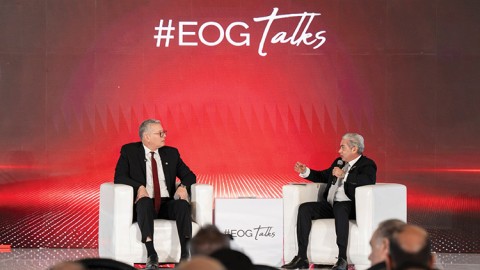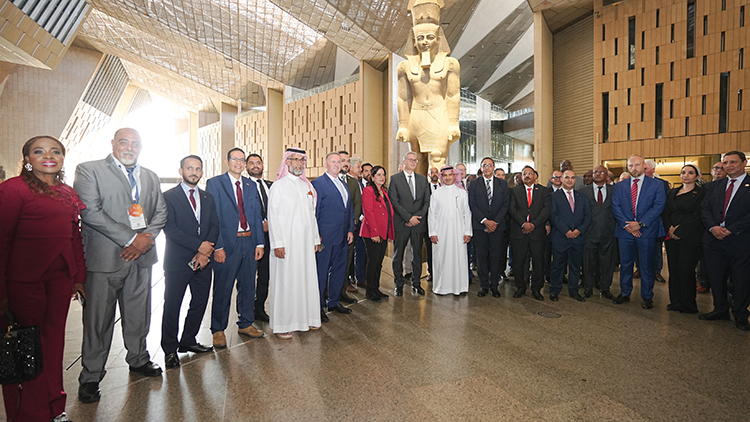
The 4th edition of the Egypt Mining Forum (EMF), held on July 15–16, 2025, in Cairo, offered Egypt a platform to showcase the steps it has taken to bolster its mining sector in recent years, while unveiling ambitious plans for the future.
Under the theme “Accelerating Commercial Exploration and Mineral Discoveries,” the forum—hosted by the Ministry of Petroleum and Mineral Resources (MoPMR) and supported by the Mineral Resources and Mining Industries Authority—brought together over 5,000 delegates, including high-level government officials, industry leaders, international investors, and major mining companies.
Speakers at the forum’s panel discussions explored the current state of Egypt’s mining industry, its recent momentum, and the challenges and opportunities ahead.
From Pause to Progress
Egypt is actively positioning itself as a regional mining hub, aligning its efforts with global shifts in the industry.
For decades, mining in Egypt received little attention—both nationally and internationally.
“Mining was everything but fashionable. It was a dying industry. No one seemed to care, and the media had absolutely no interest,” said Mario Guedes, Vice President at ARGAS. “But from 2003–2004, a major shift began to take shape.”
Guedes pointed to the “electrification of society” as a turning point—replacing fossil fuel technologies with electric alternatives like EVs, renewable energy systems, and battery storage. These require minerals such as lithium, copper, and nickel.
“In 2003, the average price of an ounce of gold was around $350. Now it’s over $3,000. Copper was $180 per ton—now it’s nearly $10,000,” Guedes added. “Such changes completely altered the interest in mining.”
With this global surge, Egypt began tapping into its vast mineral resources, aiming to contribute 6% to the country’s GDP.
Investment Barriers
For mining investors, decision-making is complex and fraught with risk.
“We don’t just look at geology—we assess the entire jurisdiction,” said Khathutshelo Mapasa, Head of Africa at Appian Capital. “Do we understand the legal environment? Are timelines aligned with our capital lifecycle?”
One recurring theme across panels was Egypt’s regulatory complexity.
“The regulatory complexity of Egypt is on a scale much larger than we’ve ever encountered,” said Al Fabbro, CEO of Red Sea Resource. He cited lack of coordination among EMRA, the Environment Ministry, and the military as bottlenecks that delay approvals and frustrate junior explorers.
“For junior companies, time is capital. Delays hurt us,” Fabbro added. “We need to identify a resource quickly or walk away.”
Competitors like Côte d’Ivoire offer faster, more transparent permitting.
“You simply go online, apply for a piece of land, and get an answer. In Egypt, juniors tell me it can take years,” said Dave Harper, CEO of Geodrill.
Wael Jaber of Wood Mackenzie emphasized that data, policy, and economic viability are key to investor confidence.
“You want money to go toward drilling—not land grants or bureaucracy,” he said. “Egypt mostly checks those boxes, but more needs to be done.”
Reform in Motion: New Law and Geoportal
The Egyptian government has responded with reforms.
A recent amendment to Mineral Resources Law No. 198 (2014) transforms EMRA into an independent economic entity—the Mineral Resources and Mining Industries Authority—giving it more flexibility to form partnerships, update geological databases, and streamline approvals.
“This is not just a policy tweak—it’s a transformation,” said Mohamed Ismail, Member of the Constitutional & Legislative Affairs Committee.
The legislation supports investment in satellite imaging, digital mapping, and modern licensing tools to reduce investor risk.
One of the most anticipated moves is the launch of a new geoportal by year’s end.
“An investor needs clarity, stability, and a huge amount of data,” said EMRA Chairman Yasser Ramadan. “Our target is to survey all Egyptian territory and provide interpreted satellite images using the most advanced techniques.”
Egypt is also rolling out a new strategy to improve the investor experience.
“Our incentives are divided into two sections,” said Hossam Heiba, President of the General Authority for Investment and Free Zones. “One relates to CAPEX, where projects can recover 50% of investment costs through tax credits. Additional tax rebates may also apply.”
Ease of doing business is central to the reform agenda.
“We facilitate company incorporation through 14 investor centers,” Heiba explained. “We’ve launched a unified platform for licenses and approvals, streamlining the process for investors.”
Beyond Gold: A Sea of Minerals
Beyond the traditional focus on gold, the forum significantly highlighted the immense potential of other mineral resources and the strategic importance of value-added manufacturing within the mining sector. Discussions underscored a broader vision for Egypt’s mineral wealth, emphasizing diversification and downstream integration.
Tim Lucks, Managing Director of SRK Consulting, pointed to a specific area of opportunity, stating:
“Egypt and other countries of the Middle East have great phosphate resources. I think Egypt’s role is important in terms of this mineral going forward. There is a decline in the number of producers selling phosphate rock, and a lot of people are looking to integrate and move towards more downstream. So the role Egypt can play by increasing its footprint in that market could be really significant.”
In this context, Mostafa El Gabaly, CEO of Polyserve Fertilizers and Chemicals, highlighted Egypt’s competitive edge in phosphate manufacturing:
“Egypt’s advantage lies primarily in having the raw material—phosphate is one of our key minerals. We have been producing fertilizers since 1929, so we have the technical know-how. There is a strong local market, and we export everything we produce. Access to raw material is our main strength.”
Hanan Magdy, Deputy Governor of the New Valley Governorate, emphasized that the phosphate plateau in Abu Tartur, located in the New Valley and stretching about 300 kilometers, contains high-quality phosphate—of which only 10% has been utilized so far.
According to Mohamed Abdel Azim, Chairman of Misr Phosphate, this means that phosphate mineral wealth is no longer just a raw commodity for export but rather a national asset to be refined, localized, and optimized.
“We are moving toward integrated industrial complexes, like our phosphoric acid production at Abu Tartur and the new complex in Ain Sokhna, which will create higher value locally.”
Touching upon the broader scope of available minerals, Yassir Mustafa Hamza, Director General of Exploration Companies at the Sudanese Mineral Resources Company, said:
“There are more than 400 small-scale mining minerals between gold and industrial minerals, in addition to copper, iron, and chromite in the Nile River province.”
Egypt is currently focusing heavily on localizing its mining industries following the decision to transform EMRA into an economic body.
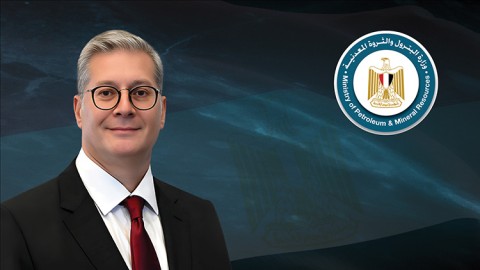
On this note, Karim Badawi, Minister of Petroleum and Mineral Resources, stated:
“A key objective is to develop a national strategy for localizing mining industries in coordination with the relevant authorities. This will be achieved through the implementation of projects that utilize local mineral raw materials, thereby maximizing their added value.”
A Golden Opportunity
Moving to the reginal level, on the second day of the forum, Nere Emiko, Executive Vice Chairman of Nigeran Kian Smith Company, a minerals and commodities trading group, highlighted Africa’s large gold potential. To Emiko, it is crucial for the continent to start to move beyond extraction and pave the road for regional cooperation that builds a fully integrated ecosystem, from mining to refining, to financial systems and retail.
“80% of African countries are gold-producers, most of this gold is exported to the Middle East and Europe,” said Emiko. She added that Africa can do more with its gold, given the strong demand from central banks and financial institutions for the metal as a hedge against inflation. She recalled that in 2018-2019, the World Gold Council advised African nations to create an African Gold Council. “Right now, this is something that it’s underway. It will be unveiled early next year in a large event for Africa,” Emiko said.
Emiko shared the Nigerian experience where even small-scale gold transactions are regulated through banks, proving that digitized, decentralized gold trading can work without major advertising. Emiko shed light on Egypt’s ability to be a leader in this initiative thanks to its rich history with gold mining,its massive role in North Africa, and its proximity to the Middle East.
Prioritizing Sustainable and Green Mining Practices
A central theme resonating throughout the 4th Egypt Mining Forum was the undeniable imperative of sustainability and green mining practices. Leaders from across the industry and government underscored the critical role of environmental, social, and governance (ESG) principles in shaping the future of mineral extraction.
Badawi affirmed that the success of Egypt’s mining sector hinges on preparing four essential pillars: geological expertise, robust infrastructure, a stimulating financial framework, and energy availability. He emphasized the importance of enhancing cooperation in these areas to achieve a long-term sustainable growth.
Gillian Doran, Chief Financial Officer (CFO) and & Executive Director at AngloGold Ashanti, a leading gold mining giant and a major partner and exhibitor at the forum, eloquently articulated this commitment, stating, “As a CFO, I have the responsibility of ensuring that our investments yield real and sustainable value, not only for shareholders, but also for host countries and communities. This requires maintaining discipline in capital allocation, fostering cooperation with governments, and promoting sustainability principles in all aspects of our operations.”
The importance of ESG extended beyond financial returns to encompass community development, as highlighted by Dave Harper, President, CEO and& Director of Geodrill.: “ESG is such a key piece of where the industry, and a company, a service company like [Geodrill], fits into the value chain. It is not just in providing that service. It is in actually developing the communities within which we work.”
Egypt’s proactive stance on green mining was clearly brought under the spotlight by Minister Badawi, who affirmed “[The ministry has] undertaken a number of green mining initiatives, aligning with the global trend towards decarbonization. As a natural extension to the Ministry’s efforts in the field of energy transition, [the ministry] has fundamental measures in place to formulate green mining initiatives to reduce emissions in cooperation with the Ministry of Environment.” Minister Badawi also called on companies in the sector to keep the environment in mind in all their projects, “I would like to urge all parties working in the mining sector, including national companies and foreign partners, to continue their efforts to commit to reducing emissions and their carbon footprint in pursuit of sustainable and environmentally friendly mining.”
Further solidifying Egypt’s commitment, Yasmine Fouad, the Minister of Environment, Arab Republic of Egypt, stated, “Egypt is committed to fostering strategic collaboration between the environment and mining sectors, streamlining policy frameworks to accelerate investment in exploration and value‑added extraction, and demonstrating MoPMR’s unwavering dedication to sustainable, circular‑economy growth across all mineral resources.”
Concrete examples of these initiatives were also presented. Alaa El Batal, First Undersecretary and Supervisor of Health, Safety and Environment (HSE); Energy Efficiency and Climate at the Ministry of Petroleum and Mineral Resources, showcased a tangible success.: “Part of the Sukari gold mine’s success lies in its using a 36-megawatt solar power plant, which reduces diesel consumption by 22 million liters annually and contributes to reducing carbon dioxide emissions by approximately 60,000 tons annually.”
Recognizing the crucial role of a skilled workforce in this sustainable transformation, Minister Badawi elaborated on several initiatives by the ministry to bolster human capital.: “[The ministry was] very keen to provide capacity building programs based on performance. In light of this, the MoPMR, in cooperation with its strategic partners such as the America Chamber of Commerce (AmCham) and the Canadian Chamber, conducted a number of capacity building programs.
This is in addition, to the MoPMR participation in capacity building programs in China, Japan and Tanzania.
He also announced a pioneering educational initiative, “In addition, [the ministry is] close to inaugurating a mining school in Marsa Alam, Egypt, in cooperation with AngloGold Ashanti and El Sweedy Institution. This will be the first Egyptian school in mining services. The school aims to enhance expertise and prepare qualified human resources capable of working in various mining activities. “The pioneering facility aims to build local expertise and develop a skilled workforce equipped to support a wide range of mining operations. “Said Badawi.
From Exploration to Innovation: Highlights from EMF 2025 Technical Sessions
EMF’s technical conference included eight sessions that provided a deep dive on the latest project advances, sustainable best practices and innovative cutting-edge technologies and solutions being deployed across the mining, minerals and metals industry.
EMF’s technical conference featured eight in-depth sessions exploring the latest advancements in projects, sustainability practices, and innovative technologies across the mining, minerals, and metals industries.
Key topics included mineral exploration, deposit characterization, and structural evolution; cutting-edge extraction methods for resource recovery; and future-facing strategies for responsible and sustainable mining. Sessions also tackled critical minerals development, the integration of AI and automation in smart mining operations, digital transformation, and innovations in oil shale processing and mine optimization.
Key Agreements and Strategic Partnerships
The EMF opening ceremony offered a great chance for , Egypt shed light on its its commitment to attracting international investment by signing two pivotal agreements with leading international gold mining companies.
Yasser Ramadan, the Chairman of EMRA signed an exploration license agreement for gold and associated minerals with Mohamed Kamal, Chairman of Centamin PLC Central Mining, a subsidiary of AngloGold Ashanti. Furthermore, Ramadan, alongside Mohamed El Bagoury, Head of the Central Administration for Legal Affairs at the Ministry, signed a framework agreement for mine exploitation with Henry Onslow, Exploration Manager at Barrick Mining Corporation.
Though the deals’ details are yet to be disclosed, it positions Egypt on the right track for exploiting its deposits given both companies’ presence in the sector.
Since 2009, Centamin PLC, now a subsidiary of AngloGold Ashanti, operated Egypt’s Sukari Gold Mine; its first modern gold mining operation. Since then, Sukari has produced over 5 million ounces, positioning Egypt as a notable player in global gold output.
With operations spanning Africa, the Middle East, and the Americas . Barick Gold entered Egypt’s mining sector in 2021 by securing exploration licenses across 19 blocks in the Eastern Desert, targeting the rich Arabian-Nubian Shield.
On the second day of EMF, MRMIA and Aton Resources ,a mineral exploration company, signed a preliminary deal to amend the Abu Marawat Concession agreement. This amendment was formalized by Mohamed El Bagoury, Head of the Central Administration for Legal Affairs at the Ministry of Petroleum and Mineral Resources, Yasser Ramadan, Chairman of EMRA, and Tonno Vahk, CEO of Aton.
The 4th Egypt Mining Forum concluded as a pivotal moment for Egypt’s mining sector, clearly demonstrating its ambitious trajectory to become a regional mining powerhouse. While the enthusiasm for Egypt’s vast mineral potential is palpable, particularly in the wake of surging global demand for critical minerals and the energy transition, the forum also candidly addressed the persistent challenges. Yet, the clear roadmap for reform, combined with a genuine commitment to sustainability and a strategic vision for diversification and value addition, positions Egypt on the cusp of a true mining renaissance.