Energy leaders are crucial in transitioning global economies to reliable, sustainable, clean energy. However, they face rapid market changes, evolving policies, digital disruptions, and rising stakeholder demands. To succeed, leaders must balance strategic vision, external relationships, and internal efficiency. In light of this, energy professionals have gathered in the ‘EGYPS Leadership & Energy Conference’ to discuss the path to a green, sustainable future.
Sameh Sabry, Managing Director of Middle East & North Africa at Harbour Energy, delivered the opening keynote highlighting how energy leaders are innovating to reshape the energy landscape.
The first panel, titled “Leading Sustainable Commercial and Operational Decision Making,” featured Mahyar Golabi, Group HSE and Sustainability Director at Cheiron; Moath Al Rawi, CEO of ARGAS; and Mohamed El-Haddad, Vice President of Energy at IRSC. Panelists focused on balancing sustainability and profit. “Our investors are banks,” Golabi said. “They are asking [for] interest [and will] hold it … against some principles.” Accordingly, energy companies face “a big challenge” to balance interest payments while satisfying the lending bank’s requirements.
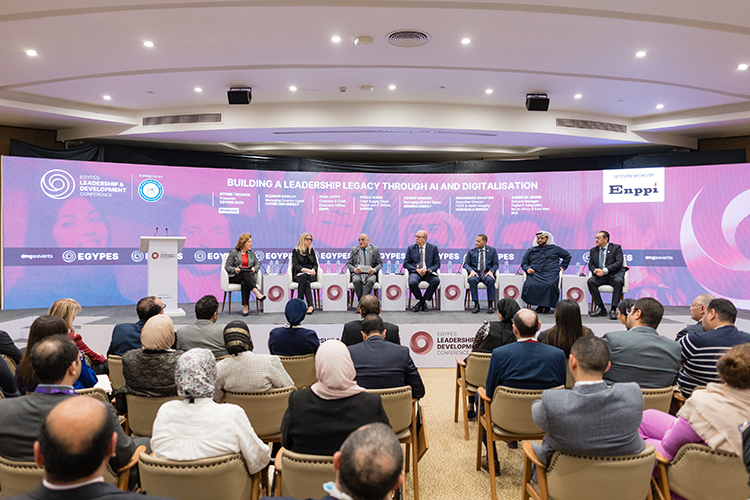
Discussions in the second panel, ‘Building a Leadership Legacy Through AI and Digitalization,’ centered on how digitalization affects decision-making, financial performance, and broader industry transformation. Panelists highlighted how AI and automation drive operational excellence while ensuring a balanced approach to integrating these technologies into the workforce.
Panelists included Wael Lotfy, Enppi Chairman & CEO; Ashraf Hamasa, Managing Director Egypt at Siemens Energy; Eleanor Rowley, Managing Director Egypt at Capricorn Energy; Paolo Albini, Chief Supply Chain, Digital & IT Officer at Saipem; Mohammed Bahatem, Executive Director, HSSE & Asset Integrity at Mubadala Energy; and Ahmed El Saeed, General Manager of Digital & Integration, North Africa & East Mediterranean at SLB.
Lotfy said AI is the future of the energy sector, “fueling the fourth revolution.” He added that AI is inevitable and that all companies have to use it. “If you do not change, you will be late,” he said
The third panel, titled ‘Maximizing Energy Talent Acquisition and Retention Through Employer Branding Strategies,’ highlighted the pivotal role a strong employer brand plays in attracting and retaining top talent.
Panelists noted how organizations aim to become “preferred employers” as competition for Science, Technology, Engineering, and Mathematics (STEM) talents increases. They also discussed the significance of employer branding in defining corporate culture, promoting career opportunities, and securing the next generation of professionals in the energy industry.
Panelists included Walid Tayel, Group Chief HR Officer at El Sewedy Electric; Dina Ghanem, HR Director at TotalEnergies; Yasmine Yehia, Global Employer Branding Head at Schneider Electric; Nawal Nourie, Head of HR, North Africa at ENGIE; Wafaa El Ashry, HR Manager Egypt at Shell; and Richard Barron, Talent Acquisition & Employee Branding HUB Lead, MEA at Hitachi Energy.
The fourth panel, titled “Leveraging the Power of Communication to Strengthen the New Energy Narrative,” examined how strategic communication builds trust and positive stakeholder sentiments. Leaders shared insights on aligning corporate sustainability with public expectations and fostering industry-wide support for decarbonization.
Panelists included Jacqueline Elboghdadi, Chief Marketing Officer at ADNOC Distribution; Nour Elabbady, Head of Communications at the Organisation Méditerranéenne de l’Energie et du Climat; Deena McMullen, Public Affairs Director at Apache Corporation; Jonathan Ashton, Head of Marketing & Communications, Middle East & Africa at KROHNE; Madonna Mekhail, Global Commercial & Regional Communications Executive Director at Baker Hughes; and Paddy Blewer, Corporate Communications Director at Energean.
Speakers at the “Upskilling and Reskilling the Workforce to Drive Digital Transformation” session discussed how energy companies prepare for AI, digitalization, and automation. They stressed reskilling, closing skill gaps, and attracting innovative talents to lead the energy sector’s digital transformation. The panel highlighted evolving workforce models and education policies crucial for a sustainable, skilled talent pipeline.
Panelists included Narayanan Valayaputtur, CEO, EBIC, EFC; Ossama Maguid, Countries Manager Egypt/Africa at Yokogawa; Sherif Aboelgheit, Procurement Director at NMDC Energy; Celestina Raggi, Vice President HR at Emerson; and Jim Green, Director Marketing, IMEA Downstream at Nalco Water, an Ecolab Company.
The “Unlocking Leadership Potential and D&I Through Mentorship” session discussed how mentorship fosters diversity and empowers women in the energy sector. Panelists noted how mentorship advances careers, overcomes systemic obstacles, and cultivates an inclusive work environment. They also discussed how companies leverage mentorship to develop a diverse leadership pipeline and drive lasting change.
Panelists included Hussain Al Bulushi, Vice President People & Culture, MENA at bp; Mavis Anagboso, Global Head of Diversity, Equity and Inclusion at Harbour Energy; Maha Ahmed, Head of HR, Egypt/Libya at TAQA; Isabel Geerdes, Asset Manager & Exploration Manager at Chevron; and Mounia Attiga, Chair of North Africa, Lean in Equity & Sustainability.
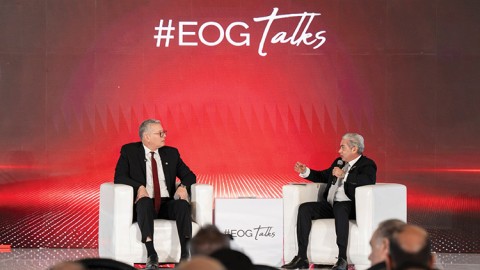
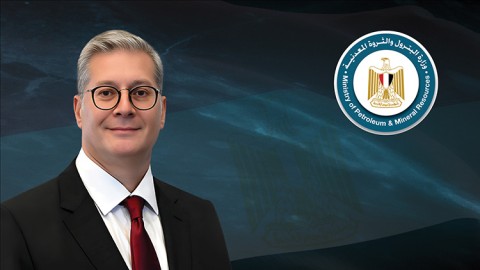
A fireside chat titled ‘Cultivating the Next Generation of Energy Leaders’ ended proceedings. It focused on upskilling young professionals and STEM students to spearhead the energy transition. Moataz Atef, Undersecretary and Official Spokesperson of the Egyptian Ministry of Petroleum and Mineral Resources (MoPMR), highlighted the Ministry’s strategic investments, industry partnerships, and educational initiatives shaping the next generation of leaders in the energy sector.
He emphasized that bridging the skills gap is crucial for enabling future geoscientists, engineers, and innovators to drive decarbonization and develop sustainable energy systems. MoPMR currently offers training for human resource professionals on new technical skills. They also opened two vocational schools that teach skills aligning with the latest energy and minerals developments. The first batch comprised 150 participants who graduated last November.