As the energy industry continues to be a powerful engine for economic growth and technological innovation, it also faces challenges related to gender equality and diversity. Despite the vast potential of women in shaping the future of energy, their representation in senior leadership roles remains limited. In the MENA region, women-owned businesses make up less than 5% of all businesses compared to a global average of up to 26%. Even startups founded only by women in the MENA region receive just 0.5% of all venture capital funding. This is where the EmpowerMed Women Network comes in.
At COP 29, the East Mediterranean Gas Forum (EMGF) launched the EmpowerMed Women initiative with its mission to create a vibrant and supportive community dedicated to uplifting women in the energy sector. By fostering collaboration, professional development, and leadership opportunities, the network aims to reshape the narrative around women in energy, particularly in the East Mediterranean.
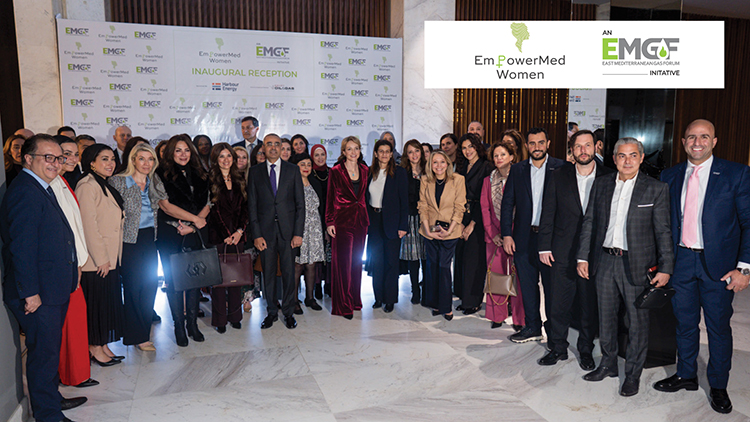
Following the network’s completion, EMGF inaugurated on February 16 the EmpowerMed Women Reception event at the Dusit Thani Lake View Hotel in Cairo to gather industry leaders and influential figures and discuss the structure of the network, goals, and activities.
Opening Remarks
The event commenced with an opening remark from H.E. Osama Mobarez, Secretary General of EMGF and Network Strategy & Operations Leader, expressing his delight to host this reception event and welcoming distinguished guests of leading men and women taking part in the initiative.
He emphasized the importance of the EmpowerMed Women network as a step forward to ensure that women’s voices are heard, respected, and represented at every level of the energy sector. “The main difference that we want to make is an impact on the ground. That is why we have developed a different structure that focuses more on working groups and specific topics to provide women with leadership programs, mentoring programs, and doing things on the ground,” he said.
“To ensure that women play an equal role in shaping the future of energy in the area, it is not just a matter of gender equality but about reshaping the narrative around women in energy, particularly in our region,” said H.E. Alexandra Sdoukou, Deputy Minister of Environment and Energy of Greece and Chair of the Network.
Sameh Sabry, Managing Director of Harbour Energy in the Middle East & North Africa and Network Advisory Board Member, emphasized that social barriers hinder women’s participation in the energy sector. “Social barriers are the main reason why women in this region have problems in entering and advancing their careers in the energy sector. Only 10% of the workforce are women, which is way less than the global average of 22%, which is very low in comparison to other industries by itself. Because of this, even less representation of women is found in leadership positions,” he said.
H.E. Sabah Mashaly, Deputy Minister of Electricity and Renewable Energy, underscored the importance of balancing career demands with personal and family responsibilities stating, “Empowering women and ensuring their full participation is vital for achieving sustainability goals by balancing the demands of a career in energy with personal and family responsibilities, which can be very challenging for any woman. Also, ensuring that women have access to education and the training they need to succeed in the energy sector became very crucial.”
H.E. George Papanastasiou, Minister of Energy, Commerce, and Industry of Cyprus, highlighted the practical impact of the EmpowerMed Women Network stating that it “is an important tool in the context of the East Mediterranean Gas Forum (EMGF), intended to help us design policies that are more targeted, and consequently will make a positive difference in specific and practical ways in the everyday life of people. Its work is focused on ensuring that women’s voices are included in the design and implementation of policies that will create the sustainable and inclusive energy future that we want to have.”
About EmpowerMed Women Network
During the event, Enas Shabana, Communications & Media Relations Specialist at EMGF and Network Chief Operating Officer, delivered a compelling presentation on the vision and goals of EmpowerMed Women Network as well as its structure and activities.
The network has currently grown to include 270 members from 11 countries that focus on promoting gender equality and diversity within the sector, she noted.
To achieve true gender equality, the network’s board structure includes leading men and women across the Mediterranean, creating a space where diverse perspectives can come together to drive a meaningful and impactful change.
Shabana highlighted the network’s main activities including capacity building, mentorships, advocacy, collaboration, and increased visibility for women. She also noted that activities will deal with innovation challenges, virtual roundtables, skill-building workshops, annual conferences celebrating women’s achievements, awareness campaigns, and cultural exchange events.
Interactive Discussions
The event featured an interactive session led by H.E. Alexandra Sdoukou and Enas Shabana, which sparked dynamic discussions on empowering women in the energy sector.
Josie Christodoulou, Commissioner for Gender Equality of Cyprus and the Network Diversity, Equity, and Inclusion Lead, shared her insights about the network, stating, “We have this motto that women know exactly what they want, and what they need is space, and this is what this network provides.”
Maria Rita Galli, CEO of DESFA and member of the Executive Committee of the Network emphasized the importance of education in boosting women’s inclusion in the energy sector. “If we want to increase the number of women with executive decision-making roles in the energy sector, we need to give them the instrument and one fundamental instrument is STEM education.”
She also noted, “family experiences give us skills and tools that are super important in the business life.”
Meanwhile, Mathios Rigas, CEO of Energean, touched upon one of the critical issues facing women today in regard to the pay gap stating, “In Europe, the gender pay gap is average 12%. So not only do we have less women, but they are paid 12% less than men. In UK energy space, there is 20% gender pay gap.” He also noted the importance of gender equality and the need to ensure that women are paid fairly in the workforce through this network.
Mirna Arif, General Manager of Microsoft Egypt, underscored the role of technology in empowering women in the workforce stating, “Technology is running our worlds and truly impacted how we live, work, study, and do everything. When we fail to engage half of the world’s brainpower in top engines of innovation, we fail as countries, communities, and societies.”
“I look at Egypt and I look at places like rural Egypt, for example, where a lot of women find it difficult to leave their homes and find jobs. Well, with technology, they can do this from the comfort of their home while they’re looking after their children. So, there are so many initiatives that we’re pushing in this,” she added.
Besides, Mohamed Fouad, Founder and CEO of Egypt Oil & Gas Group (EOG) emphasized the EOG Committee’s role in empowering women in the energy sector through its Women in Energy Task Force “If we are looking for a sustainable energy sector, energy security, economic growth, it can’t happen without the diversity in gender and empowering women,” he said.
“Empowering women in the energy sector is not just a moral imperative, but a business necessity. According to the International Renewable Energy Agency, women make up only 32% of the workforce in the renewable energy sector, and only 22% of leadership positions. This underrepresentation is not only a loss for the sector, but also a missed opportunity for innovation and growth,” said Cristina Lobillo Borrero, Deputy Director General for Energy, EU, and Network Leadership Development Lead as she shared her remarks virtually at the event.
Osama Mobarez gave his closing remarks for the event stating that: “As long as women have the capabilities and competencies, they should be given the space and empowerment not just to develop themselves, but actually to contribute to our goals and the impact we aim to create through the EmpowerMed Network for Women. That’s why I believe in this initiative.”